Most businesses have no idea how they appear in AI search right now. They’re tracking Google rankings, monitoring website traffic, and running the usual analytics reports but none of that tells them whether ChatGPT, Perplexity, or Gemini is mentioning them when buyers ask questions about their category.
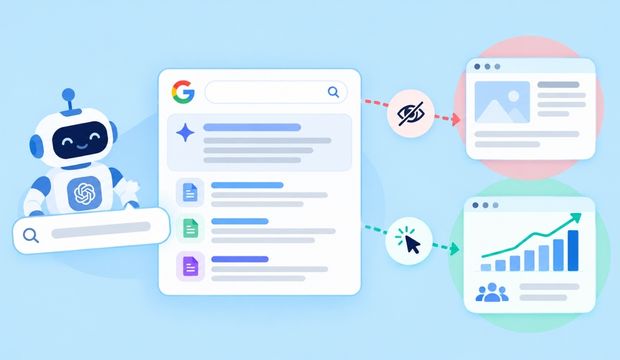
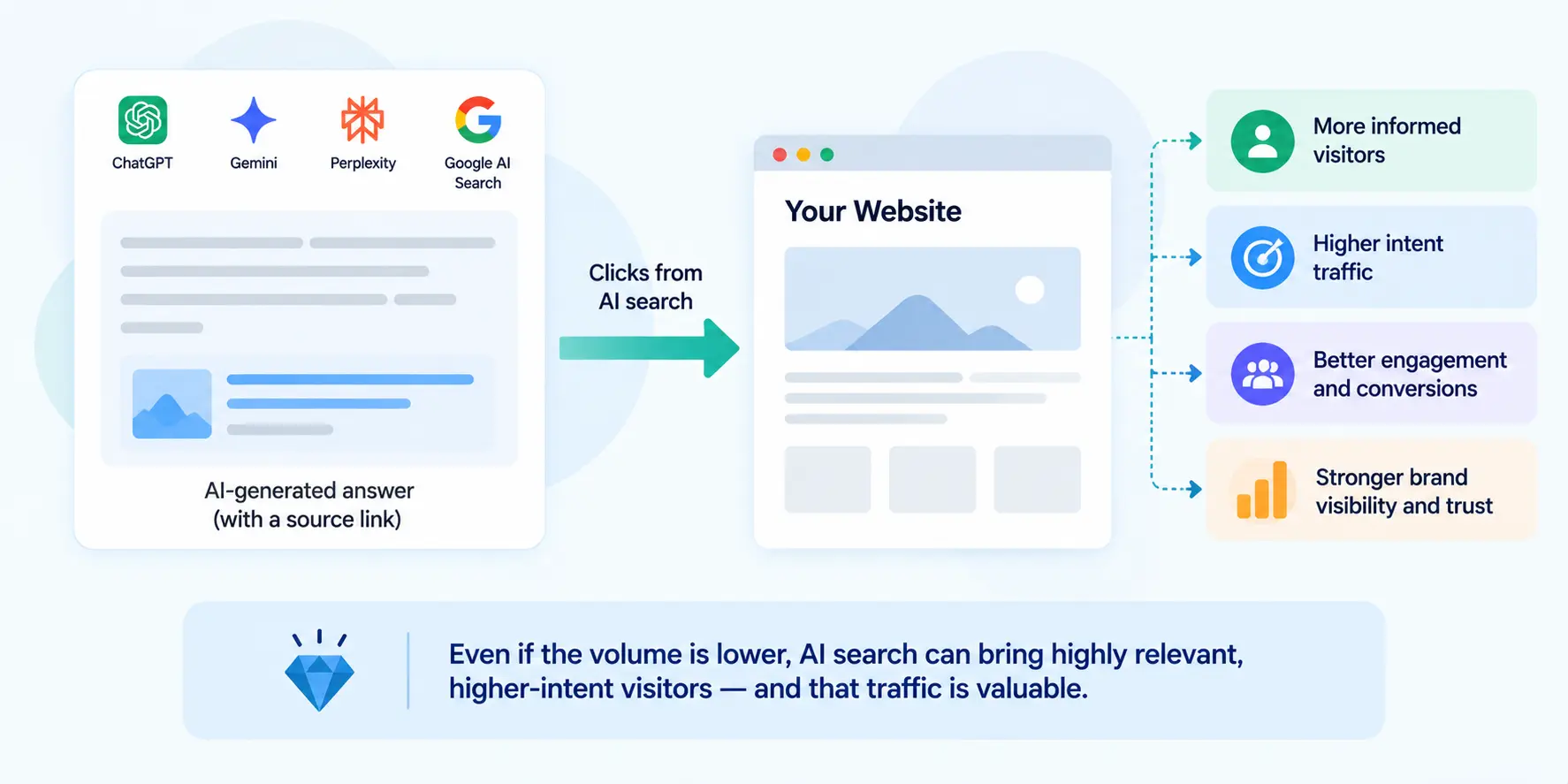
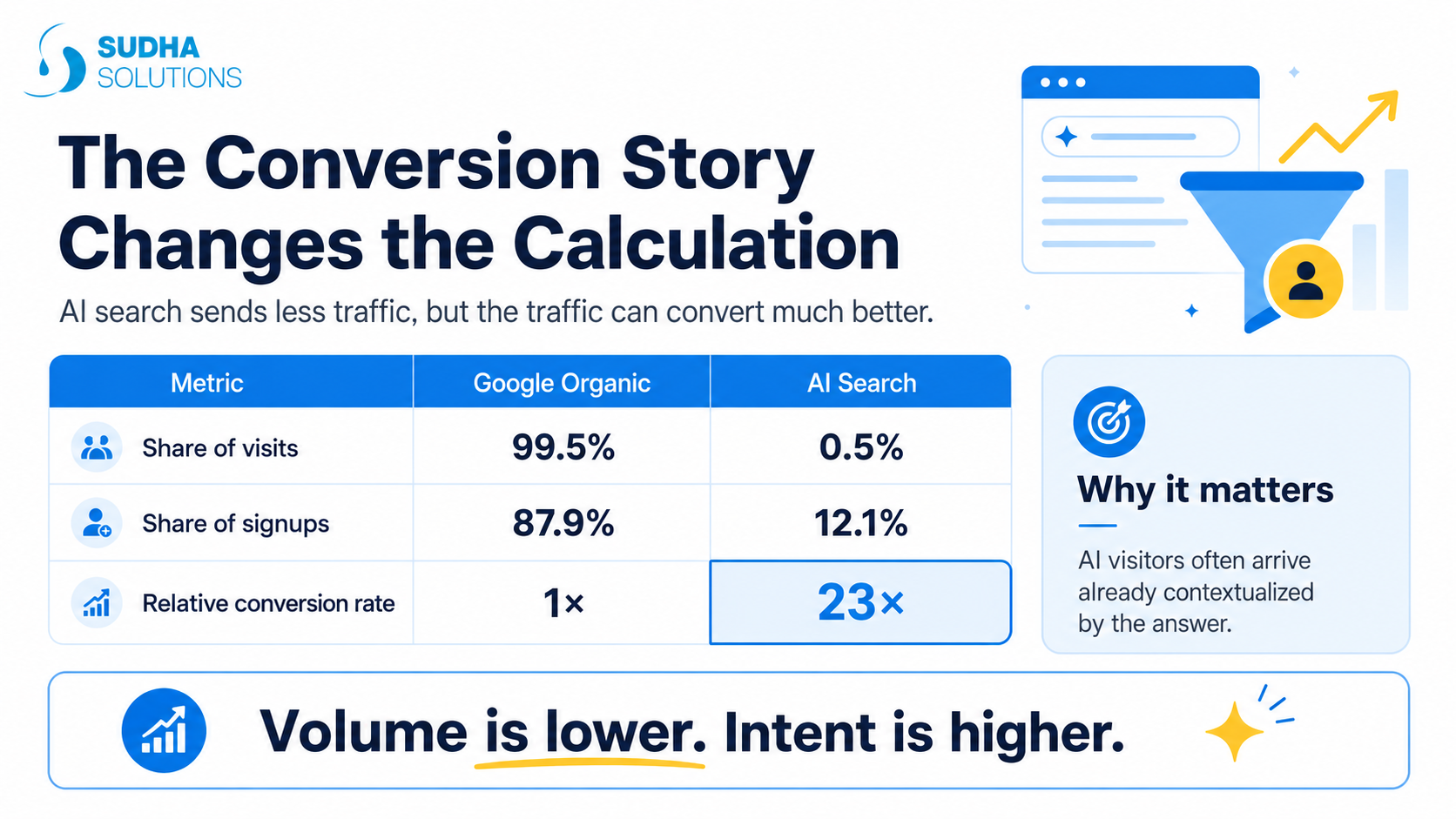
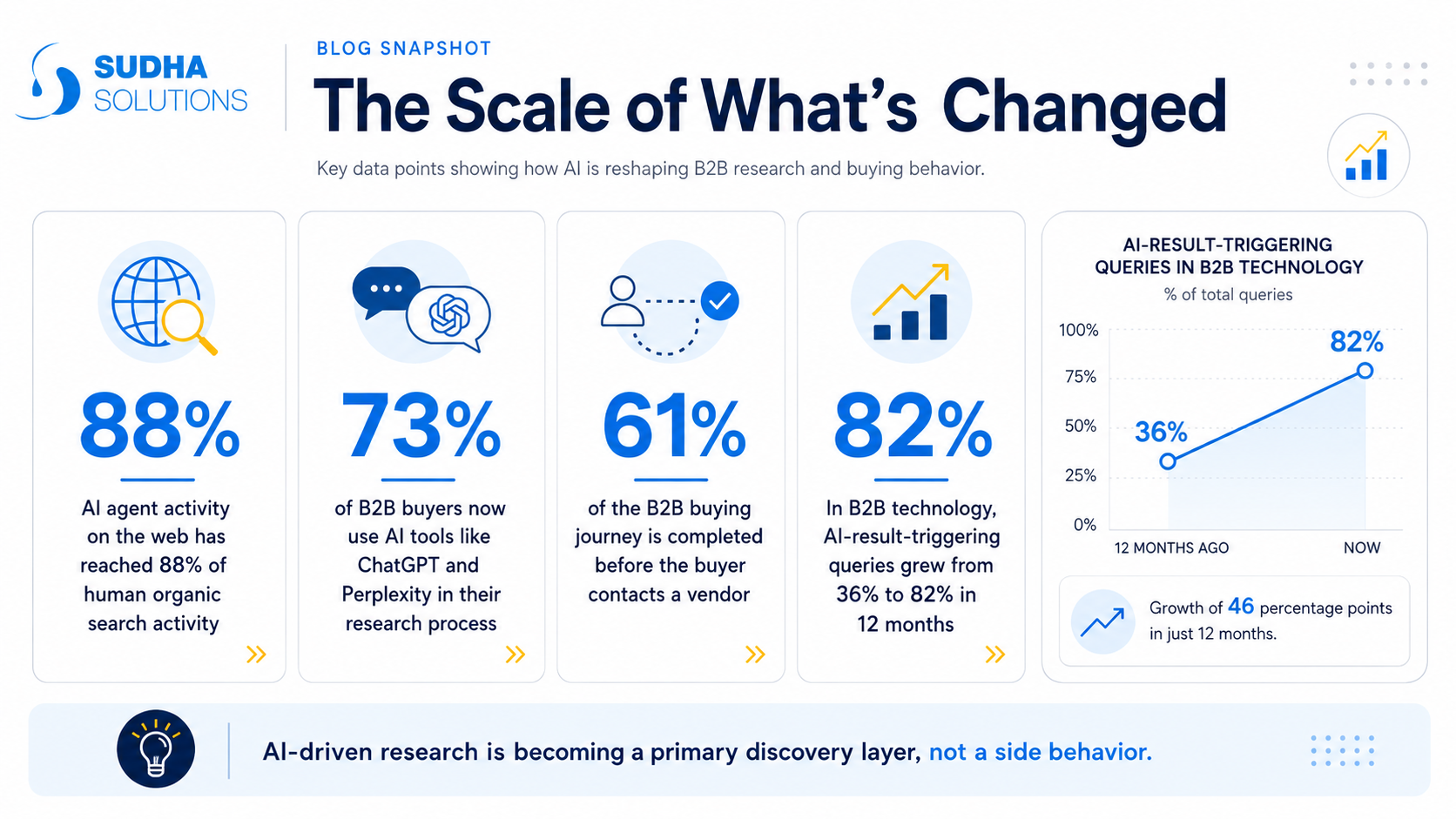
That’s a significant blind spot. And it’s a common one. Only 22% of marketers currently track AI visibility at all, according to a multi-source analysis of 680 million AI citations published in April 2026. The remaining 78% are making content and marketing decisions without understanding how they’re showing up in the channel that converts at 4 to 5 times the rate of traditional organic search.
An AI visibility audit fixes that. It gives a brand a concrete baseline — where it appears, how often, in what context, and against which competitors — from which every improvement can be measured.
This article walks through exactly how to run one, step by step, using a mix of free manual methods and scalable tools.
Why This Audit Is Different From a Standard SEO Audit
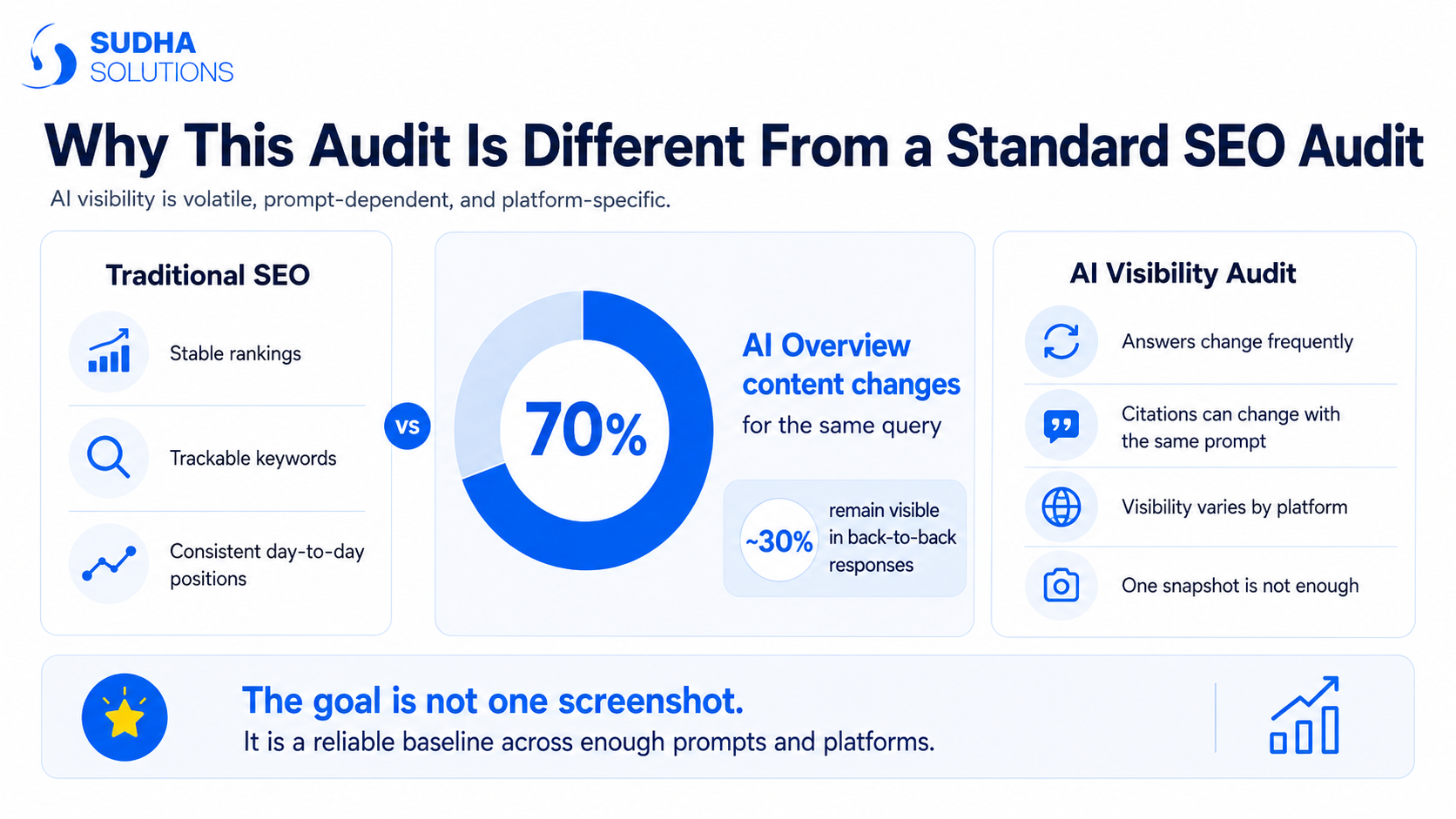
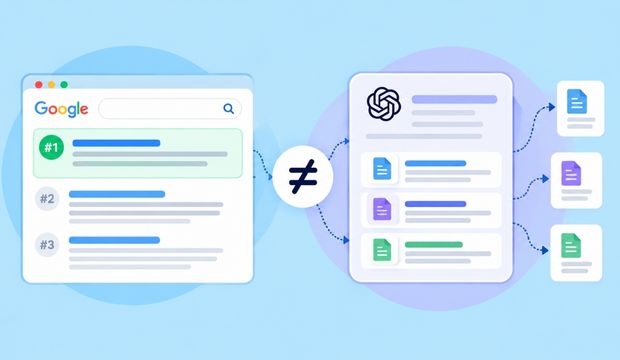
Before getting into the process, it’s worth being clear about what makes AI visibility different to measure.
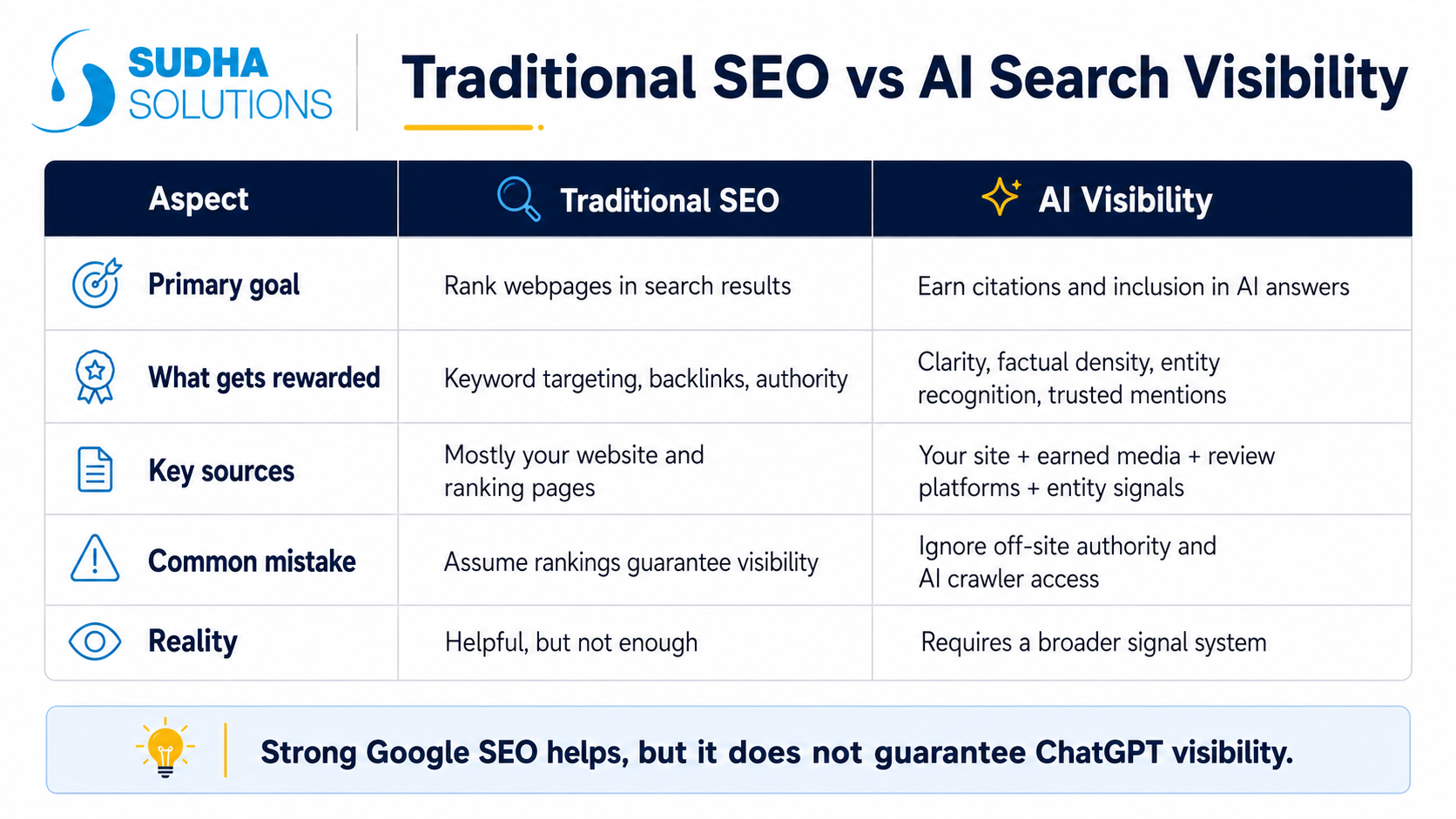
In traditional SEO, visibility is relatively stable and trackable. A page ranks at position four for a keyword, and that ranking holds reasonably well from one day to the next. Tools can scrape it, track it, and alert a brand when it changes.
AI search doesn’t work like that. Businesses investing in SEO expert services for AI search visibility are increasingly adapting their technical SEO strategies for AI-driven search behavior. AI Overview content changes roughly 70% of the time for the same query, and when an answer updates, almost half of the citations are replaced with new sources, according to AirOps research cited in Superlines’ March 2026 AI search statistics compilation. Only about 30% of brands remain visible in back-to-back AI responses for the same query.
This volatility means a single snapshot isn’t enough. The goal of an AI visibility audit is to establish a reliable baseline across enough prompt-platform combinations that the data is statistically meaningful — and to set up a monitoring cadence that catches changes over time.
Step 1: Define the Scope Before Running a Single Prompt
The most common mistake businesses make when starting an AI visibility audit is running a handful of random queries and drawing conclusions from the results. Before opening ChatGPT, there are three things worth defining.
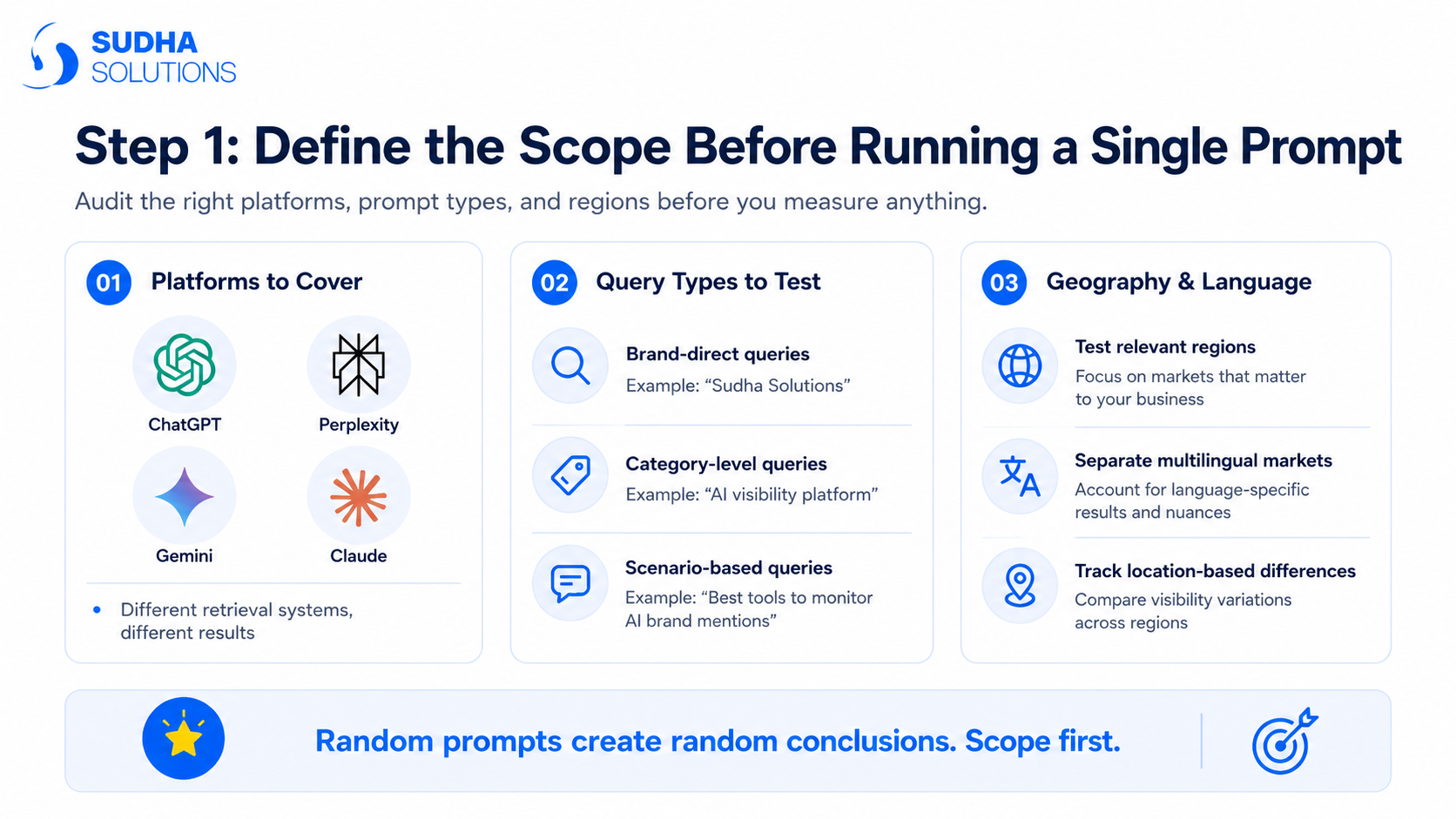
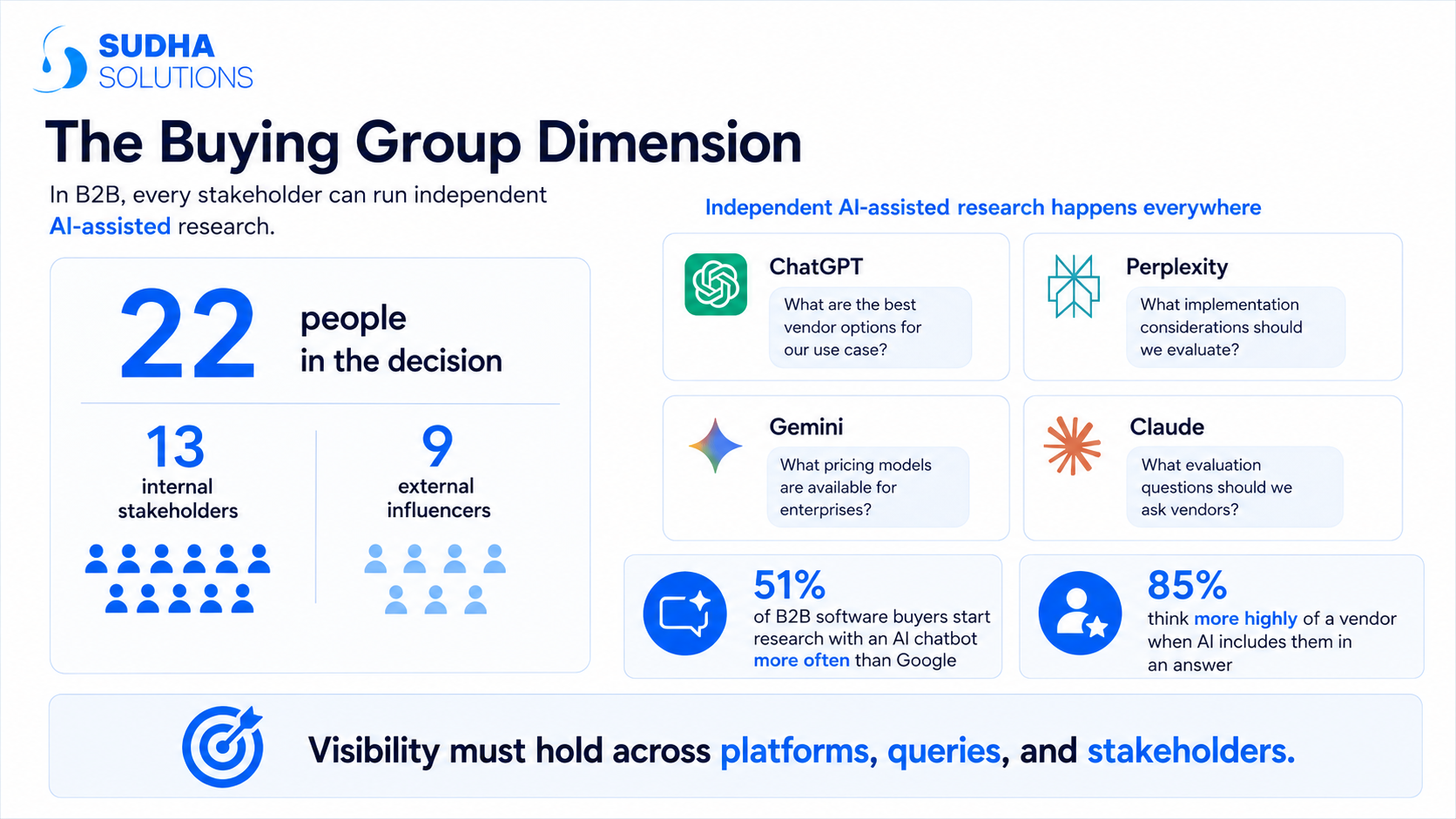
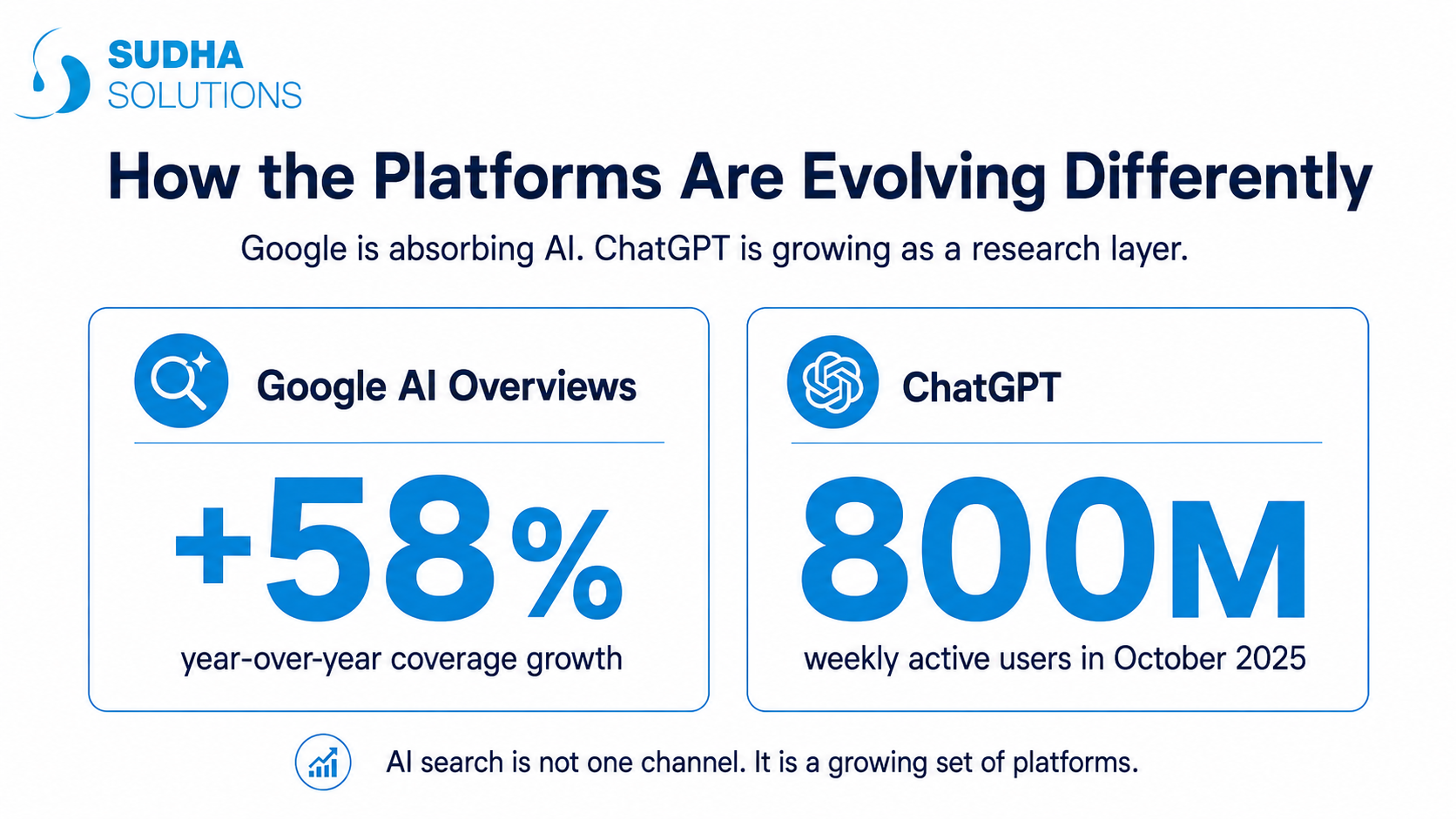
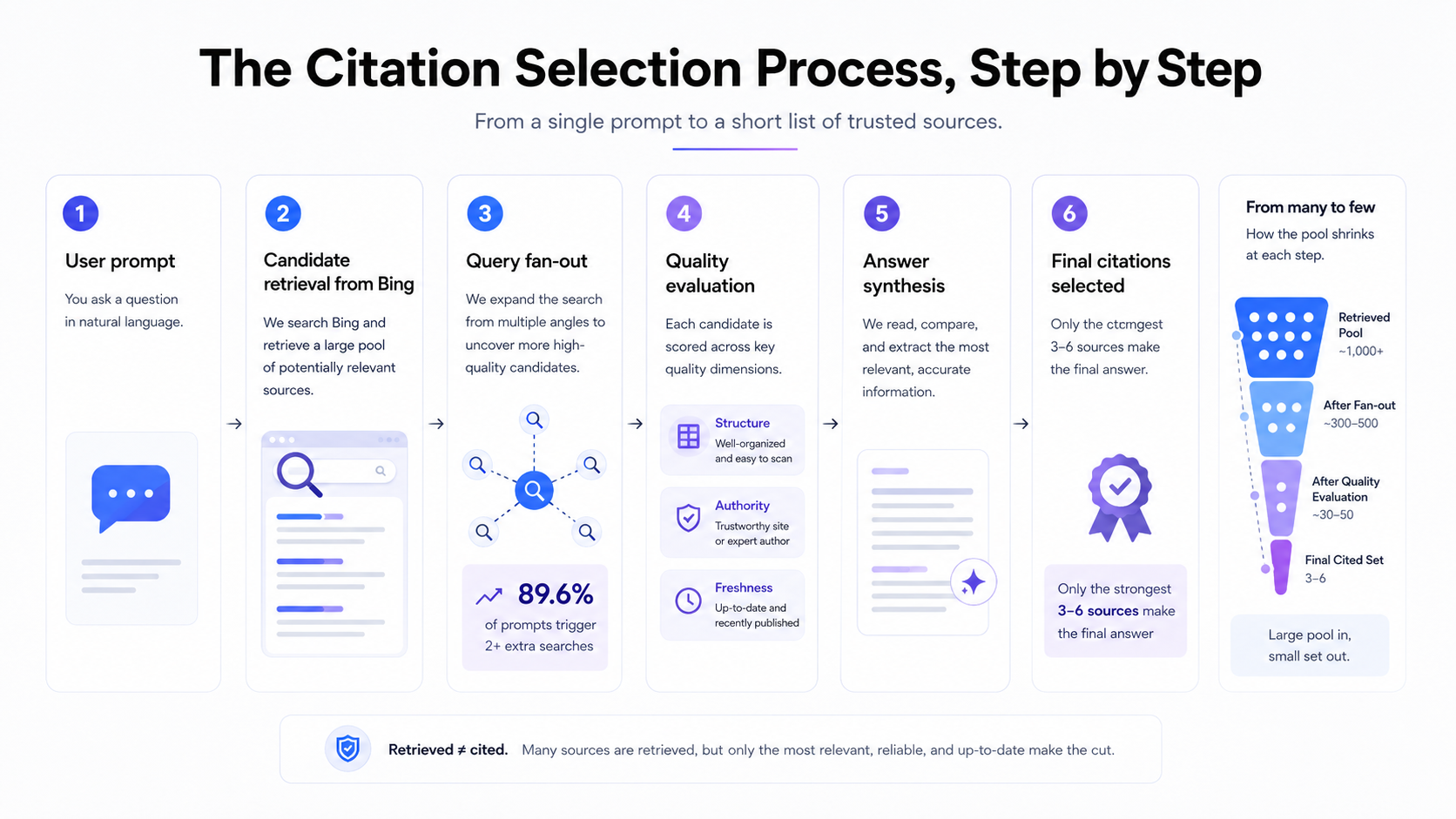
Which platforms to cover. ChatGPT, Perplexity, Gemini, and Claude are the four platforms that dominate AI-driven discovery in 2026. Each handles source retrieval differently — ChatGPT retrieves via Bing’s index when browsing is active, Perplexity shows inline citations natively and favours research-oriented queries, Claude has strong enterprise adoption, and Gemini integrates with Google’s ecosystem. Covering all four gives a complete picture. Starting with just ChatGPT gives a partial one.
Which query types to test. There are three categories of prompts that together paint the full picture of a brand’s AI visibility:
Brand-direct queries test what AI knows about the brand specifically. Examples: “What does [brand name] do?” or “Is [brand name] a good option for [service category]?” These reveal how accurately AI models describe the business and what sources they draw on.
Category-level queries test whether the brand appears in unprompted competitive answers. Examples: “What are the best options for [service category]?” or “Which companies should I consider for [problem the brand solves]?” These are the queries closest to real buyer behaviour and the hardest to appear in.
Scenario-based queries simulate how buyers actually describe their problems. Examples: “I’m a mid-sized B2B company looking for help with [specific challenge] — what are my options?” These often surface brands that category-level queries miss, because they match the actual language buyers use.
The geographic and language scope. AI platforms can return different results based on the user’s location and query language. If a brand serves multiple regions, the audit should cover them separately.
Step 2: Run the Prompts and Document Everything
With a prompt set defined, the next step is systematic execution. This means running each prompt across each platform and capturing the output in a structured way rather than reading responses and moving on.
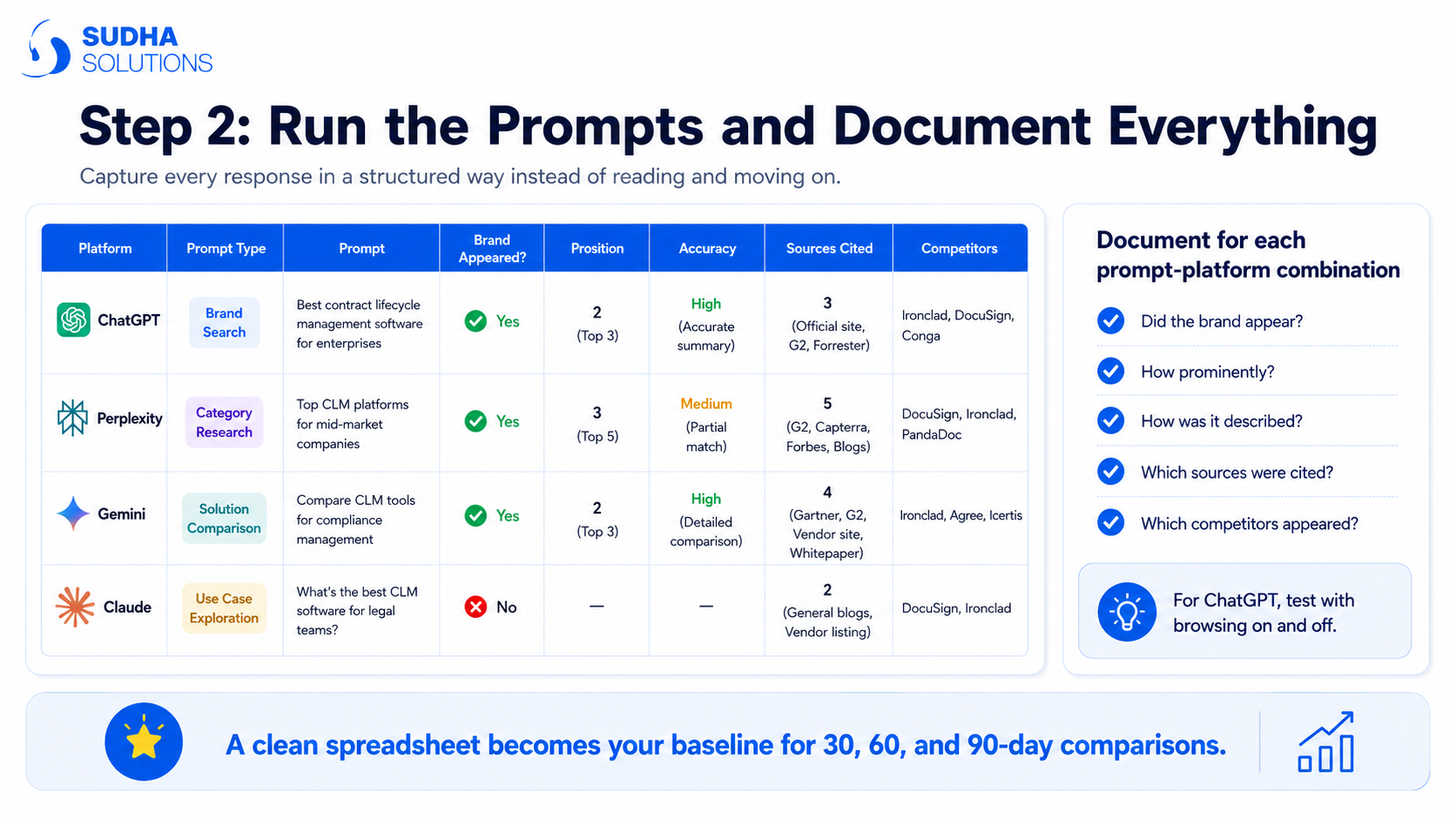
For each prompt-platform combination, document the following:
Whether the brand appears at all. Whether it appears prominently or is buried after multiple competitors. The exact language used to describe the brand — whether it’s accurate, positive, neutral, or inaccurate. The sources cited in the response, where visible. Which competitors appear, and how prominently.
A simple spreadsheet works well for this. Columns for platform, prompt type, the prompt itself, whether the brand appeared (yes/no), position relative to competitors, description accuracy, and sources cited. It takes time up front but creates a clean baseline to compare against in 30, 60, and 90 days.
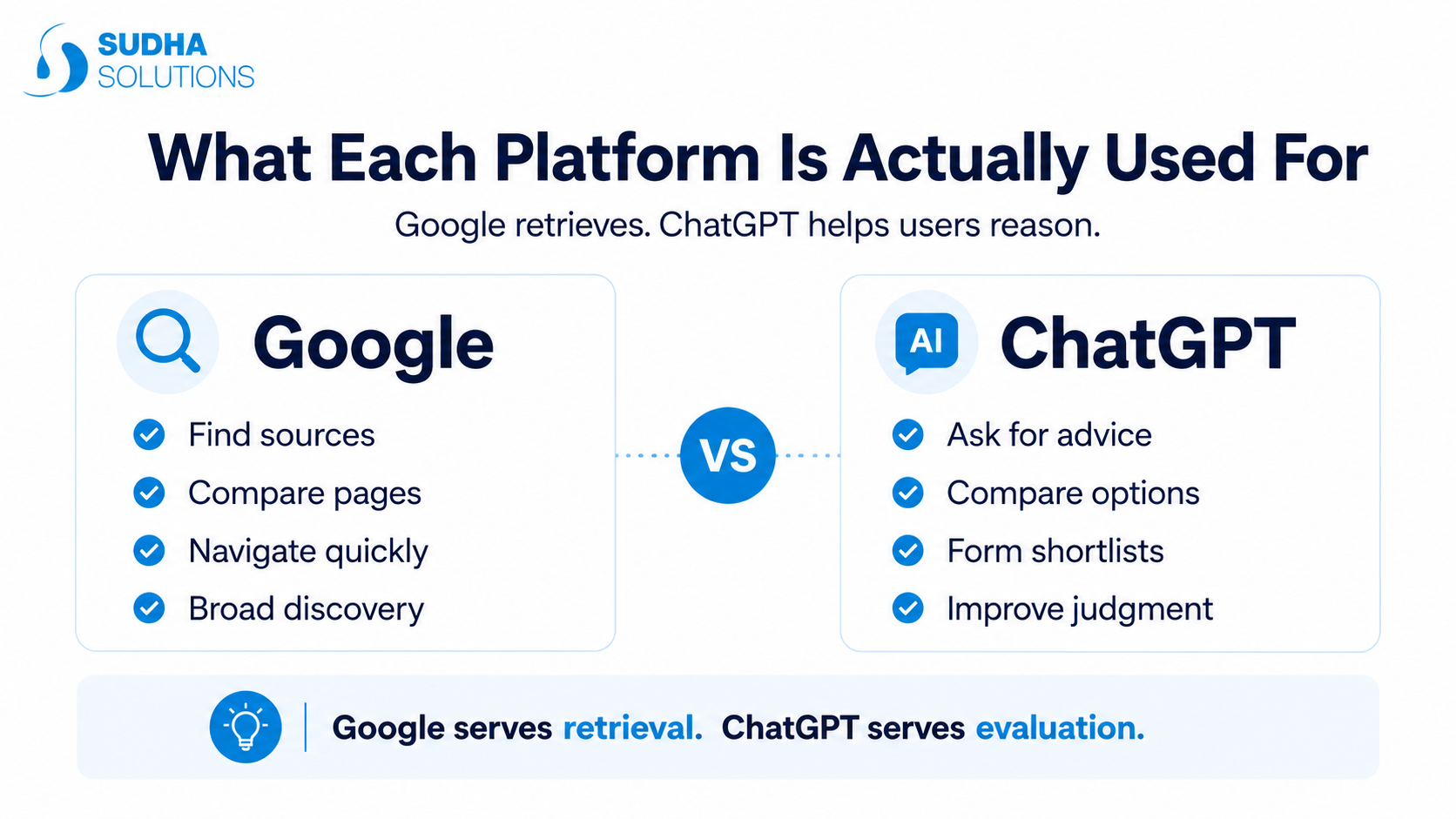
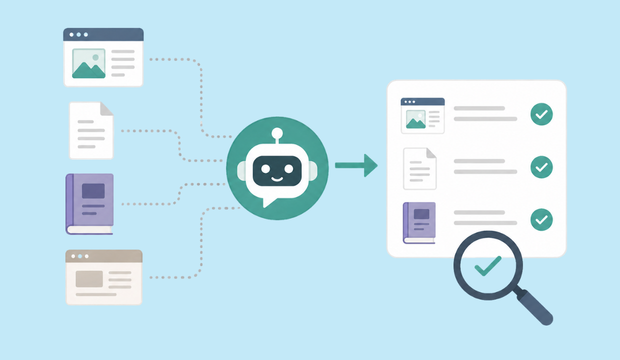
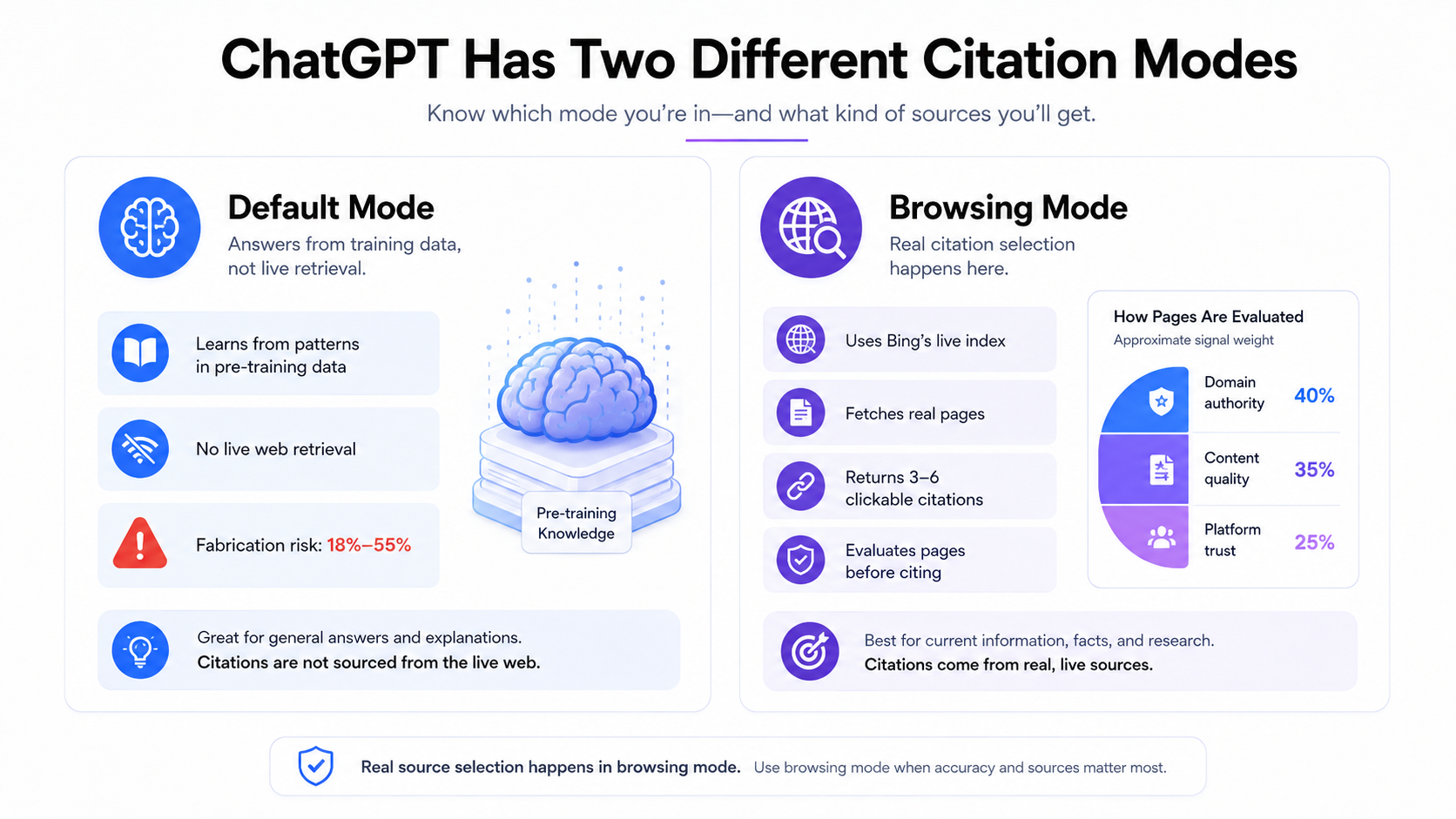
One important note for ChatGPT specifically: run each prompt with web browsing enabled and without it. The browsing-enabled response shows what ChatGPT retrieves live from Bing’s index. The response without browsing shows what the model’s training data alone surfaces about the brand. Businesses researching how AI search engines retrieve content can better understand why certain brands appear more frequently in AI-generated answers. These can be meaningfully different, and both are worth knowing.
Step 3: Calculate a Presence Score
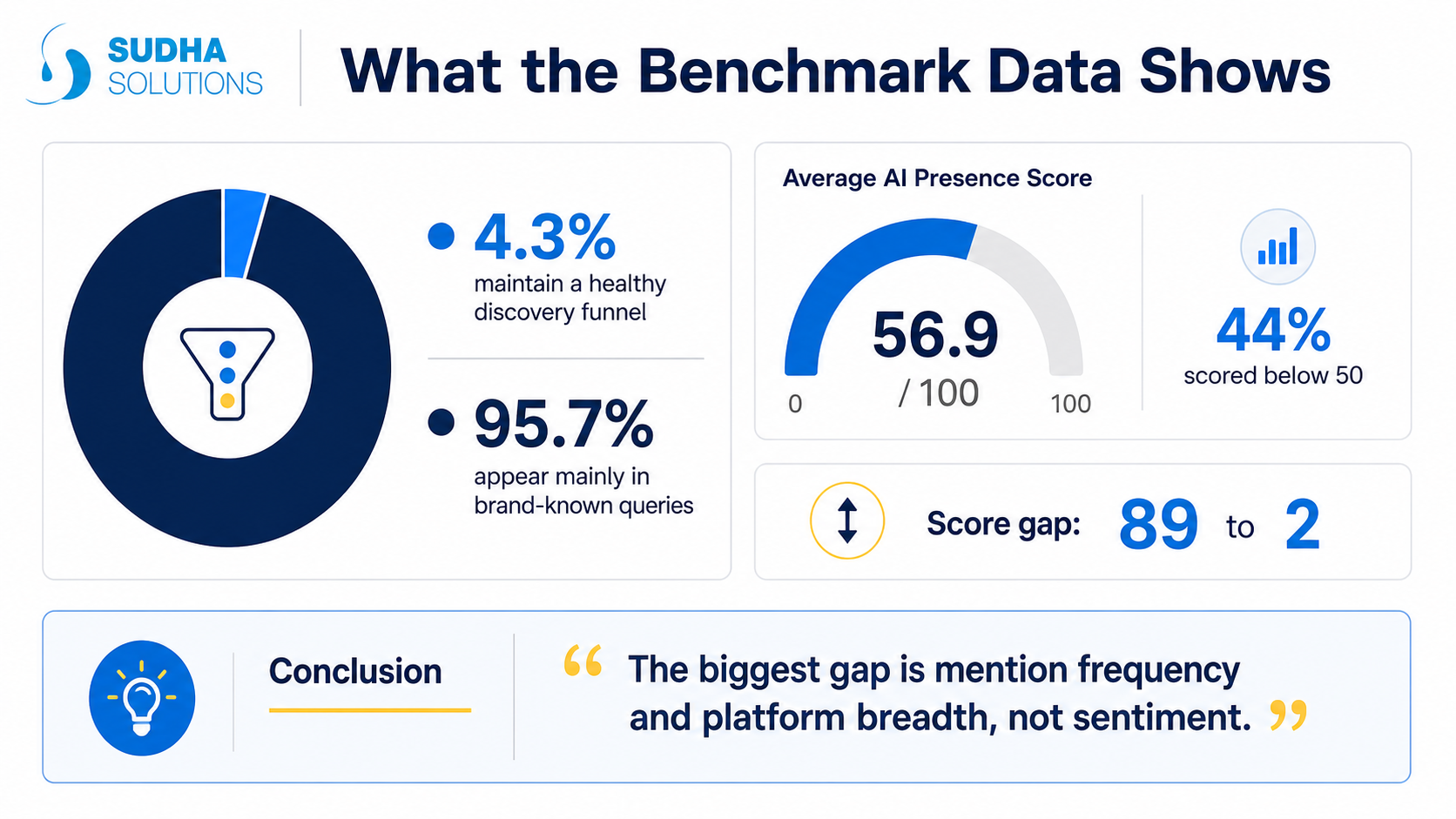
Once the documentation is complete, calculate a simple presence rate: the number of times the brand appeared divided by the total number of prompt-platform combinations tested.
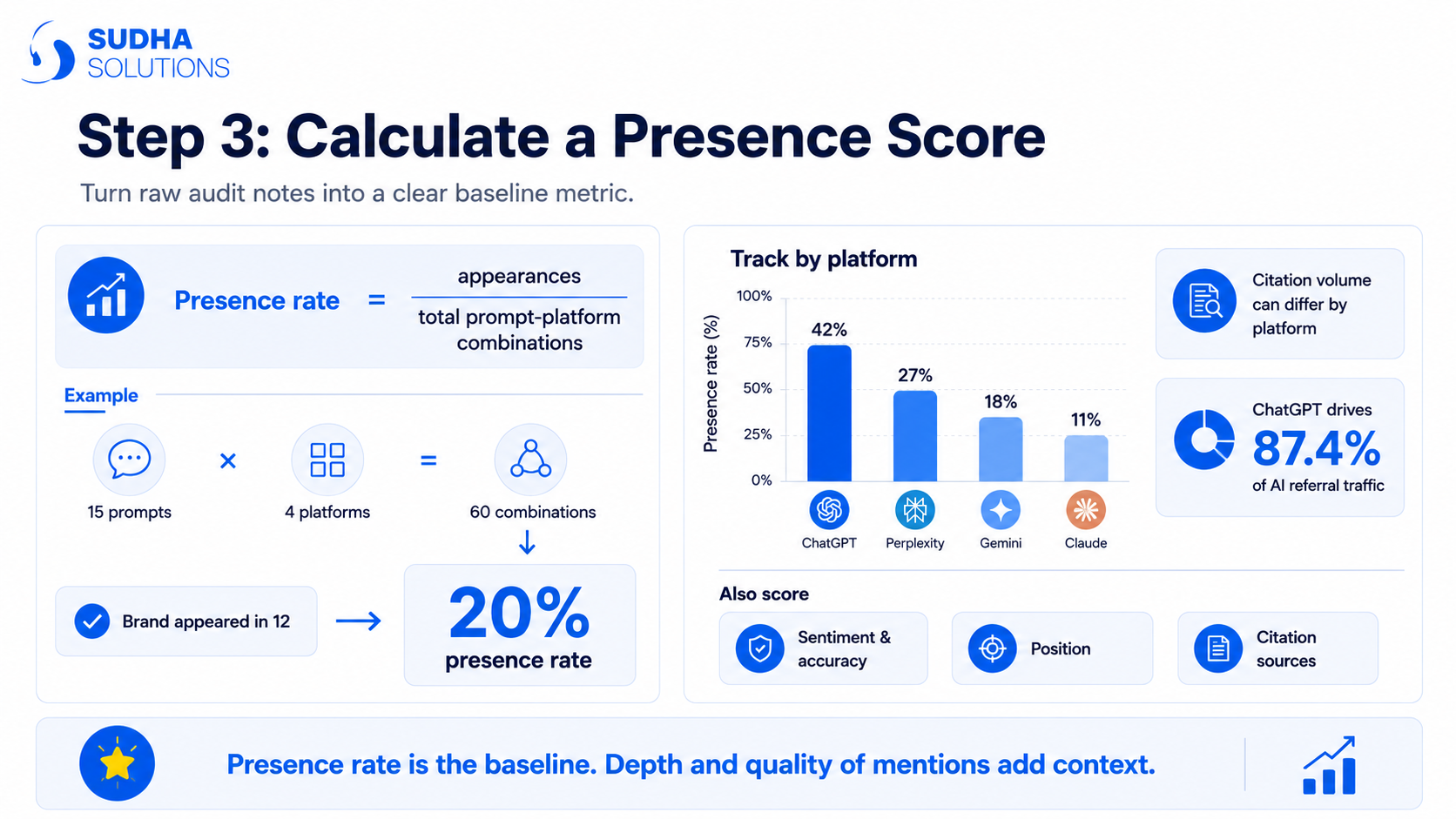
If 15 prompts were run across 4 platforms (60 total combinations) and the brand appeared in 12 of them, the presence rate is 20%. That becomes the baseline.
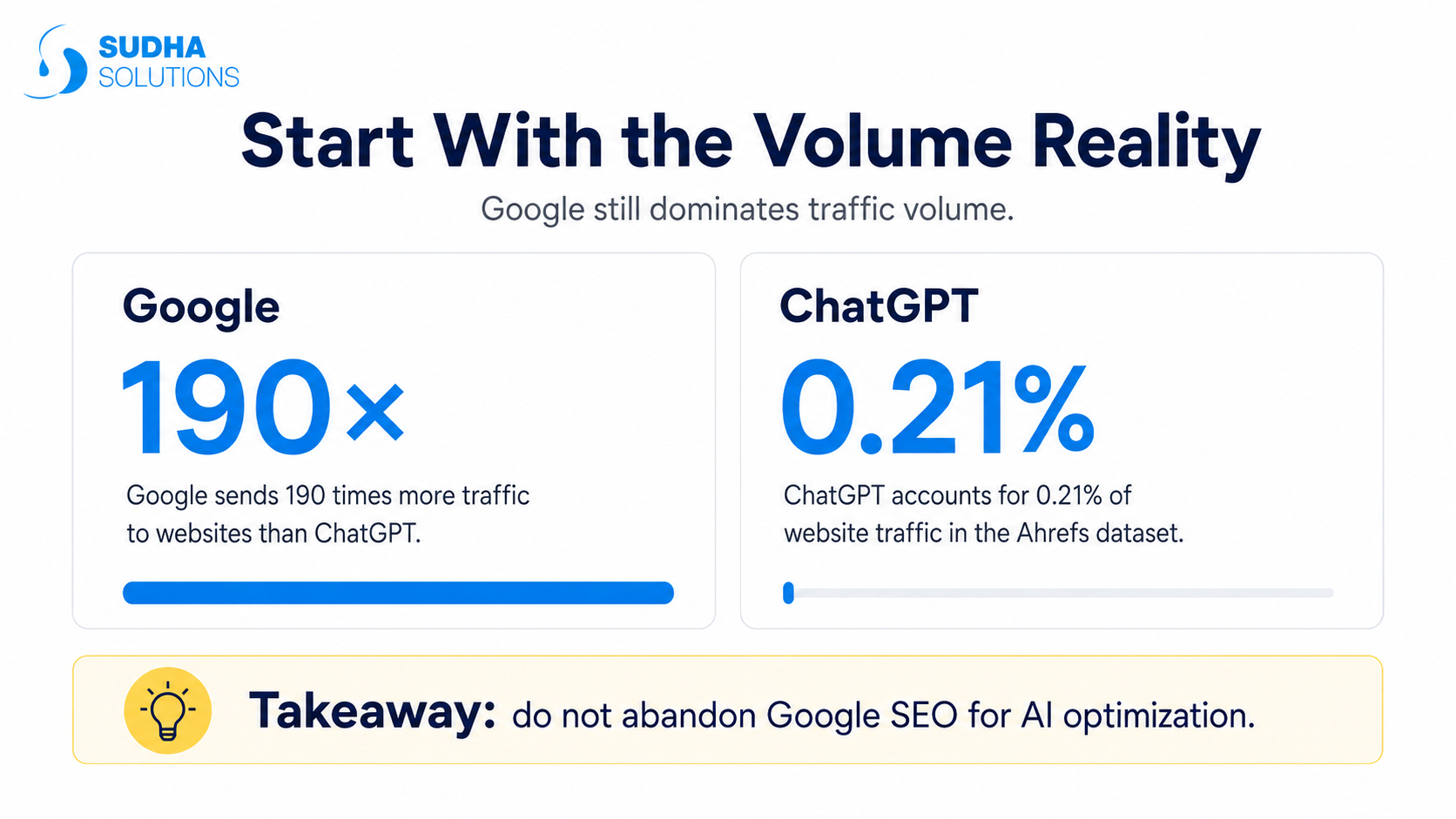
The same brand can see citation volumes differ by up to 615 times between different AI platforms, according to Superlines’ original research from March 2026. This makes platform-by-platform tracking important. A brand might appear consistently on Perplexity but barely at all on ChatGPT — which matters a great deal, given that ChatGPT drives 87.4% of all AI referral traffic, per Conductor’s 2026 benchmarks.
Beyond presence rate, note three additional dimensions for each appearance:
Sentiment and accuracy. Is the description positive, neutral, or negative? Is it factually accurate? A brand that is mentioned but described incorrectly, or mentioned only in the context of limitations, may be worse off than a brand that isn’t mentioned at all.
Position. Does the brand appear first, second, third, or later in AI responses that list multiple options? Earlier positions correlate strongly with click-through for the small percentage of responses that drive website visits.
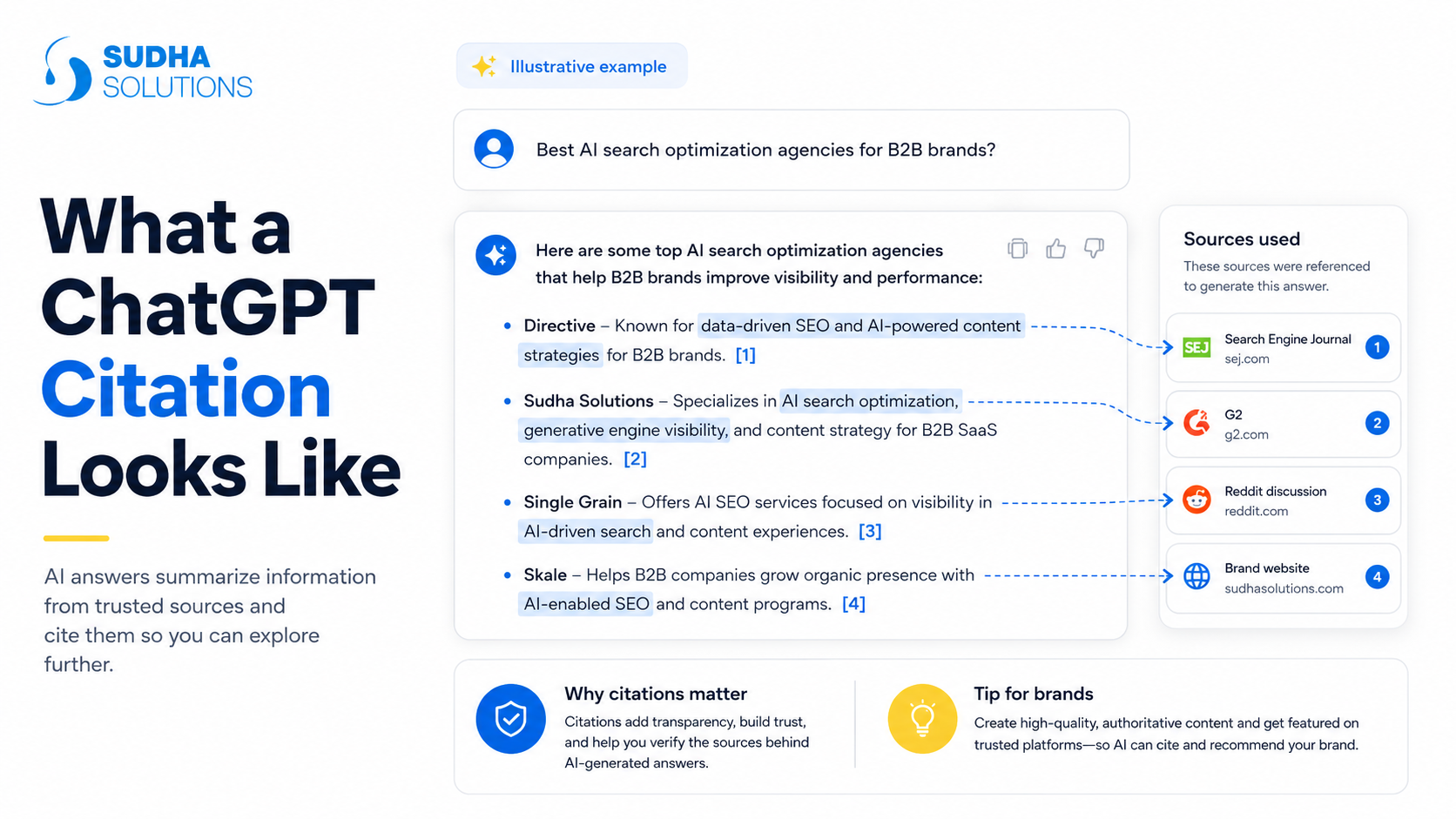
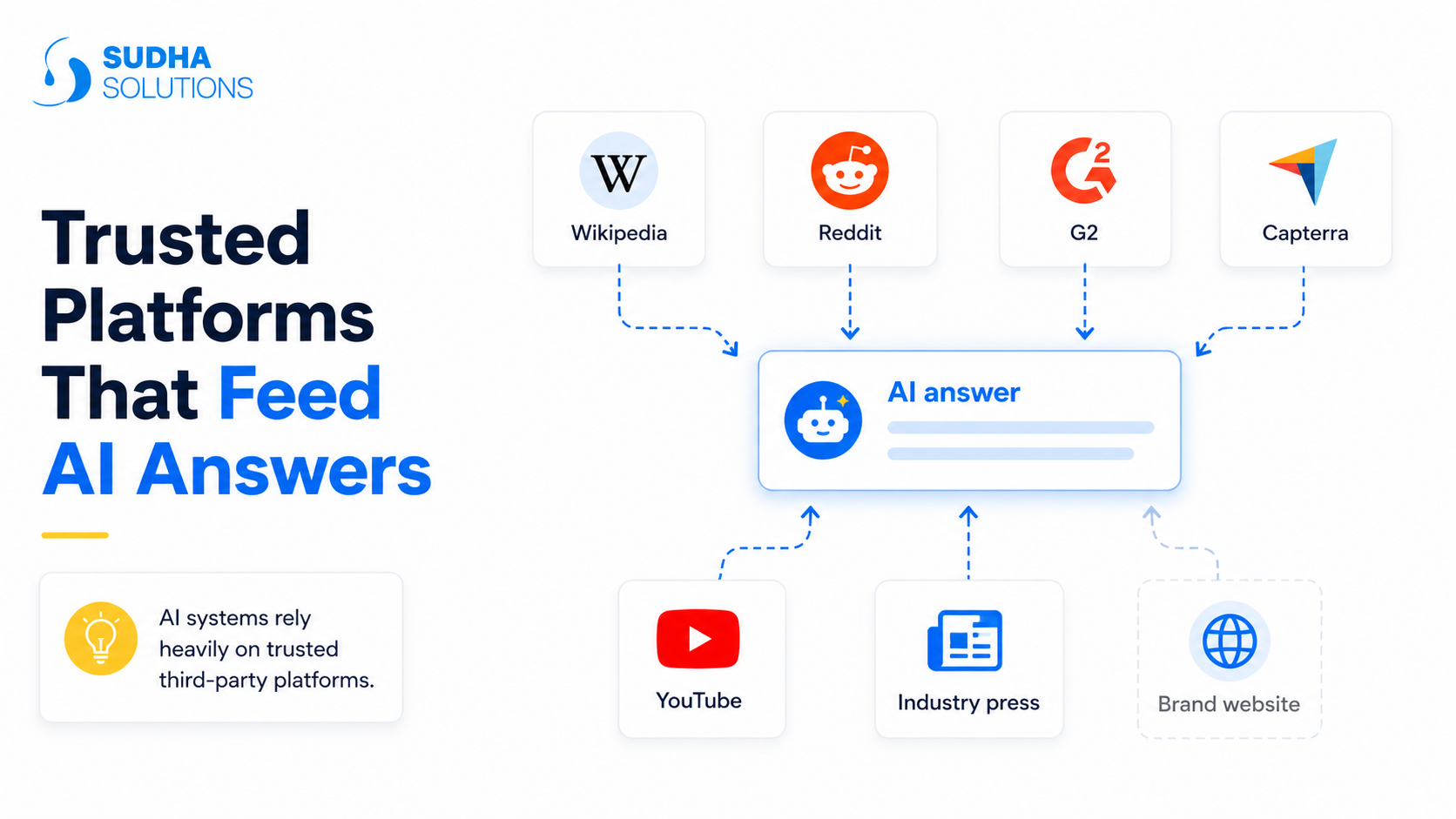
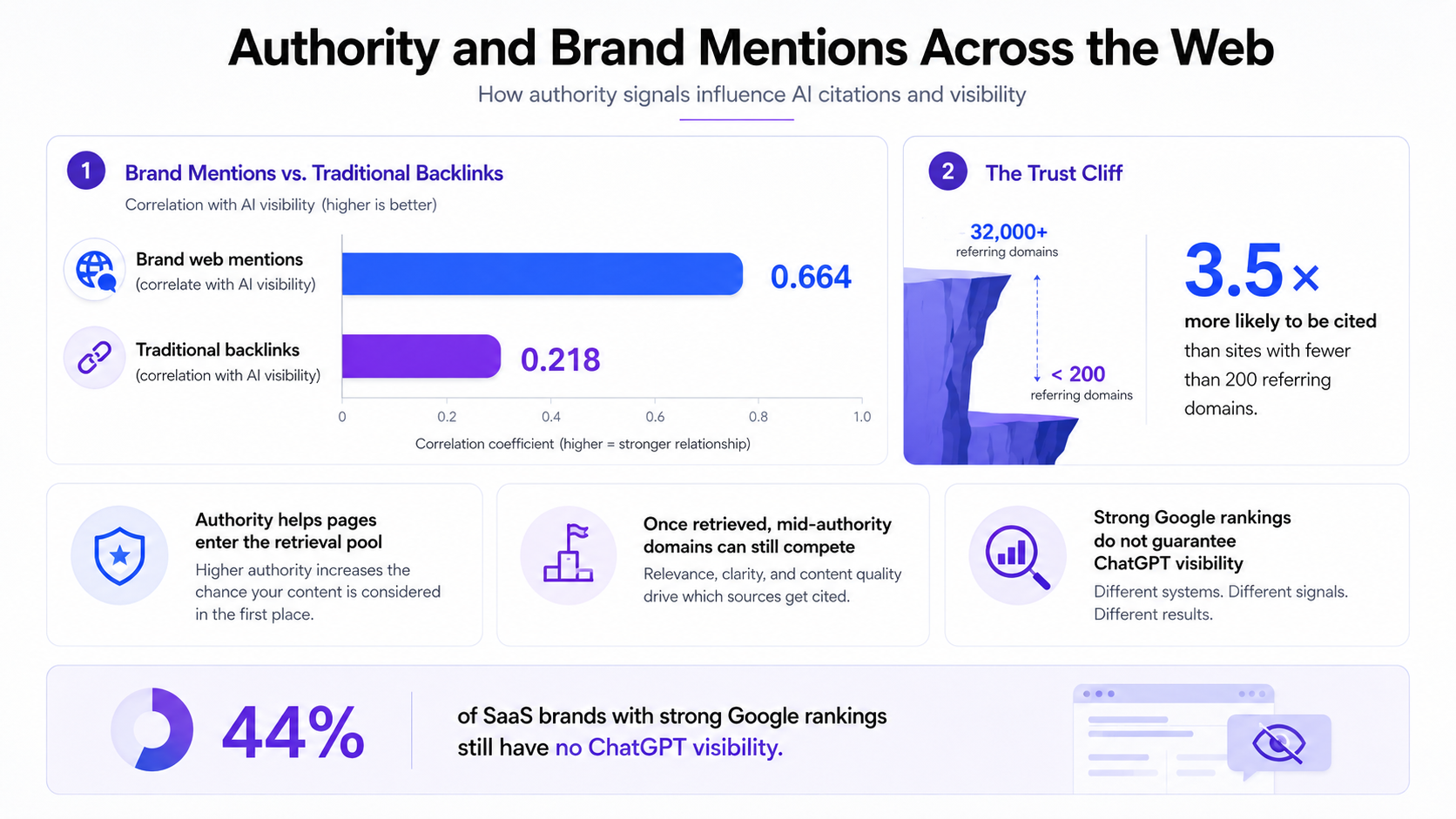
Citation sources. Which third-party domains does the AI draw on when it mentions the brand? These reveal where the brand’s credibility signal is coming from — and, just as usefully, which trusted domains it is not present on.
Step 4: Analyse the Citation Source Gap
Businesses investing in ChatGPT citation optimization services are increasingly improving their off-site authority and AI citation ecosystem presence.
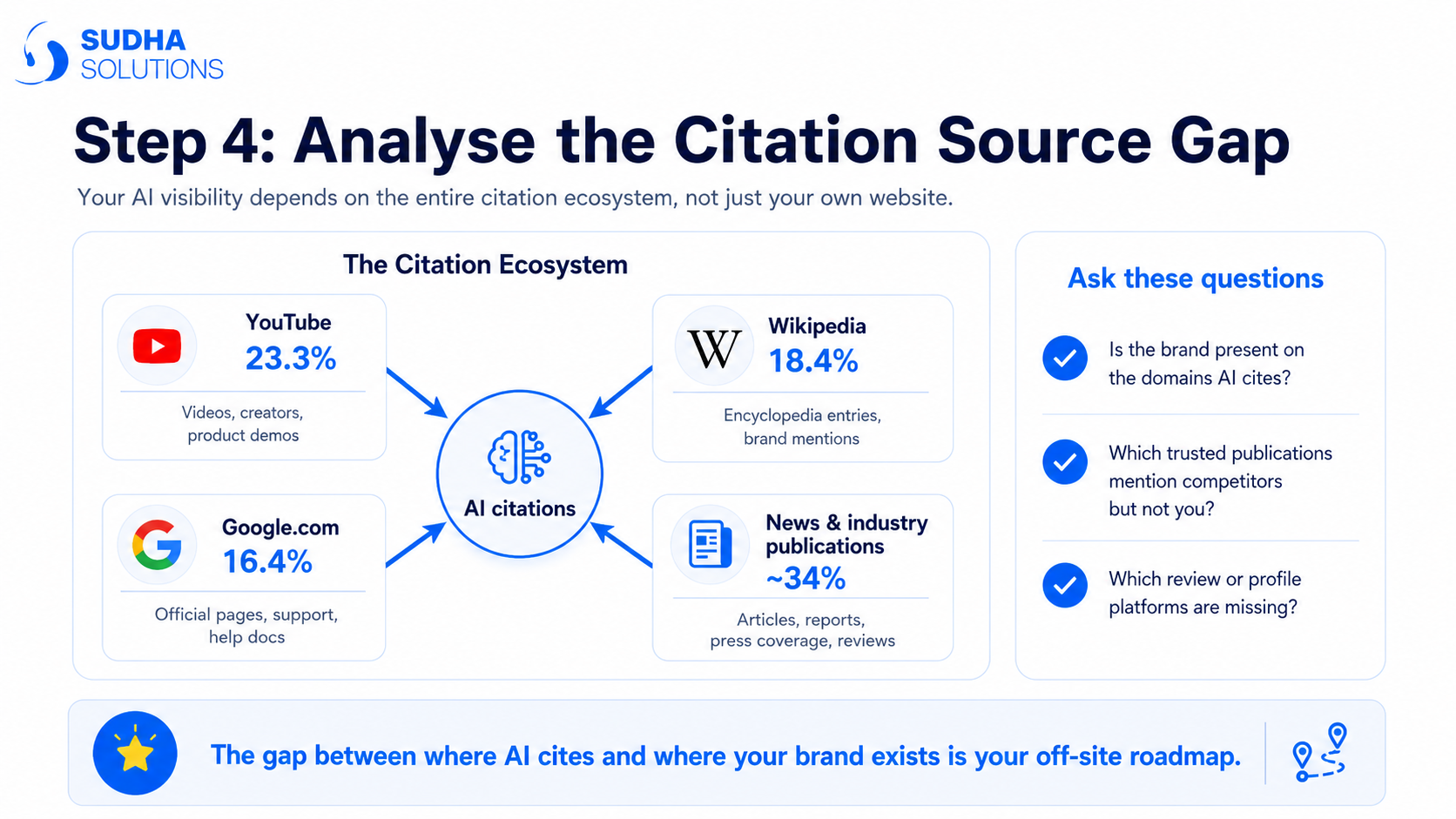
This step is where audits generate the most actionable insight, and it’s the one most businesses skip entirely.
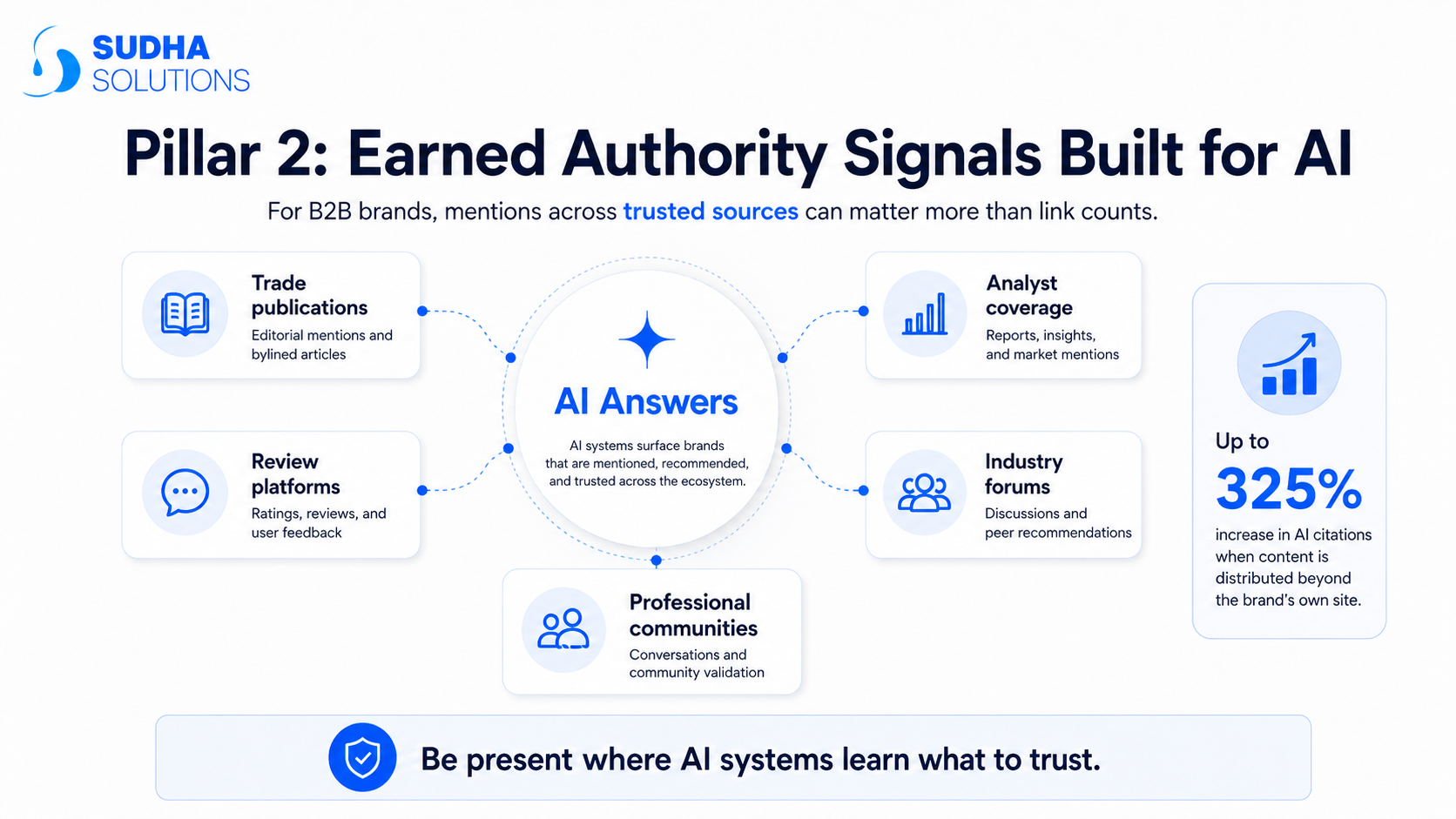
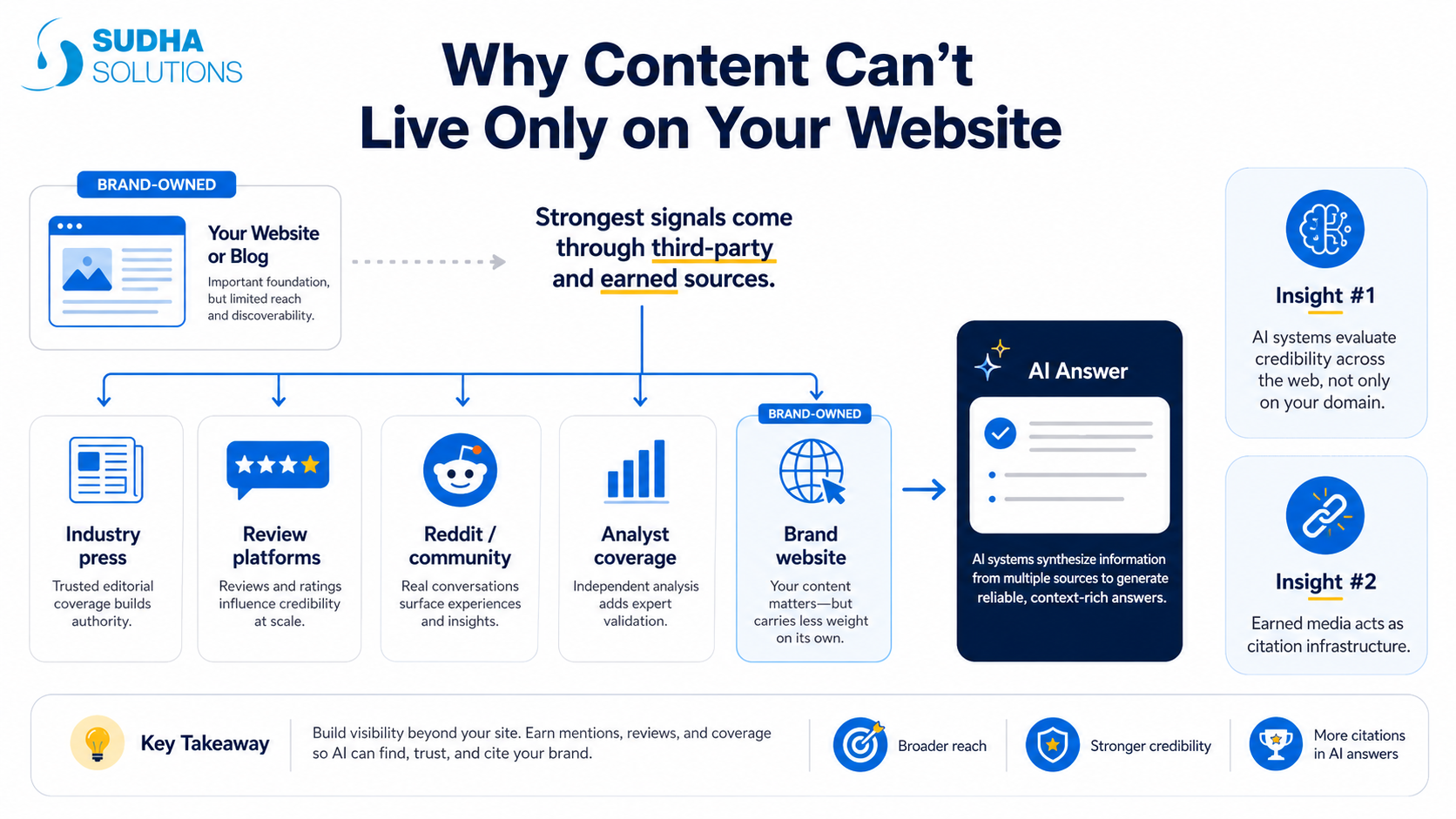
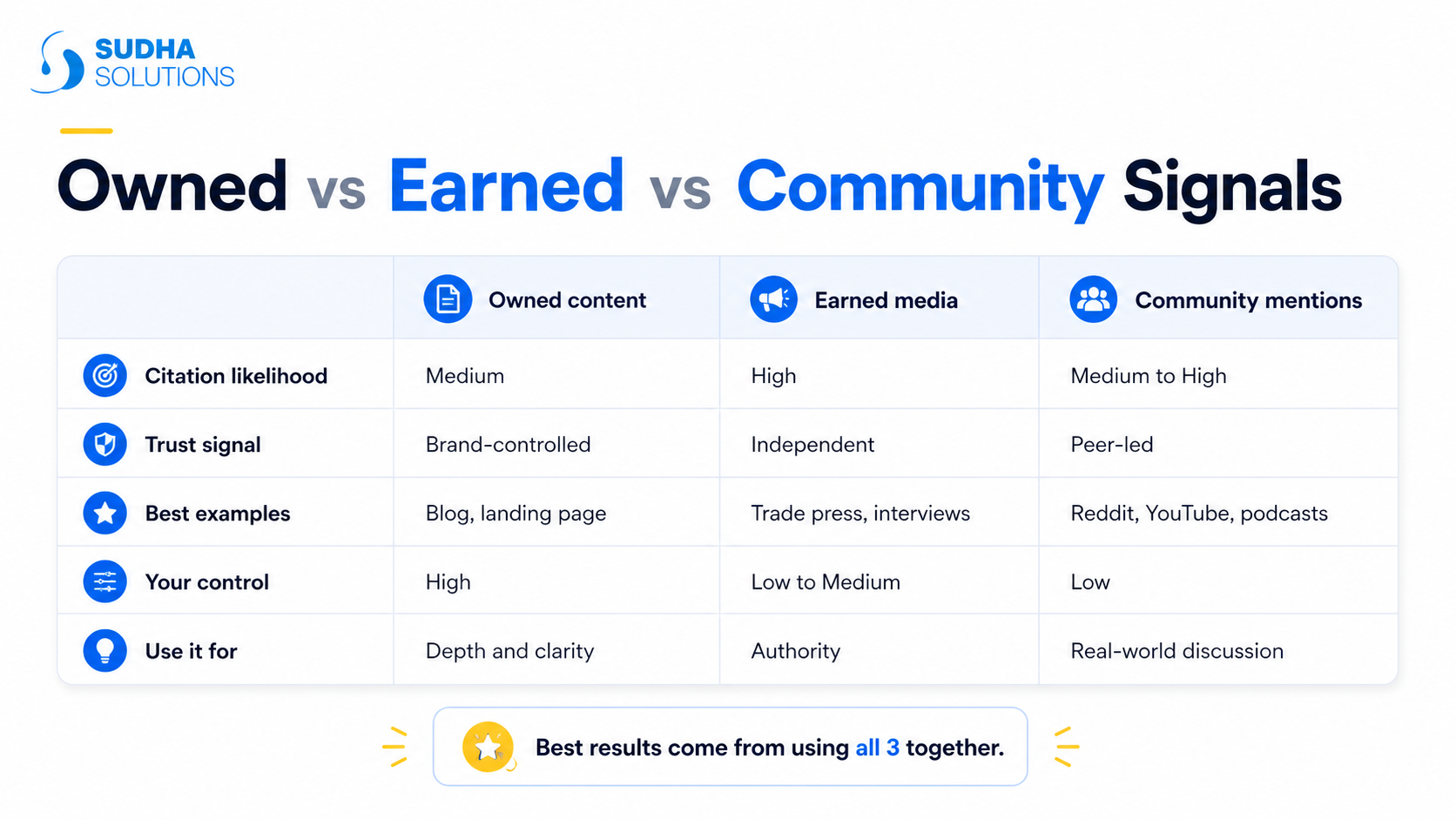
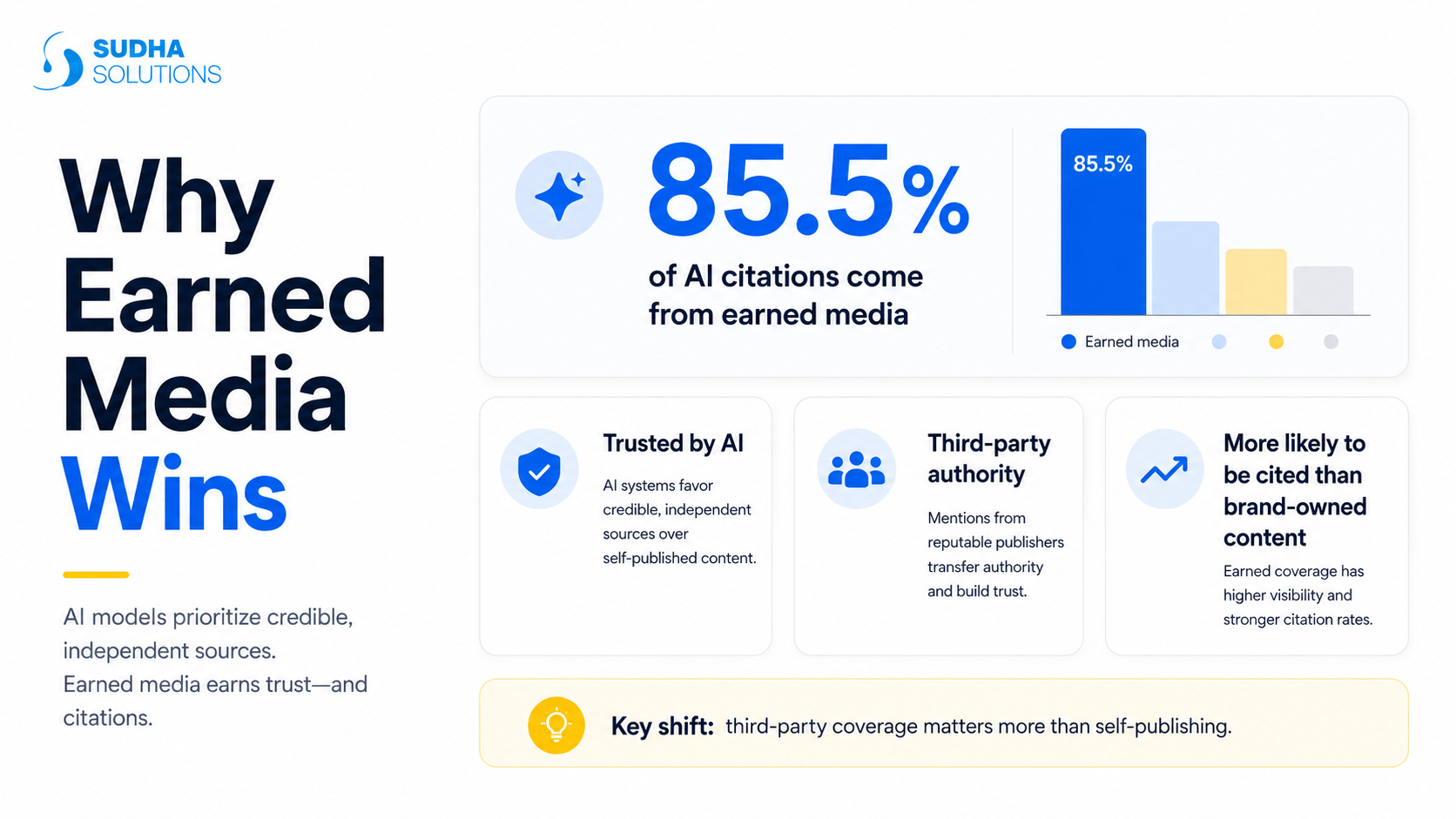
Late-2025 citation data shows that YouTube accounts for 23.3% of average AI citations, Wikipedia for 18.4%, and Google.com for 16.4%, with roughly 34% coming from news sites and industry publications, according to Topify’s analysis. These percentages shift by category and query type, but the pattern holds: a brand’s AI visibility is shaped by its presence across an entire citation ecosystem, not just its own website.
The practical process here is straightforward. Identify the specific domains the AI cites when responding to category-level queries about the brand’s space. Then ask: is the brand represented on those domains? Is it covered in the industry publications that appear? Does it have a profile on the review platforms cited? Has it been mentioned in the news sources that come up repeatedly?
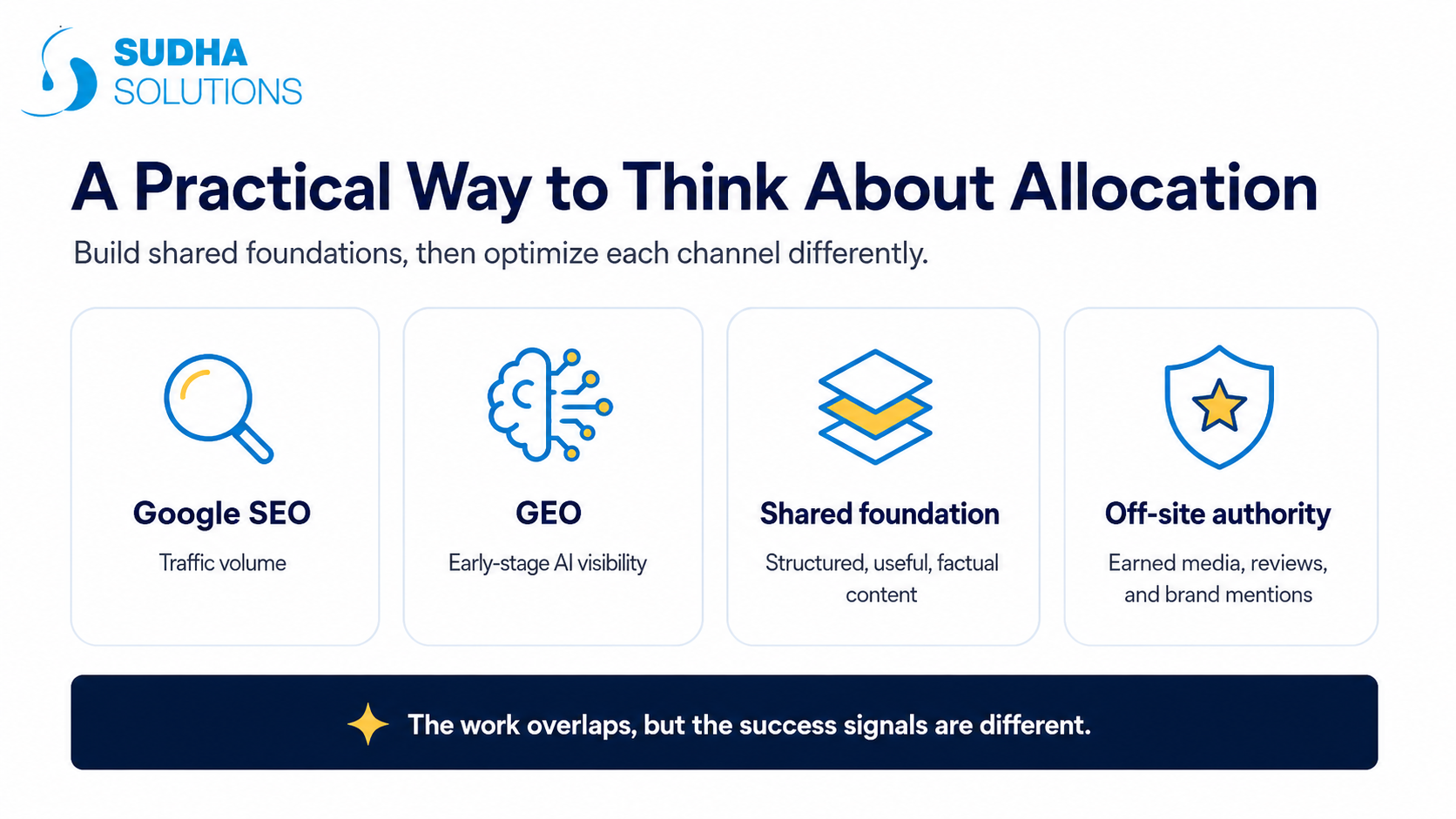
The gap between where the AI draws its citations and where the brand actually has a presence is the clearest possible roadmap for off-site work. It replaces guesswork with a specific list of domains and publications to target.
Step 5: Check the Technical Access Foundations
A brand can have strong content, good earned media, and solid entity signals — and still be invisible in AI search because of a technical problem that takes 30 minutes to fix.
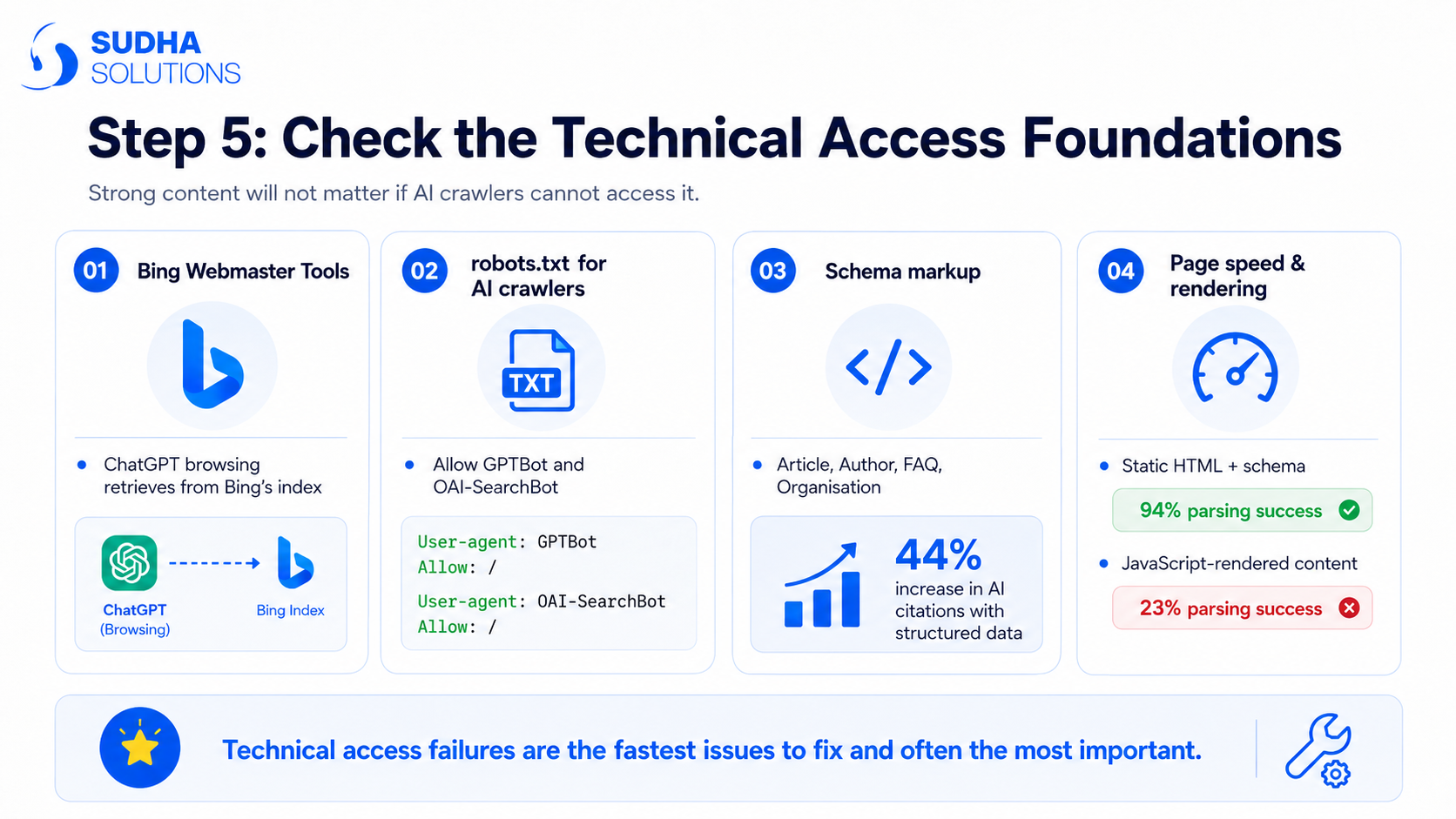
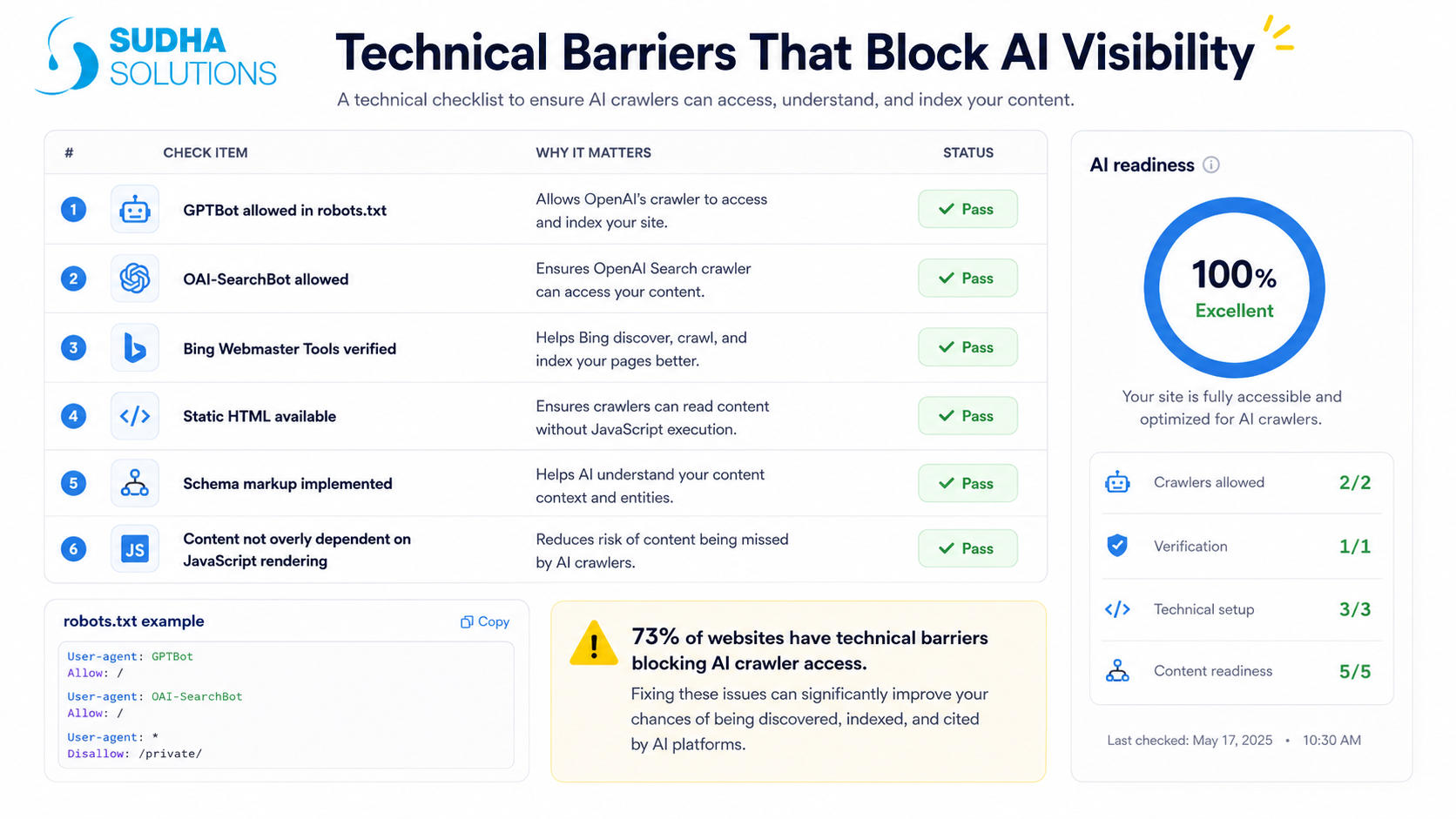
There are four technical checks worth running as part of every audit.
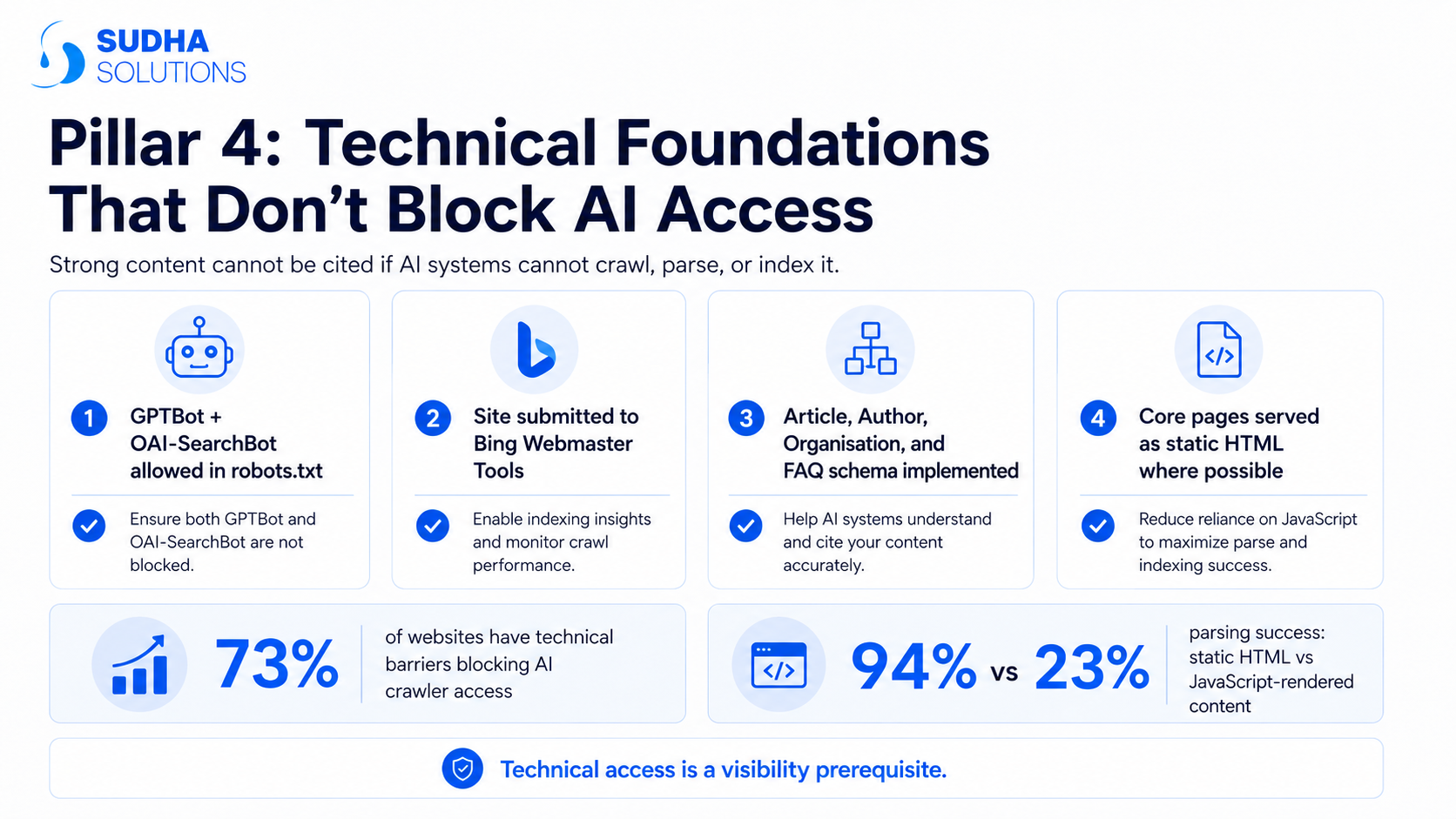
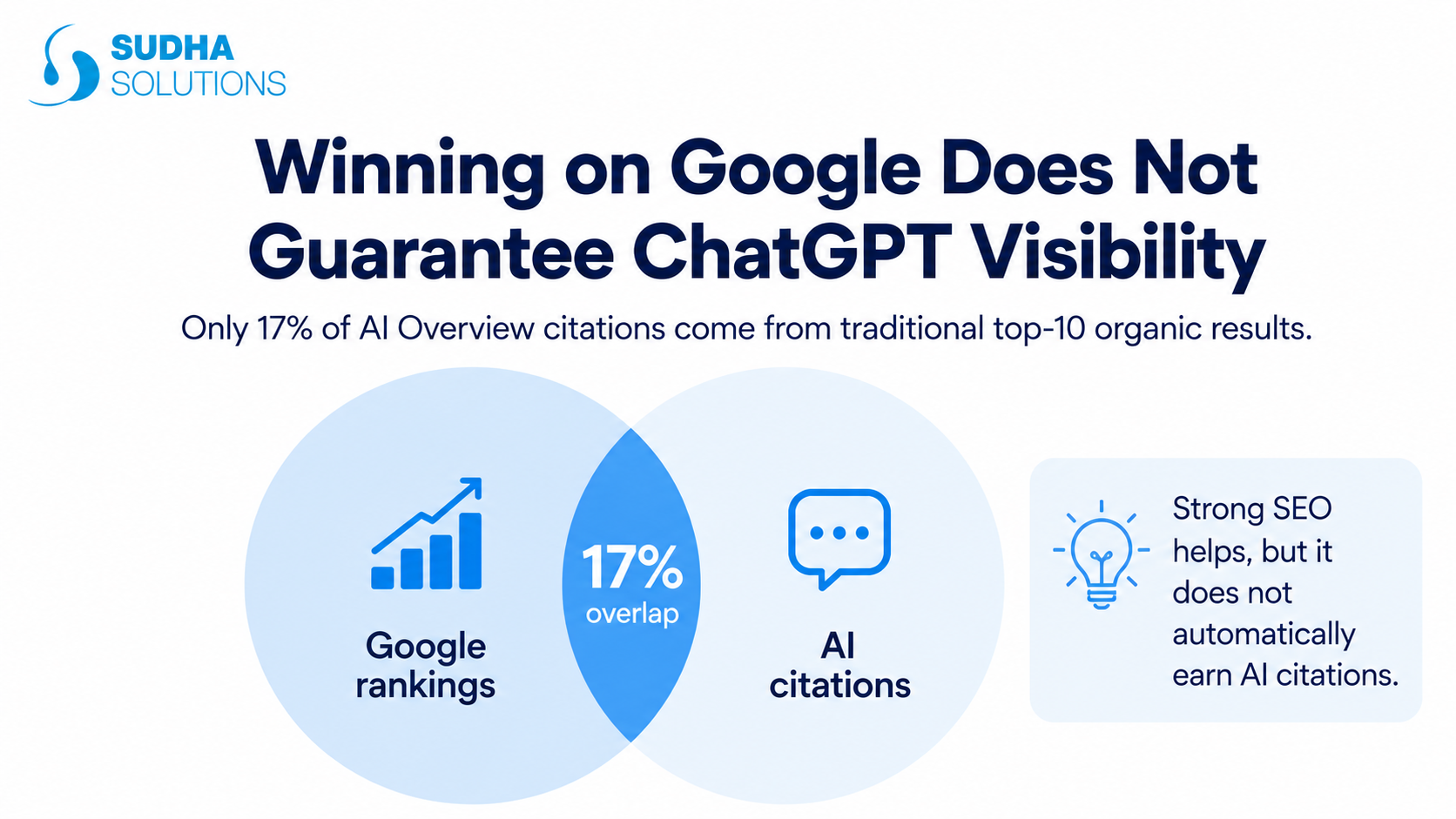
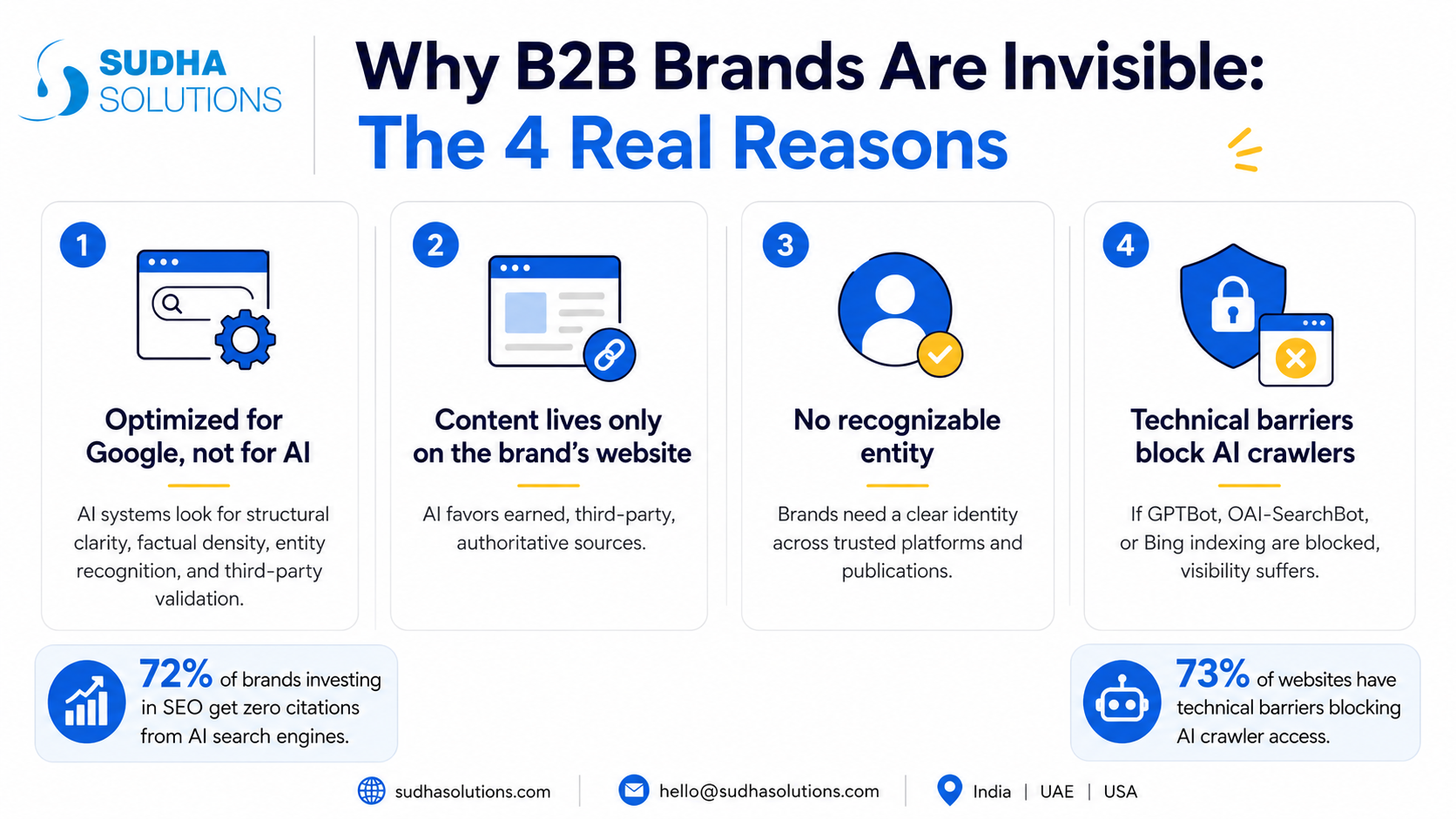
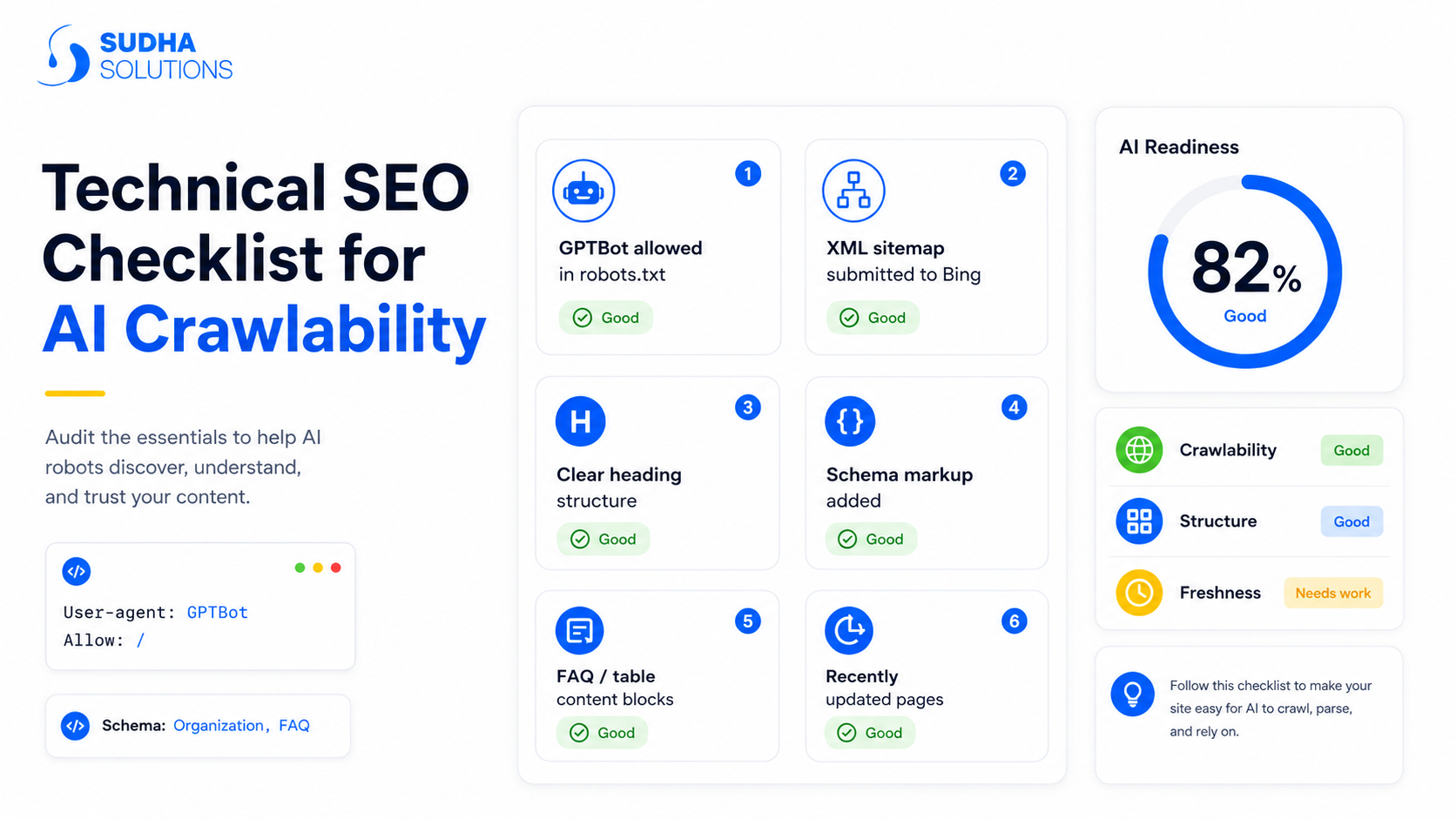
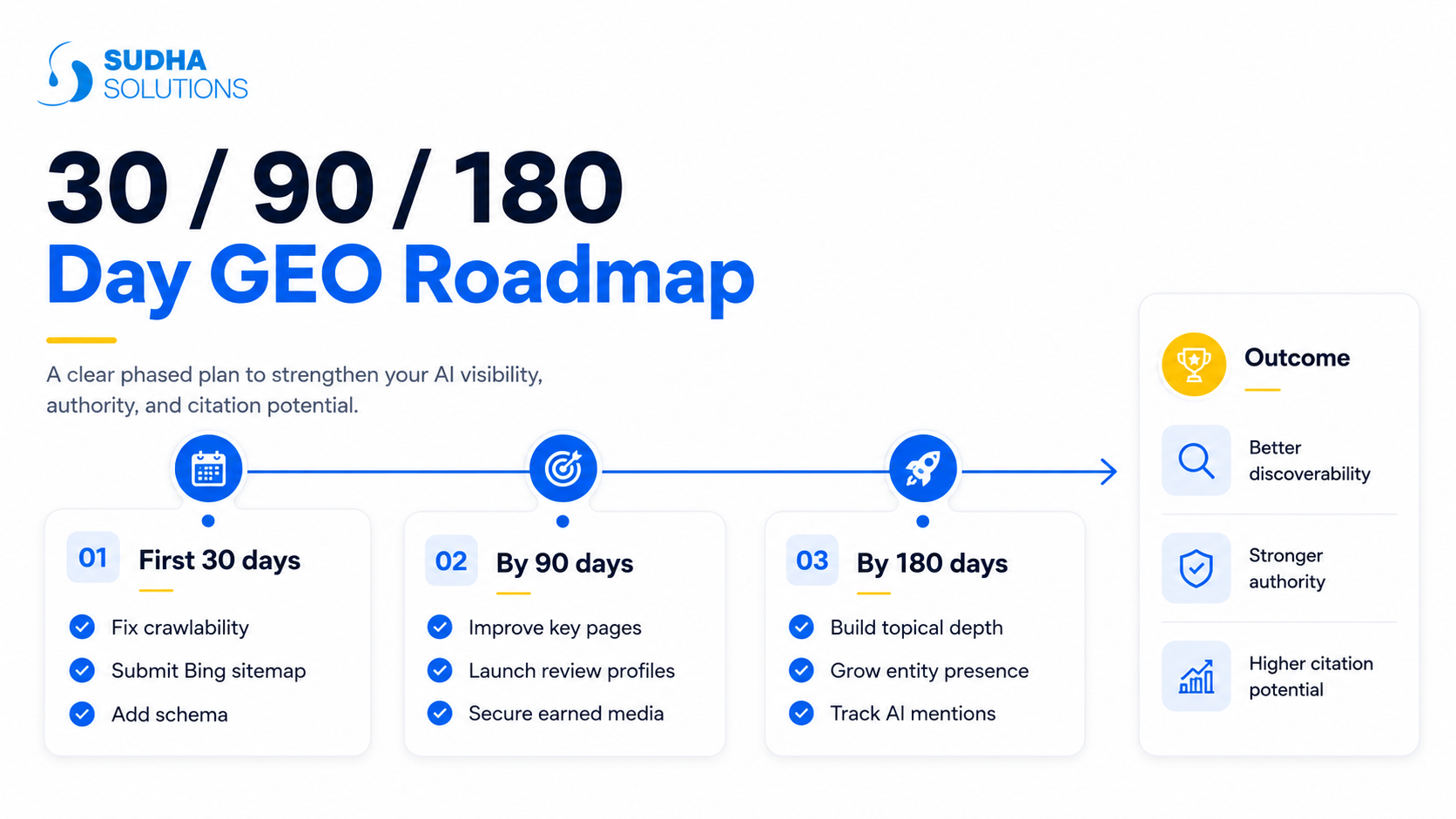
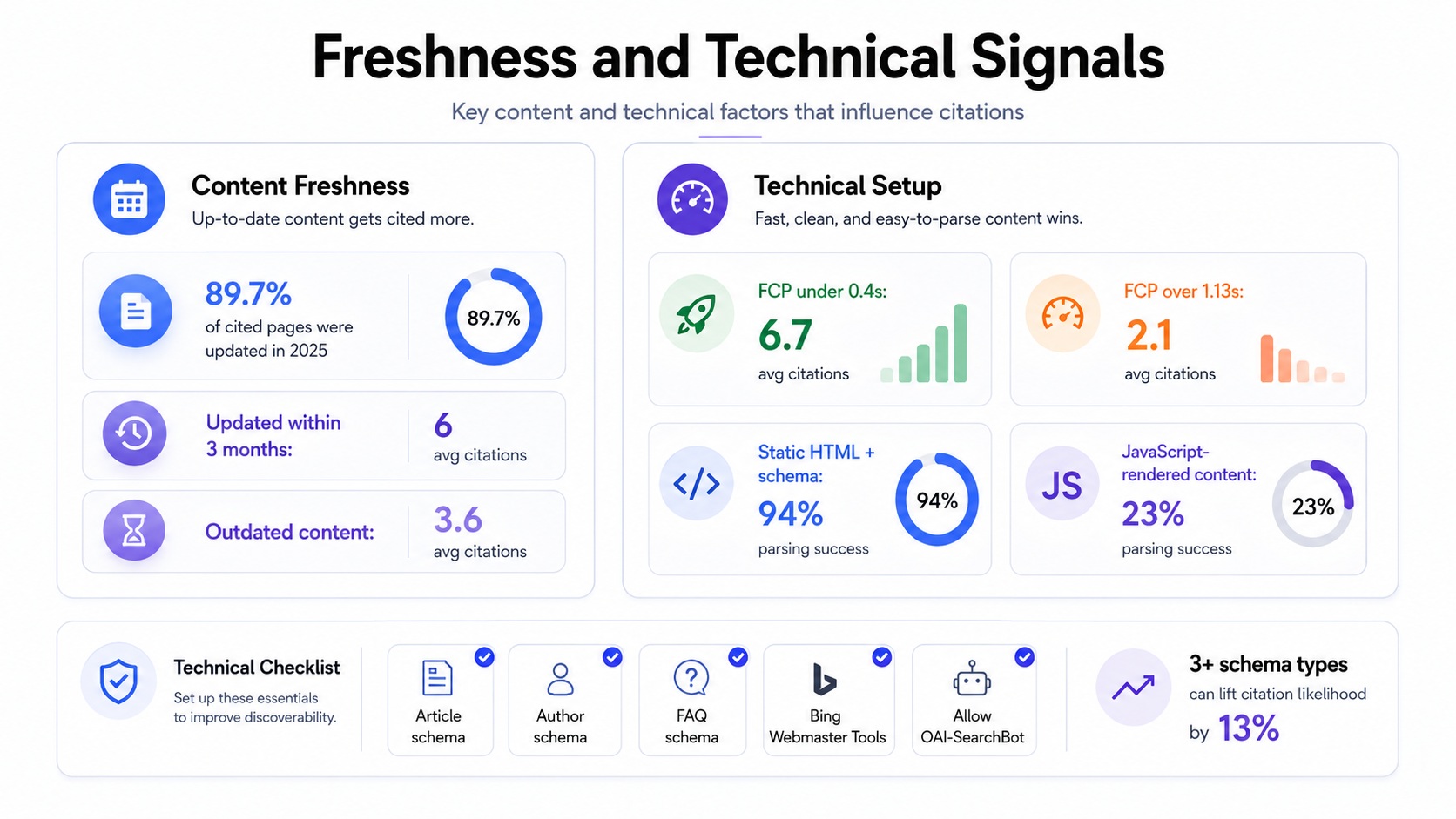
Bing Webmaster Tools. ChatGPT’s browsing mode retrieves pages from Bing’s index. If a site has not been submitted to Bing Webmaster Tools or is not being crawled by Bing, it is structurally absent from ChatGPT’s live retrieval regardless of its Google rankings. Checking this takes minutes. Fixing it, if needed, is straightforward.
Robots.txt for AI crawlers. Check whether GPTBot (OpenAI’s web crawler) and OAI-SearchBot are allowed access. Some sites block them inadvertently through broad disallow rules. A site that blocks these crawlers is telling ChatGPT not to read it. The robots.txt check is a one-line lookup that every audit should include.
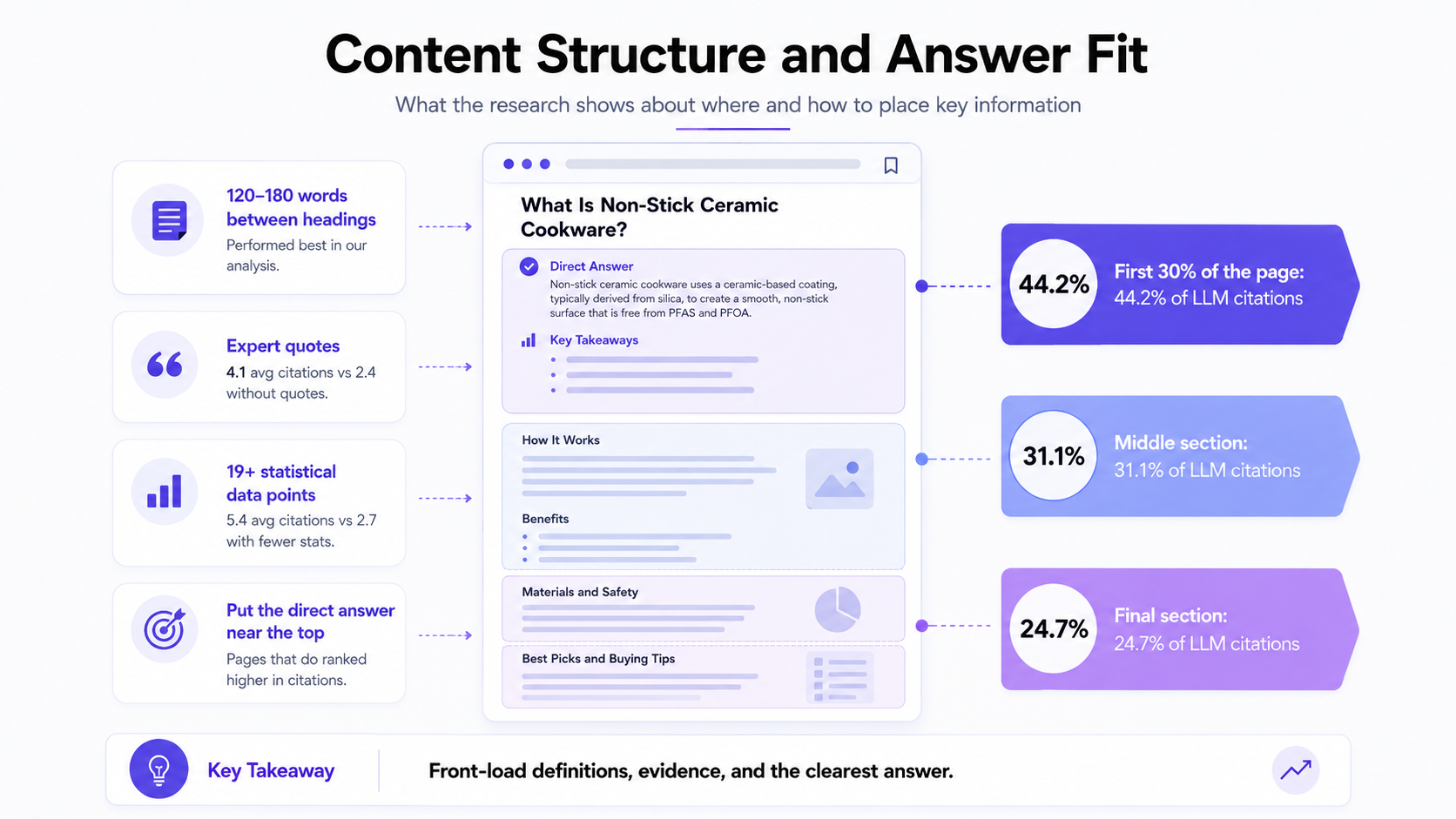
Schema markup. Sites implementing structured data and FAQ blocks saw a 44% increase in AI search citations, according to BrightEdge research. Checking whether the site has Article, Author, FAQ, and Organisation schema in place takes a few minutes using Google’s Rich Results Test or a schema validation tool.
Page load speed and rendering method. As covered in How ChatGPT Decides Which Sources to Cite, AI parsing success for static HTML with schema runs at 94%, compared to 23% for JavaScript-rendered content. If the site’s key landing pages rely heavily on JavaScript for content rendering, that’s worth flagging as a structural issue in the audit.
Step 6: Benchmark Against Competitors
A presence rate only becomes meaningful in context. Running the same prompt set for two or three direct competitors — and documenting their appearances, descriptions, and citations using the same framework — transforms an internal audit into a competitive intelligence exercise.
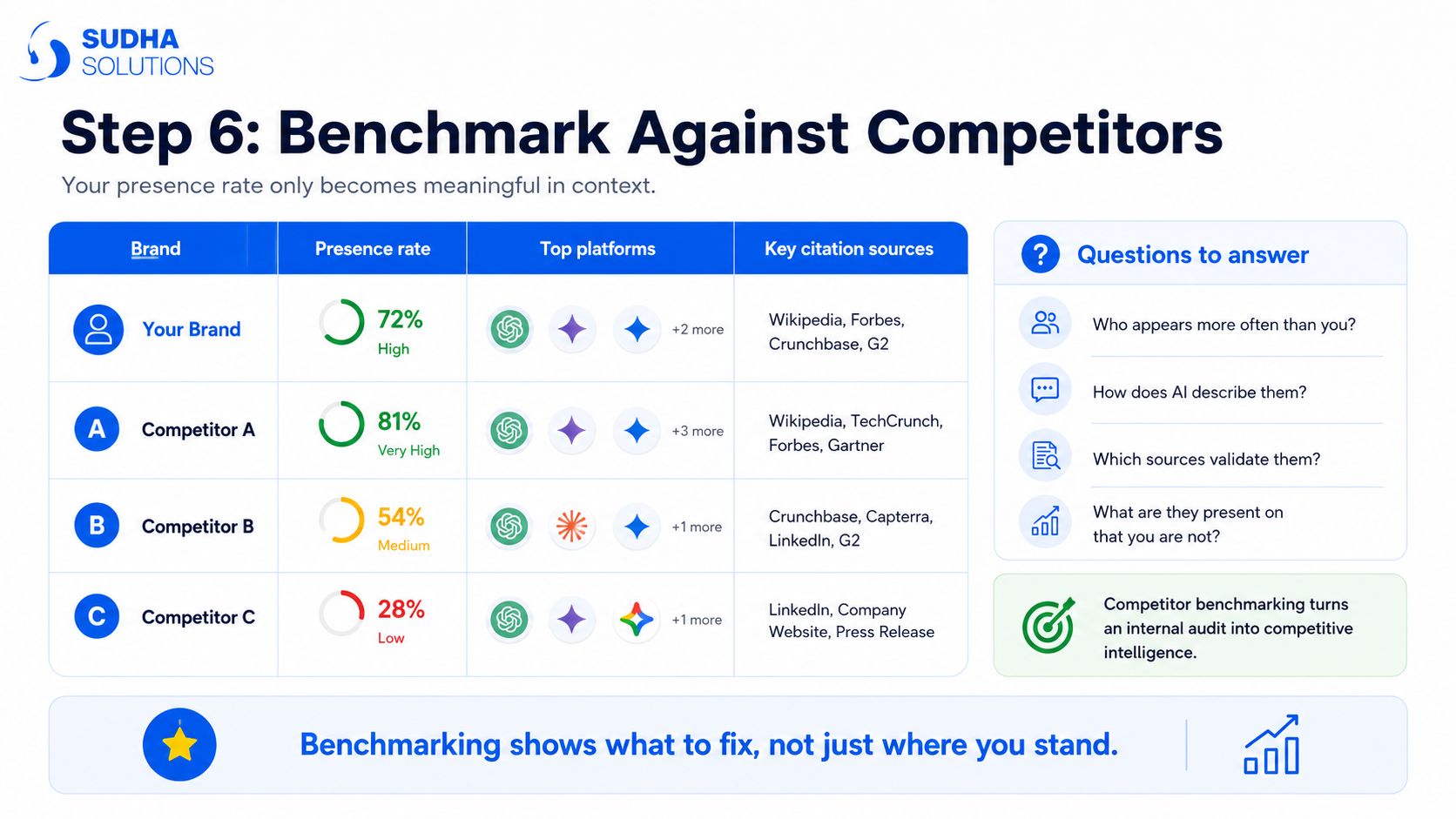
The benchmarking questions worth answering are: Which competitors appear more frequently than the brand? What language does the AI use to describe them? Which sources does it draw on when citing them? And what are those sources doing that the brand’s own content or off-site presence is not?
Ahrefs’ Brand Radar automates much of this benchmarking process for teams tracking multiple brands and platforms simultaneously. For a manual audit, the competitor analysis adds perhaps two to three hours of additional work and produces disproportionately useful intelligence.
Step 7: Build a Monitoring Cadence
Because AI responses shift frequently, a one-time audit is a starting point, not an ongoing strategy. The question is how often to re-run the process.
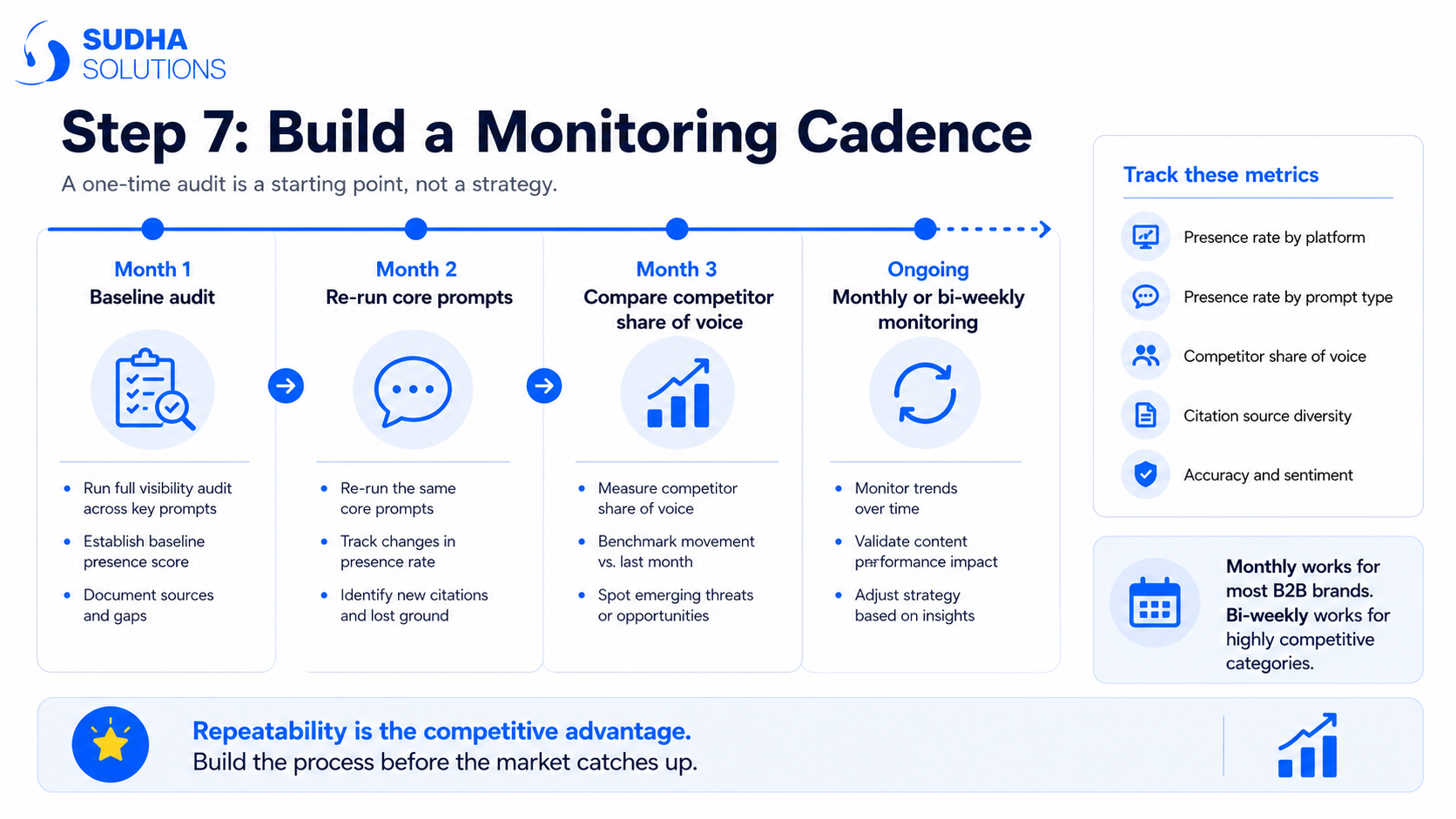
For most B2B businesses, a monthly manual audit of the core prompt set is a practical starting point. Bi-weekly is better for brands in actively competitive categories or those who have recently made significant changes to their content or off-site presence.
The key metrics to track across audit cycles are: presence rate by platform and prompt type, competitor share of voice, citation source diversity, and the accuracy and sentiment of brand descriptions. Changes in these metrics — positive or negative — are the signal. They show whether strategy adjustments are working and where new problems are emerging.
Gartner’s 2025 CMO Spend Survey found that 59% of CMOs report insufficient budget to execute their strategy, and Goodfirms’ 2026 survey found that 51.4% of marketers cite measuring and proving ROI as a top challenge. AI visibility tracking is still new enough that most marketing teams don’t yet have the processes in place to do it systematically. Building a repeatable audit cadence — even a manual one — is a meaningful competitive advantage right now. An experienced AI-powered digital marketing agency can help brands continuously track AI visibility trends and optimize content strategies for generative search.
What to Do With the Audit Results
An AI visibility audit produces four types of output, each pointing to a different kind of action.
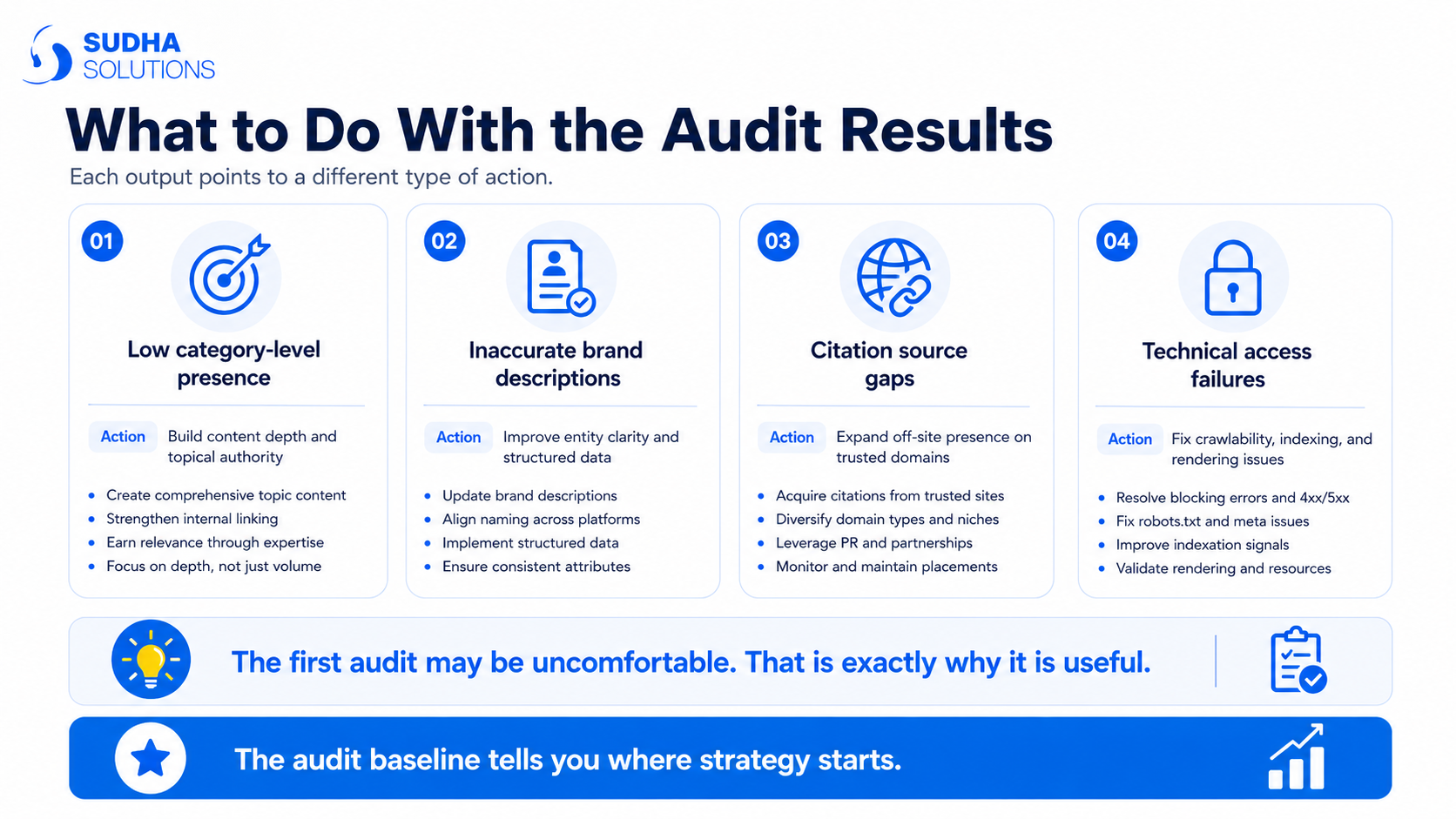
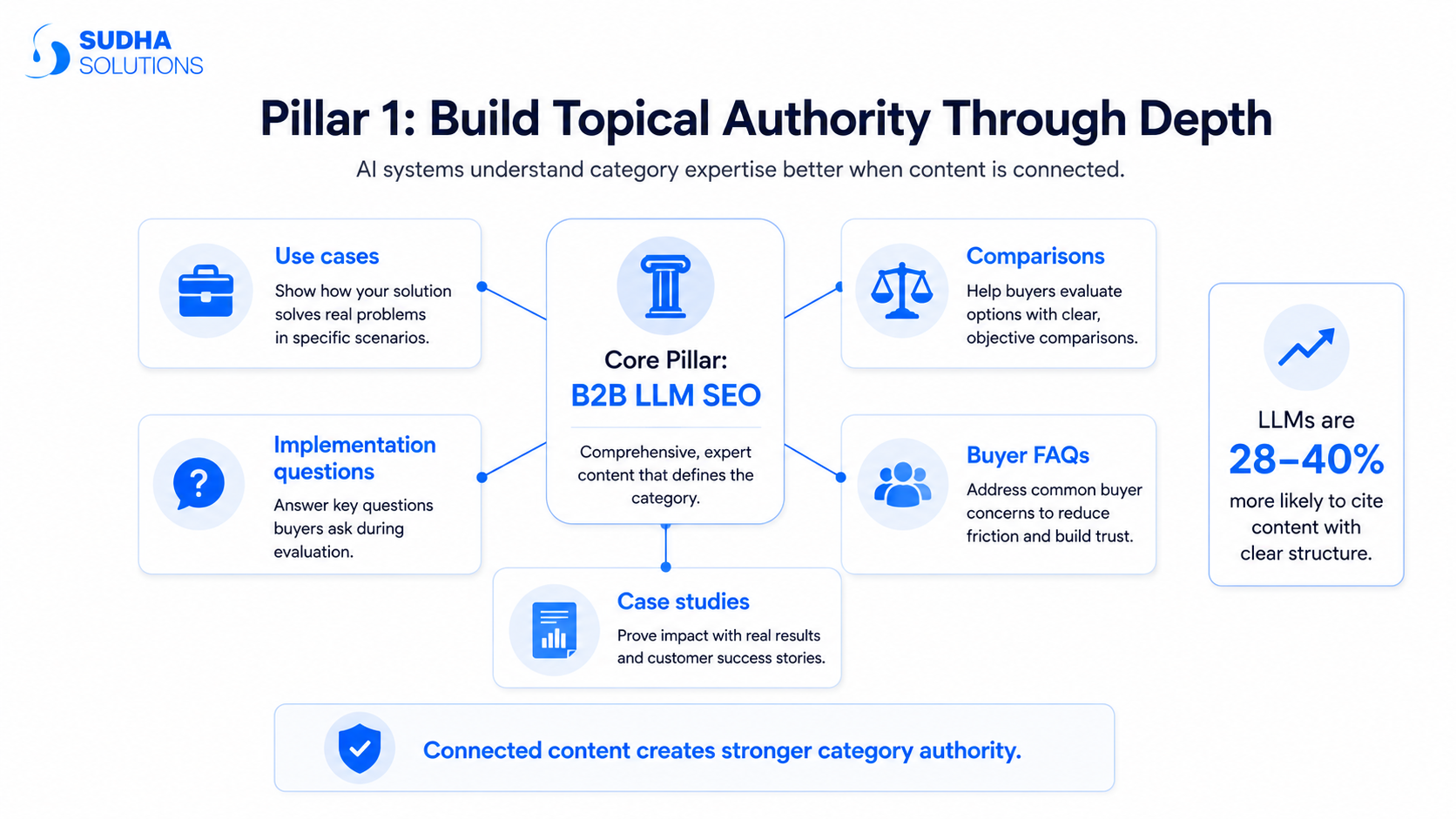
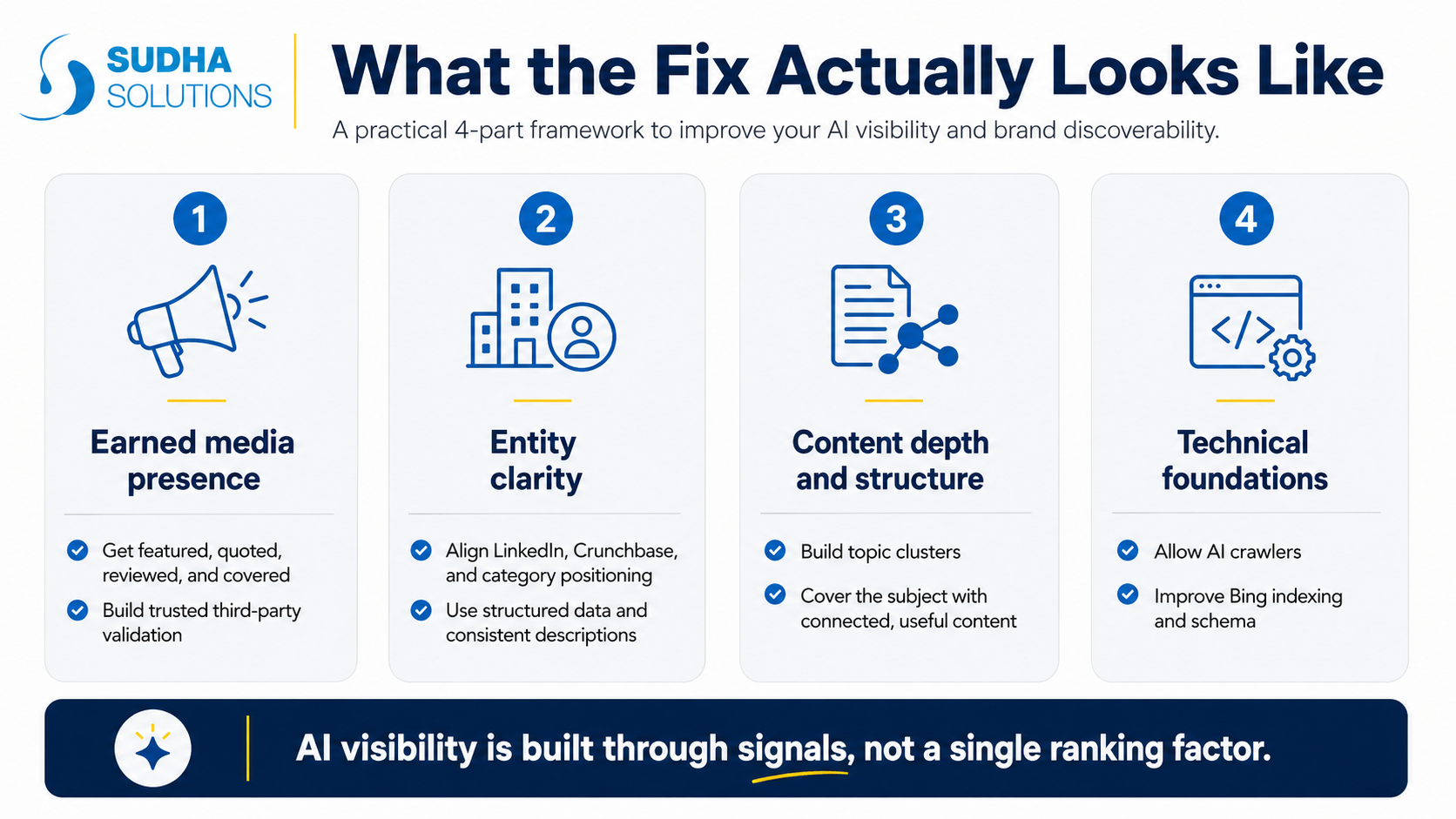
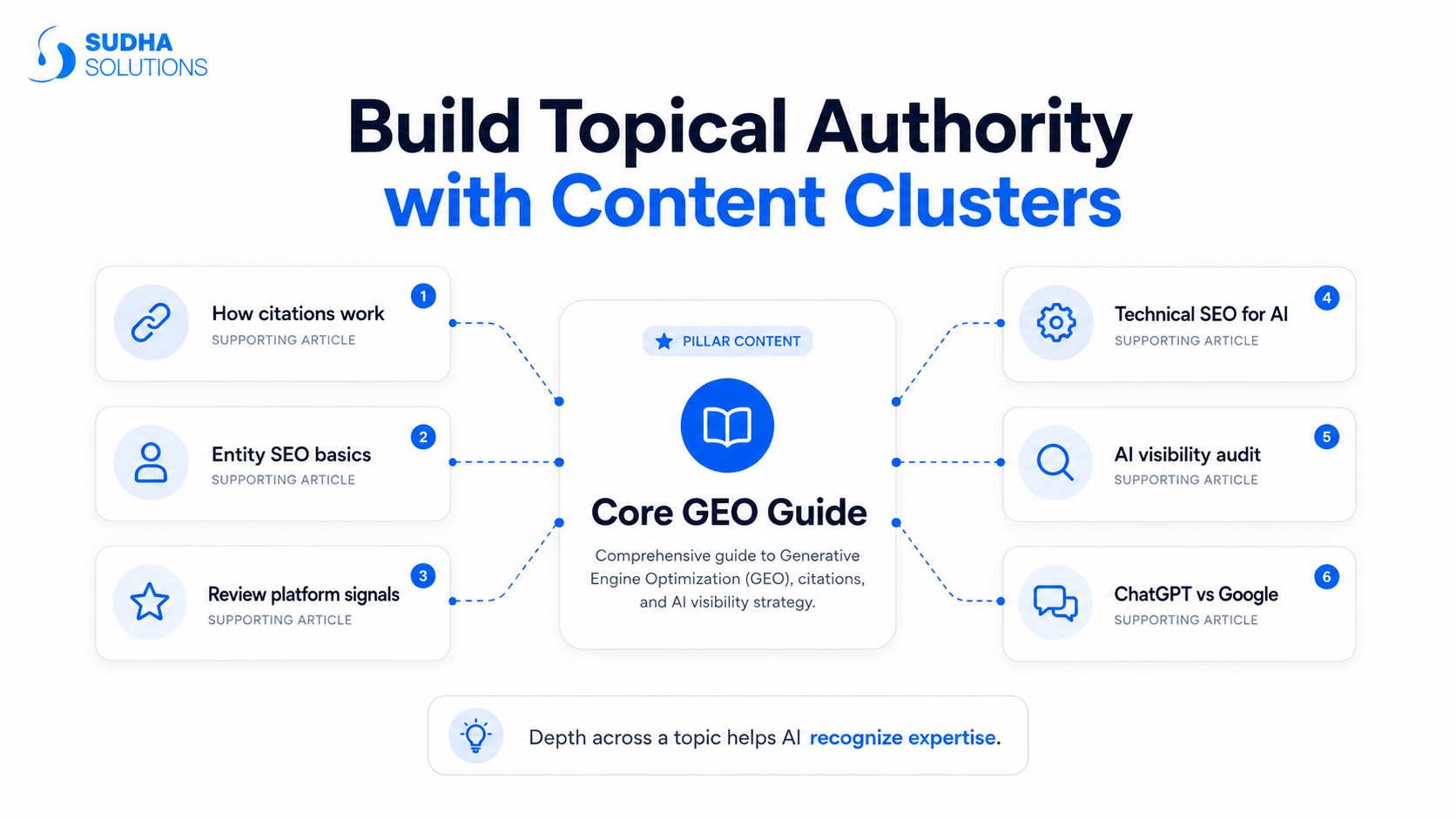
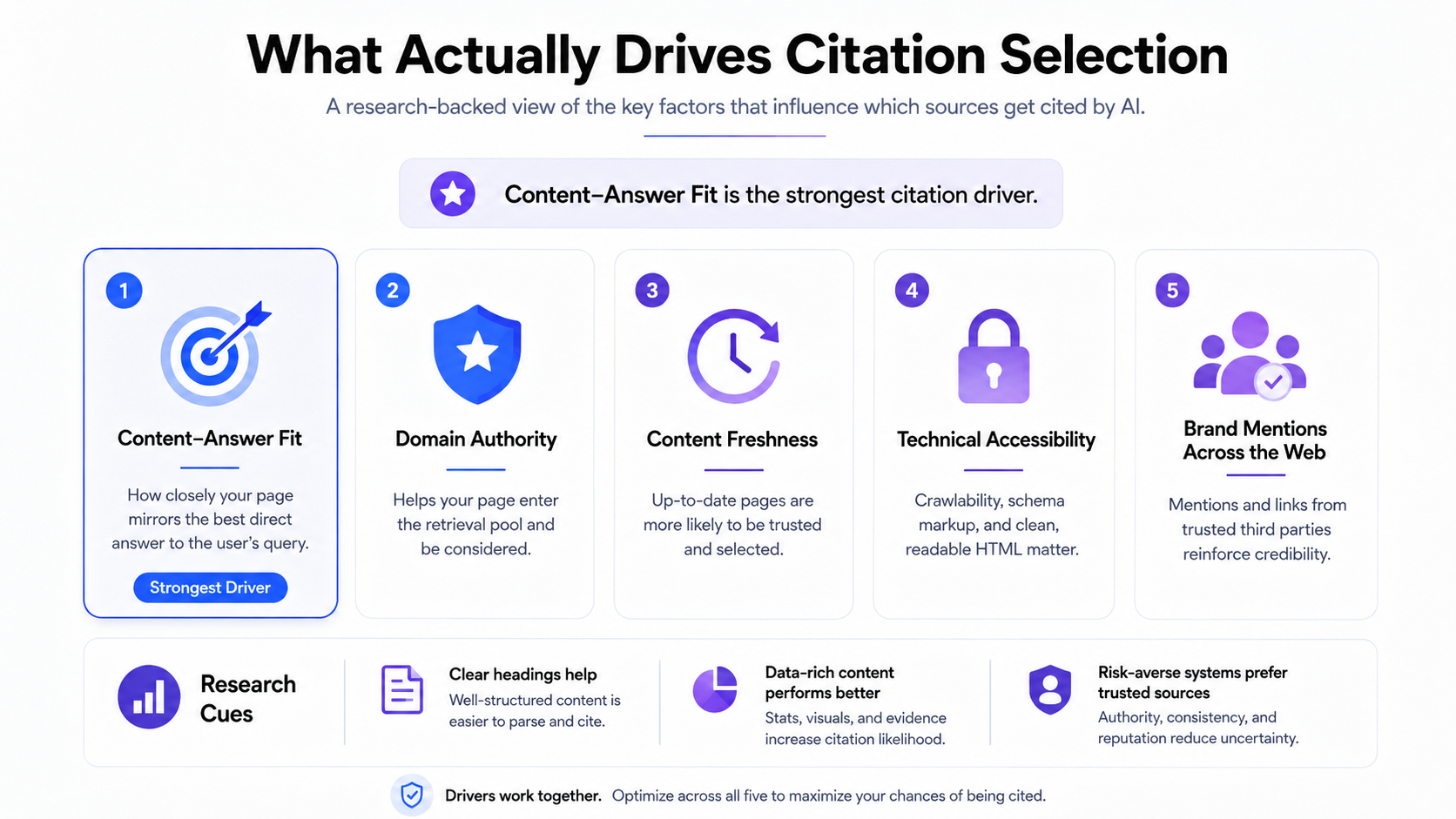
Low presence on category-level prompts points to a content depth and topical authority problem. The brand may not have sufficient content coverage for AI systems to confidently recommend it in unprompted category queries. The solution is a content strategy — not individual articles, but a cluster of interconnected pieces that together demonstrate genuine depth on the relevant subject area.
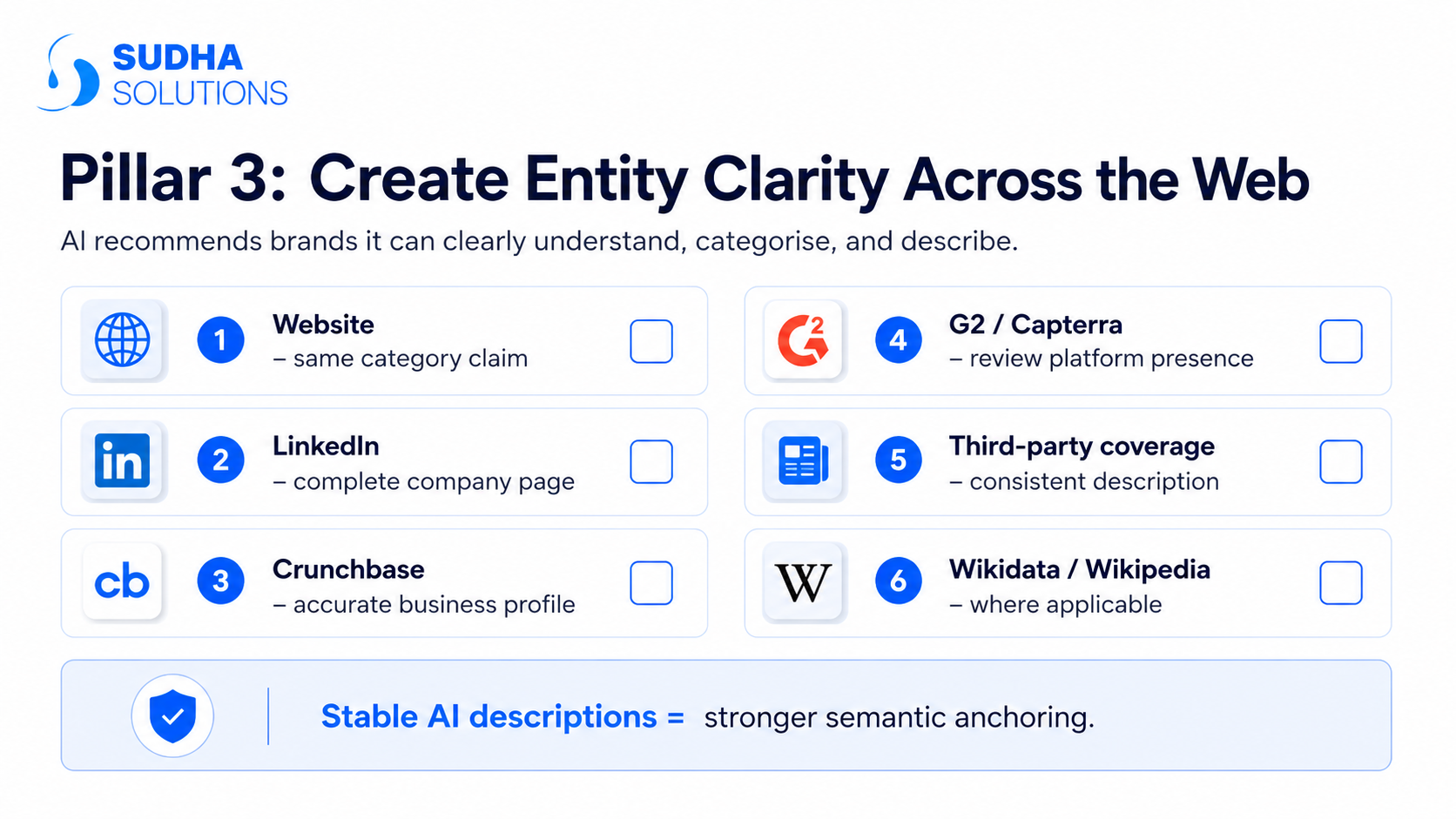
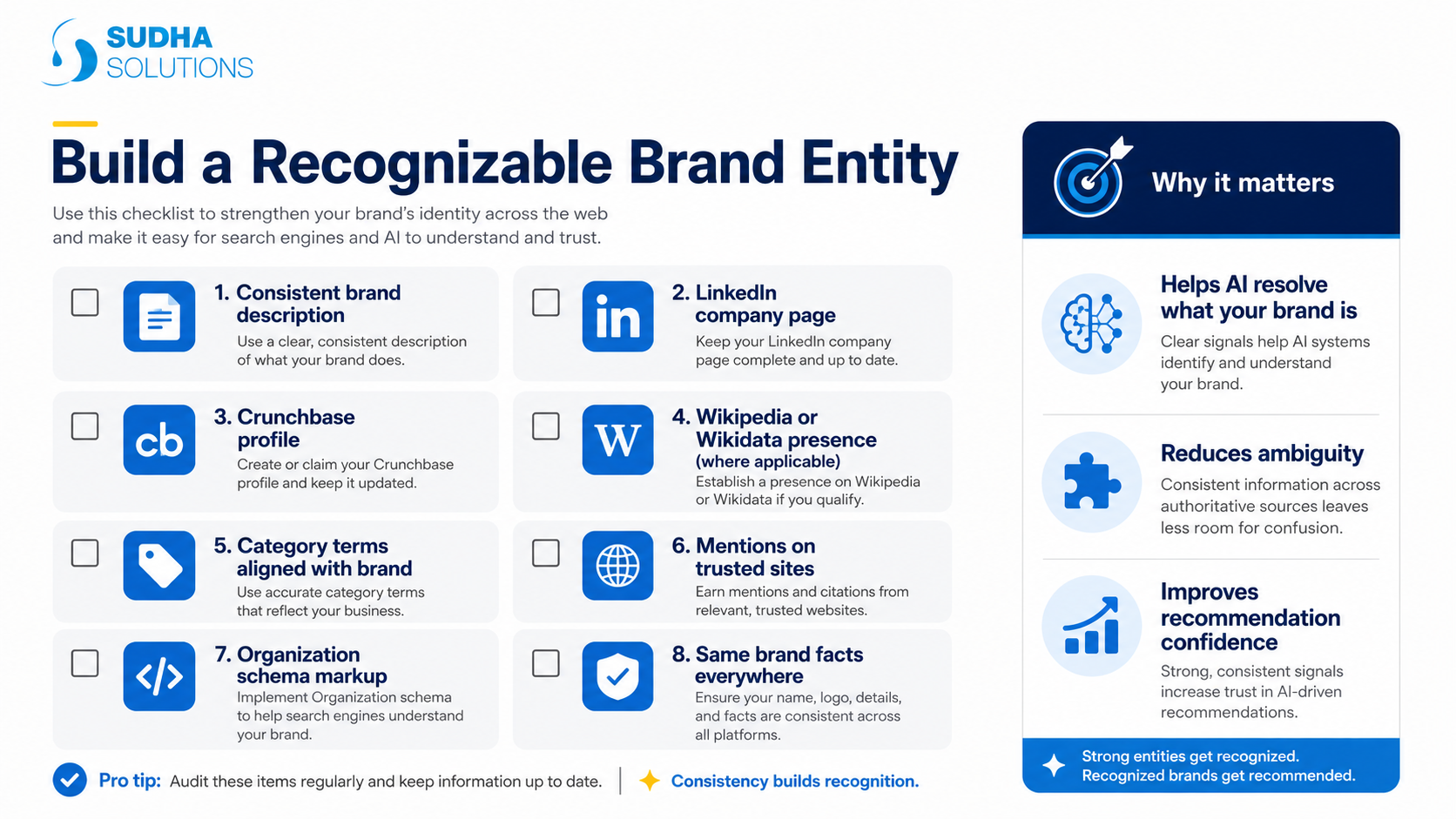
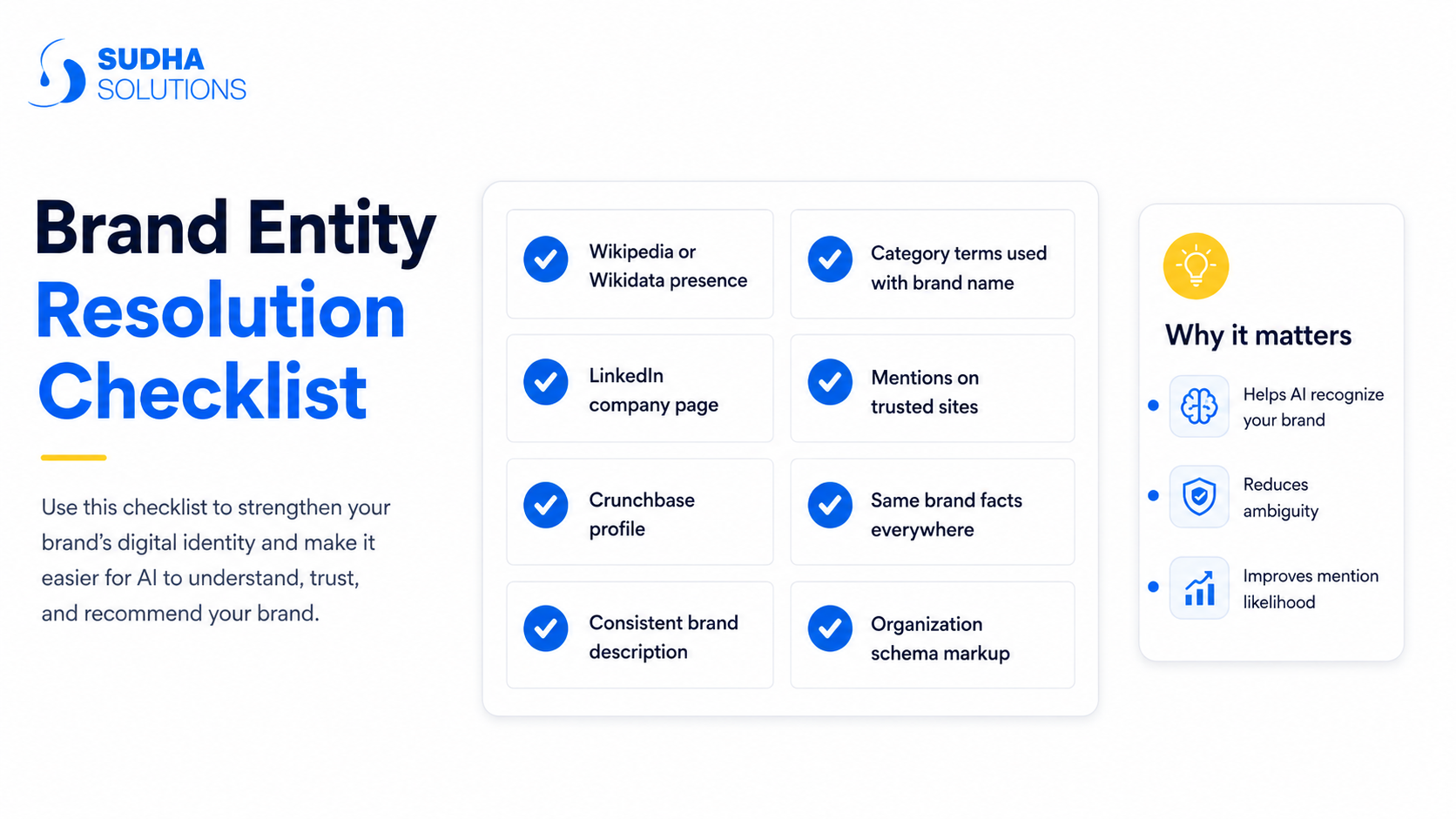
Inaccurate or thin descriptions in AI responses point to an entity clarity problem. The AI is working with incomplete or inconsistent information about the brand. The fix involves improving the brand’s structured data, updating third-party profiles and directories, and creating clearer, more consistent brand positioning signals across the web.
Citation source gaps point to off-site presence work. If AI systems are citing publications and platforms where the brand has no footprint, building presence on those specific domains is the highest-leverage external activity available.
Technical access failures point to immediate fixes. Many organizations now rely on SEO audit services for AI visibility to identify technical barriers affecting ChatGPT and AI search discoverability. These are the highest priority items in any audit because they can block everything else regardless of how good the content and off-site work is.
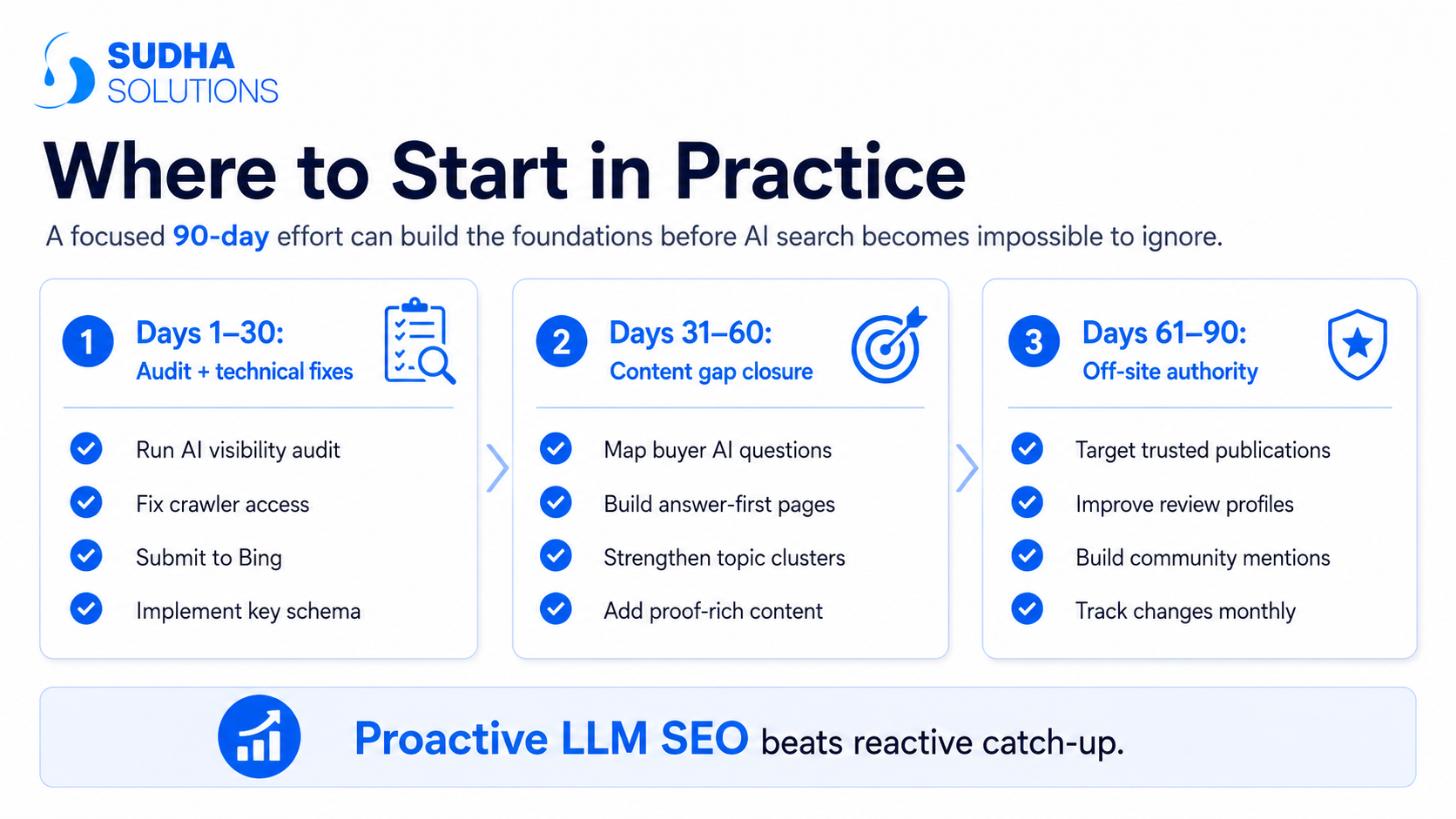
Running this audit for the first time will likely produce some uncomfortable findings. Most brands discover they have lower AI presence than they expected, competitor gaps larger than they realised, and technical issues they didn’t know existed. That’s the point. The baseline is where the strategy starts.
The next article in this series, LLM SEO for B2B Brands, goes deeper on how to build the specific content and authority signals that move these audit metrics over time.
Sudha Solutions helps businesses build visibility in AI search through content strategy, GEO, and digital marketing. Based in India, working with brands globally.
Frequently Asked Questions
How do you audit ChatGPT visibility?
You can audit ChatGPT visibility by testing brand-related prompts, tracking AI citations, monitoring competitor mentions, analyzing citation sources, and reviewing AI crawler accessibility.
Why is AI visibility important for businesses?
AI visibility is important because buyers increasingly use AI-powered search platforms like ChatGPT and Gemini to research products, services, and vendors before visiting websites.
What is the difference between SEO and AI visibility?
SEO focuses on traditional search rankings, while AI visibility focuses on how brands appear inside AI-generated answers and conversational search experiences.
How can businesses improve AI search visibility?
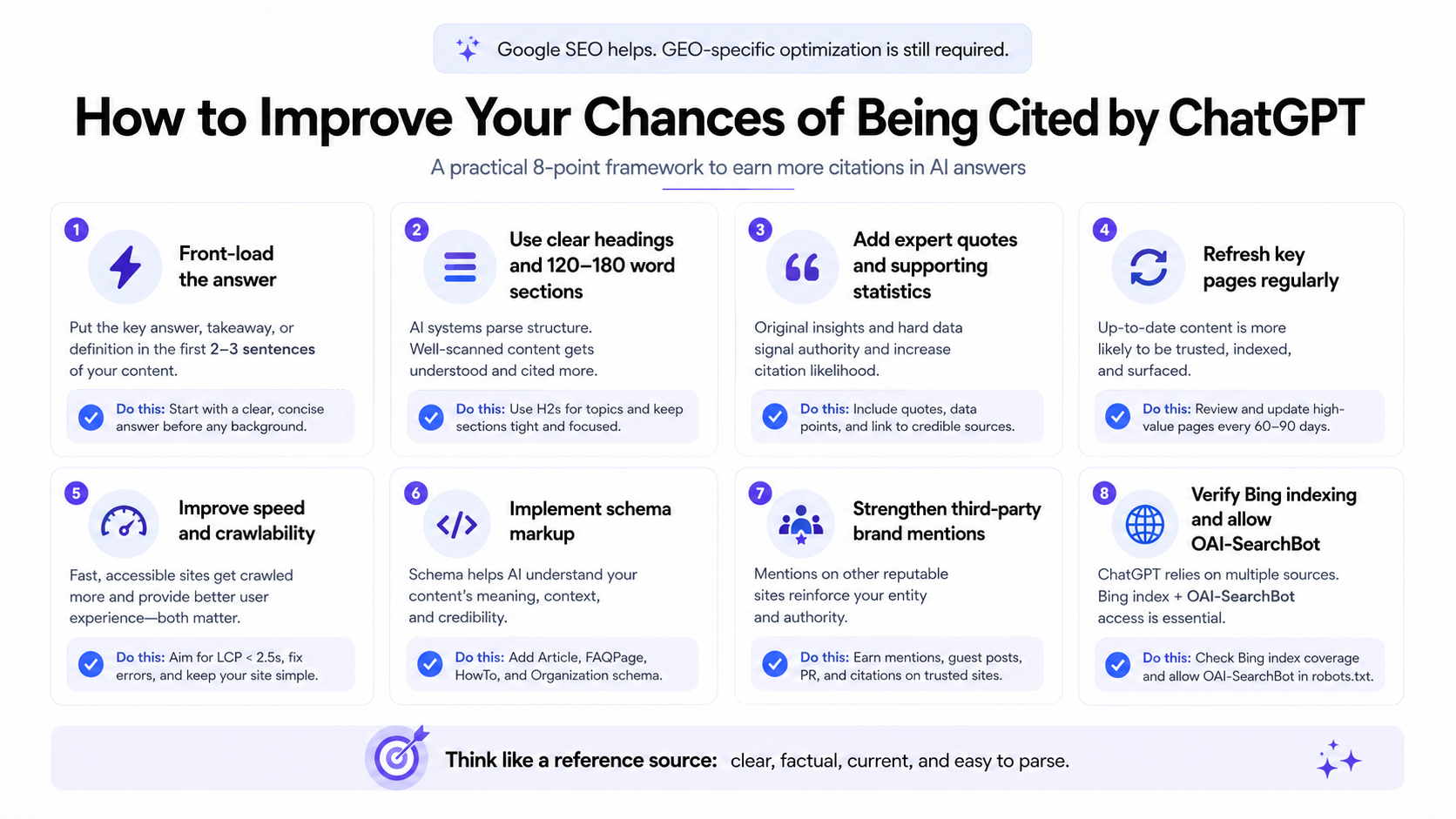
Businesses can improve AI visibility through GEO optimization, structured content, technical AI SEO, entity optimization, and stronger third-party authority signals.