Sudha Solutions

Categories
Ecommerce General SEO

10 Ecommerce Website Features That Will Boost Your Conversions in 2026

Let’s start with something most e-commerce teams don’t like hearing:

Your website is probably leaking revenue at multiple points and you don’t even see it.

Not because your product is bad. Not because your pricing is off.

But because somewhere between:

  • Landing on your site
  • Browsing your products
  • Reaching checkout

…the experience breaks.

And when that happens, users don’t complain.
They just leave.

According to Baymard Institute, over 70% of e-commerce carts are abandoned. After working across multiple ecommerce brands, including beauty, lifestyle, and D2C, we can confidently say:

Most of that abandonment is preventable.

Brands facing these challenges often work with conversion-focused SEO expert services to identify and fix hidden revenue leaks across their ecommerce funnel.

At Sudha Solutions, we’ve spent years fixing exactly these leaks, sometimes improving conversions not by redesigning everything, but by removing very specific friction points.

Here’s a list of 10 E-commerce website features that can boost your conversions in 2026.

Key Takeaways:

  • Speed = revenue: a 0.1s faster load time lifts conversions by 8.4%. If your LCP is over 2.5s, you’re losing money.
  • Forced sign-ups kill checkouts: 19% of shoppers abandon because of mandatory account creation. Guest checkout is non-negotiable.
  • Mobile-responsive ≠ mobile-first: 78% of retail traffic is mobile. Thumb-zone layouts and sticky CTAs are what convert.
  • Trust wins before checkout: social proof on PLPs, upfront shipping costs, and clear return policies remove hesitation before it builds.
  • Retention beats acquisition: repeat customers convert at 70% vs. 20% for new visitors. Your post-purchase experience is your most underused growth lever.

1. Page Speed Optimisation (The Silent Revenue Killer)

largest contentful paint

Let’s be honest, with the steeply decreasing attention span, nobody is waiting more than 5 seconds for a website to load.

In fact, in Hostinger’s website load time statistics 2026, it clearly says that “Nearly half of users expect a website to load within two seconds or less”.

And the more shocking news is that even a one-second page delay can cut conversions by 7%, potentially costing large businesses millions in lost revenue.

On the other hand, improving load time by just 0.1 seconds can increase conversions by 8.4% for retail websites.

That’s why in ecommerce performance optimisation matters most.

Run your site on PageSpeed Insights.

If Largest Contentful Paint (LCP) > 2.5s → you are clearly losing revenue.

Businesses should prioritise:

  • Optimising images
  • Instil a clean code
  • Have faster server response

Because in ecommerce, speed = trust.

Improving performance metrics like LCP often requires technical expertise, which is why many brands rely on technical SEO services to optimise site speed and infrastructure.

2. Mobile-First UX (Not Responsive; Mobile-First)

Mobile-First UX

According to Statista’s research on retail website visits and orders worldwide (3rd Quarter, 2025), Mobile devices alone generate 78% of all retail traffic worldwide.

Yet most websites are still a shrunk-down of a desktop-first website, impacting engagement rate and catapulting cart abandonment rates.

What most website have:

  • Cluttered layout
  • Hard to navigate
  • CTA-hidden

On the other hand, a high-converting mobile UX includes:

  • Sticky “Add to Cart”
  • Thumb-zone optimised layout
  • Minimal form inputs

Sudha Solutions Case Study – Colorbar Cosmetics

Colorbar was losing engagement and conversions due to an outdated, desktop-first experience. We rebuilt their platform with a mobile-first architecture and streamlined UX flows.

The result? A 55% increase in overall conversion rate and 2X growth in mobile conversions, without changing a single product or price point.

3. Ecommerce Product Page Optimisation

Ecommerce Product Page Optimisation

Lack of product page optimisation is one of the top reasons for cart abandonment.

Most product pages don’t fail because of lack of information. They fail because they don’t answer the right questions.

While shopping, users are constantly thinking:

  • “Will this work for me?”
  • “Can I trust this brand?”
  • “What if I need to return it?”

That’s what e-commerce product page optimisation is really about. To simplify user search and allow them to make confident purchases with zero trust issues.

High-converting product pages are often built with the help of content marketing experts who focus on clarity, trust signals, and conversion-driven messaging.

This is why having a clear and intuitive navigation menu that allow consumers to easily explore different product categories and find exactly what they are looking for.

Key elements to include:

  • sticky CTAs
  • trust badges
  • social proof

Sudha Solutions Case Study – Manyavar

Manyavar, with a vast inventory, had cluttered product pages, making discovery and purchase decisions harder than they needed to be. We redesigned both pages with cleaner UI, smarter product layouts, and trust-first information architecture.

The result? measurably improved online visibility and a direct uplift in sales conversions across their fashion catalogue.

4. High-Impact Visual Commerce (UGC + Video + AR)

High-Impact Visual Commerce

What’s the answer to people wondering, “Will this look good on me?” while shopping online for a lipstick?

We say, product videos and images. Or even better have them try it on themselves with ‘Try-On’ features.

If your industry demands, you can even instil AI-powered customizers with live 3D/AR previews.

Why? Because users don’t want to imagine. They want to see the product in their life.

E-commerce websites must include:

  • Lifestyle images
  • Size reference
  • Product videos
  • Try-before-you-buy (AR)
  • Real customer photos & reviews

Especially in categories like beauty and fashion. This helps reduce uncertainty from the consumers’ mind and boost CTR.

Even Shopify reports products with video see up to 80% higher conversion rates.

5. AI Chatbots & Assisted Shopping

Not all users are ready to buy immediately. Sometimes they just need a little help.

That’s where AI chatbots and assisted shopping change the game.

What a well-built ecommerce chatbot actually does:

  • Answers product-specific questions instantly (“Does this come in XL?”, “Is this fragrance-free?”)
  • Guides users through category selection (“I’m looking for a gift under ₹2,000 for my mom:)
  • Surfaces the right product at the right moment, based on intent, not just keywords
  • Handles post-purchase queries (order status, returns) reducing support load by up to 30%

Beyond chatbots, try implementing smart ecommerce systems like:

  • “You may also like”: cross-sell at the product level
  • Recently viewed: re-engage hesitant browsers
  • Dynamic homepage: different entry experience based on visit history or segment
  • Personalised discounts and offers: triggered by behaviour, not just cart value

According to McKinsey & Company, hyper-personalised features like these can drive 10–30% revenue uplift, because they reduce the cognitive load of discovery and make users feel like the site was built for them.

6. E-commerce Checkout Optimisation

E-commerce Checkout Optimisation

The brutal truth? Most brands don’t lose sales because of bad products or weak marketing. They lose them in the last 60 seconds of the purchase journey, on a checkout page they haven’t touched in two years.

What kills checkout conversions:

  • Forced account creation before purchase
  • A 5-step checkout that should be 2
  • Shipping costs appearing for the first time at payment
  • No Apple Pay, no UPI, no preferred payment method in sight
  • Forms that don’t autofill, on a mobile screen, in 2026

According to Baymard Institute,

  • 18% of users abandon because the checkout process is too long or complicated
  • 19% abandon because the site wanted them to create an account first

reasons for abonding online

That’s nearly 1 in 5 ready-to-buy customers walking away because of a UX decision that costs nothing to change.

What a high-converting checkout looks like:

  • Guest checkout
  • One-page or two-step checkout
  • Autofill and address detection
  • Transparent pricing from the start
  • Multiple payment options

One more thing most brands underestimate: checkout page speed. If your checkout loads slowly, users assume the payment process is broken. It’s the most important page on your site. Treat it that way.

7. Advanced Filters and Sorting (Search + AI Filters)

Advanced Filters and Sorting

When a user lands on a category page with 400 results and no way to narrow them down, they don’t browse through all 400. They leave. That’s decision fatigue and it’s one of the most silent conversion killers in ecommerce.

This is where filters and search can simplify decision-making.

What high-converting discovery looks like:

  • Predictive search with auto-suggestions
  • Typo-tolerance: “lipstick” and “lipstick” should return the same results.
  • Intent-based filtering: filters that match how users actually think
  • Smart sorting: not just “Price: Low to High” but “Most relevant,” “Best reviewed,” “New arrivals,” “Trending now”
  • Zero-results handling: when a search returns nothing, show alternatives, not a dead end

The rule is simple: the easier you make discovery, the faster users reach purchase confidence.

8. Predictive, Omnichannel Personalisation

Today’s shopper doesn’t want to browse through 500 products. They want the site to know them: their style, their price point, their history, and surface exactly what they’re likely to buy.

That’s what predictive personalisation does. It uses browsing behaviour, purchase history, device type, and even location data to serve a uniquely tailored experience to every visitor.

Brands implementing these strategies often collaborate with content marketing experts to deliver consistent, personalised messaging across all customer touchpoints.

What this looks like in practice:

  • Homepage that changes based on past visits or category interest
  • “Picked for you” product feeds powered by ML recommendation engines
  • Location-based offers. E.g., showing winter coats to users in colder regions
  • Re-engagement nudges for users who browsed but didn’t buy

But here’s the part most brands miss: personalisation isn’t just one touchpoint. It has to be omnichannel, consistent whether your user is on your app, website and even WhatsApp.

Broken omnichannel = broken trust.

According to Salesforce, 76% of consumers expect consistent interactions across departments and those that get it are 2.4x more likely to convert.

9. AI-optimised Dynamic Pricing & Urgency

Here’s something the biggest ecommerce players have known for years:

The price you show isn’t always the final price. It’s a variable, optimised in real-time.

Amazon reportedly changes prices 2.5 million times a day. While that level of sophistication may not be realistic for every brand, the principle holds: static pricing leaves money on the table.

What dynamic pricing looks like for ecommerce brands:

  • Competitor-aware pricing: automatically adjusting when a competitor runs a sale
  • Demand-based pricing: increasing prices during high-traffic periods
  • Loyalty pricing: showing member-only prices to logged-in users
  • Bundle pricing: smart suggestions like “Buy 2, save 15%”

Pair this with urgency mechanics: and you’ve got a powerful conversion engine:

  • Low stock indicators (“Only 3 left!”)
  • Flash sale countdown timers
  • “X people are viewing this right now”
  • Cart reservation timers at checkout

We did the exact the same thing for one of our leading ethnic fashion brands in India and saw a steep 1.9X increase in cart recoveries!

10. Post-Purchase Experience Optimisation

Most ecommerce brands treat conversion as the finish line.

The most successful brands treat it as the starting line.

The post-purchase phase, from order confirmation to delivery to follow-up, is where loyalty, LTV (lifetime value), and word-of-mouth are either built or broken.

And it’s almost entirely overlooked.

What a high-converting post-purchase experience looks like:

  • Order confirmation page with upsells: “Complete your look” or “You might also need” (this is your highest-intent moment)
  • Proactive delivery updates not just “your order is confirmed” but “your order is out for delivery”
  • Post-delivery review request
  • “Thank you” discount for next purchase: converting a first-time buyer into a second-time buyer is your highest-ROI acquisition
  • NPS or satisfaction survey: short, mobile-friendly, automated

The brands that dominate ecommerce in 2026 are retention engines and they do not miss post-purchase experience optimisation at any cost.

Repeat customers spend 67% more than new customers (Bain & Company). The post-purchase experience is the most underinvested, highest-returning area in e-commerce today.

What Separates High-Converting Ecommerce Sites from the Rest

After working across beauty, fashion, lifestyle, and D2C brands, one pattern becomes very clear:

The brands that win aren’t doing more. They’re removing more.

More friction has been removed from checkout. More confusion removed from product pages. More hesitation is removed through social proof.

Conversions don’t spike because you added a feature. They spike because you stopped making users work for a reason to trust you.

Here’s the honest framework:

Area What to Fix Impact
Speed LCP > 2.5s = revenue leak High
Mobile UX Thumb-zone, sticky CTA High
Product Page Trust badges, UGC, clear CTA High
Checkout Guest checkout, no hidden costs Very High
Personalisation Dynamic homepage, recommendations Medium-High
Post-Purchase Upsells, follow-up, retention High (long-term)

How to Prioritise These Improvements

You don’t need to implement all these features at once.

In fact, trying to do everything at once is one of the most common reasons ecommerce teams see no improvement: scattered effort produces scattered results.

Start here:

  1. Run a conversion audit: identify your biggest drop-off points using tools like Hotjar, GA4, or Microsoft Clarity
  2. Fix speed first: it affects everything downstream
  3. Optimise your highest-traffic product pages: these are your biggest opportunity
  4. Simplify checkout: even one less step can meaningfully move conversions
  5. Layer in personalisation and retention: once the funnel is clean, scale what’s working

The goal isn’t a perfect website. The goal is a faster, clearer, more trustworthy path from product discovery to purchase.


Final Thoughts

In 2026, the ecommerce brands that will grow aren’t necessarily the ones with the biggest ad budgets.

They’re the ones who’ve built a website that sells without friction, without confusion, and without forcing users to work for their trust.

These 10 features are a checklist of the most common, most preventable revenue leaks in ecommerce today.

You don’t need to fix all of them tomorrow. But you need to start somewhere.

Because every day your checkout has a forced sign-up. Every day your product page loads in 4 seconds. Every day your mobile layout hides the CTA, that’s revenue walking out the door quietly.

And users don’t complain when they leave. They just don’t come back.

At Sudha Solutions, we specialise in ecommerce UX, performance optimisation, and conversion-led design for D2C and retail brands. If you’re looking to audit your ecommerce experience and find your biggest conversion leaks, contact us today!

FAQs

Why is user experience important for ecommerce websites?

UX determines whether a visitor buys or leaves. Every friction point: slow load, cluttered mobile layout and forced sign-up is a revenue leak. Good UX removes those leaks.

What features increase e-commerce conversions?

The highest-impact ones: fast page speed (LCP under 2.5s), mobile-first UX, guest checkout, product page trust signals, and personalised recommendations. These five areas drive the majority of preventable cart abandonment.

How does page speed affect e-commerce conversions?

A one-second delay cuts conversions by 7%. A 0.1s improvement lifts them by 8.4%. Speed isn’t a technical concern; it’s a revenue one.

What role do product reviews play in e-commerce conversions?

Reviews are the strongest trust signal on a product page. They reduce hesitation, answer pre-buy questions, and do what brand copy can’t: prove real people bought and liked it.

What is the average ecommerce conversion rate?

Globally, 2.5–3%. Indian D2C brands typically see 1.5–2%. If you’re below 1.5%, the problem is almost always friction, not traffic.

Categories
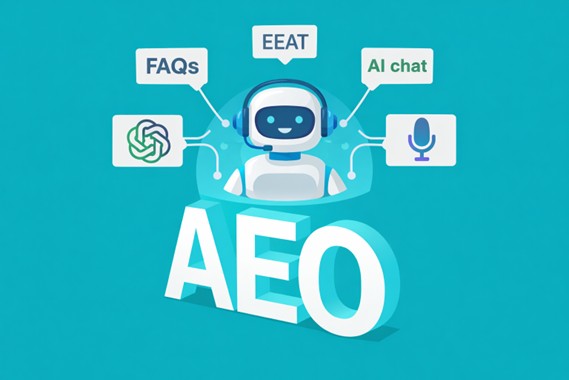
AEO Optimization

Will AEO Replace SEO? What Marketers Get Wrong About AI Search

Short answer: No – AEO will not replace SEO. It builds on it. 

To truly succeed, businesses need a structured approach through Answer Engine Optimisation (AEO) services that align SEO with AI-driven visibility.

As AI-powered search becomes mainstream, marketers everywhere are asking the same question: 

“Is Answer Engine Optimisation (AEO) replacing Search Engine Optimisation (SEO)?” 

With AI Overviews, conversational search, and large language models summarising content instantly, it feels like traditional SEO is becoming obsolete. But that assumption is exactly what marketers are getting wrong. 

AEO doesn’t replace SEO. It depends on it. Let’s break down why; and what brands really need to do if they want visibility inside AI Overviews and LLM-generated answers. 

Quick Summary 

No. AEO doesn’t replace SEO. It builds on it. 

AI search systems pull answers from well-optimised, authoritative websites. Without strong SEO foundations, AEO can’t work. 

To win in AI search, focus on clear answers, structured content, entity clarity, and topical authority. Ranking gets you seen. AEO gets you quoted. 

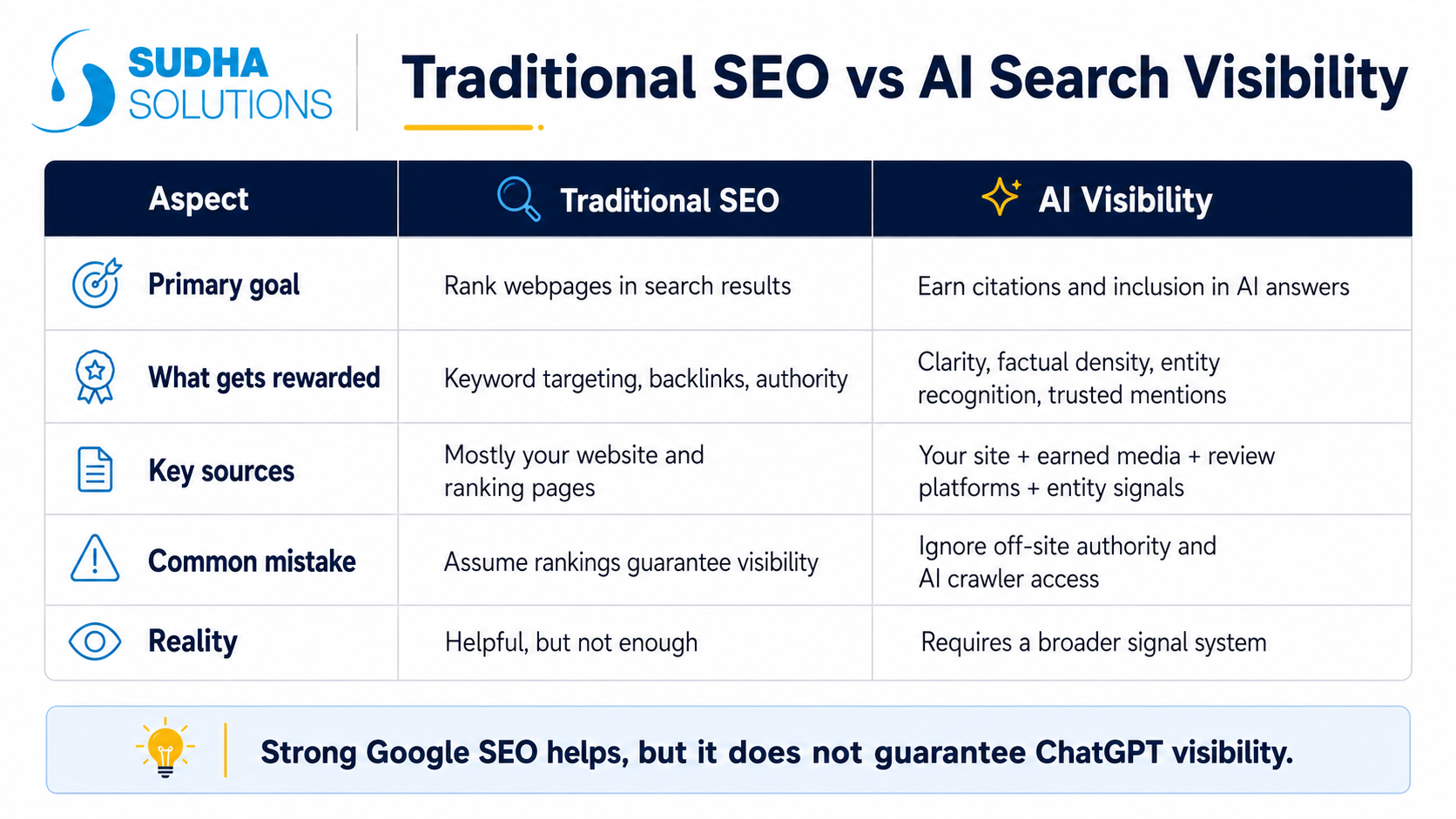
What Is SEO vs AEO? 

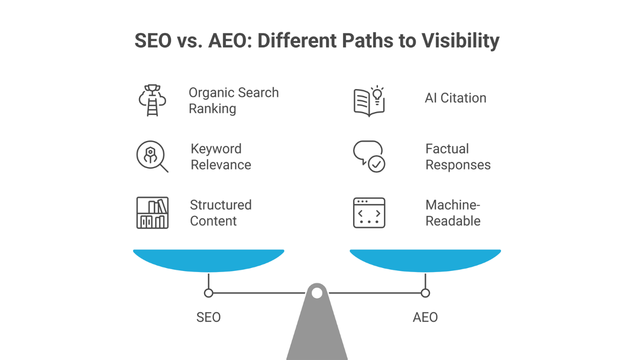
Understanding SEO vs AEO is critical for modern digital strategies, as both work together to improve discoverability across search engines and AI-driven answer platforms.

SEO vs AEO

SEO (Search Engine Optimization) 

Businesses investing in professional SEO services strengthen these foundational signals, improving visibility in both traditional and AI-powered search environments.

SEO focuses on helping web pages rank in organic search results through: 

  • Keyword relevance 
  • Technical optimisation 
  • Backlinks and authority 
  • Page experience 
  • Structured content 

Its goal: rank higher on search engine results pages. 

AEO (Answer Engine Optimization) 

AEO focuses on helping content get directly cited or summarised by AI systems. To effectively optimize for AEO, brands must structure their content clearly, provide direct answers, and maintain strong authority signals across their digital ecosystem. This is where specialised AEO optimization services help structure content for AI extraction and citation.

Its goal: become the source of answers. 

Instead of ranking for keywords, AEO optimises for: 

  • Clear, factual responses 
  • Question-based formatting 
  • Entity recognition 
  • Semantic depth 
  • Machine-readable structure 

Modern answer engines include Google AI OverviewsOpenAI’s ChatGPT, and platforms like Perplexity AI. These systems don’t just crawl pages; they extract meaning.

The Biggest Myth: “AEO Will Kill SEO” 

AEO Will Kill SEO

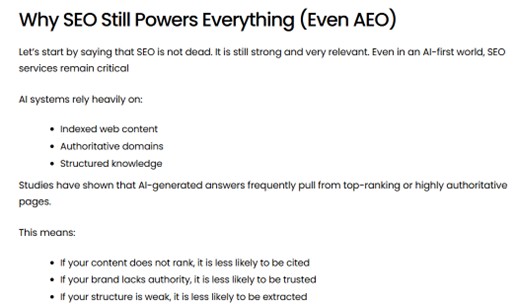
This is where most marketers go wrong. LLMs – Large Language Models don’t magically invent knowledge. 

They rely on: 

  • Indexed websites 
  • Authoritative domains 
  • Structured content 
  • Consistent entities 
  • High-quality publishing signals 

In other words: AI systems learn from SEO-optimised content. If your site isn’t crawlable, indexed, trusted, and structured properly, AEO simply cannot work. 

SEO is the foundation. AEO is the evolution. 

How AI Overviews Actually Choose Content

AI overviews

To understand this in detail, read our guide on how to optimize your website for Google AI Overviews

AI search systems typically follow this pipeline: 

  1. Crawl trusted websites 
  2. Evaluate topical authority 
  3. Identify entities and relationships 
  4. Extract concise answers 
  5. Combine multiple sources into summaries 

So, when your brand appears inside an AI Overview, it’s because your content already demonstrates: 

  • Expertise 
  • Clarity 
  • Context 
  • Trustworthiness 

Not because you “did AEO instead of SEO.” 

If you’re curious to know more on this topic, read our blog: It’s Not Popularity: How AI Decides Which Brands Deserve Visibility.

Why Ranking Alone Is No Longer Enough? 

Why Ranking Alone Is No Longer Enough

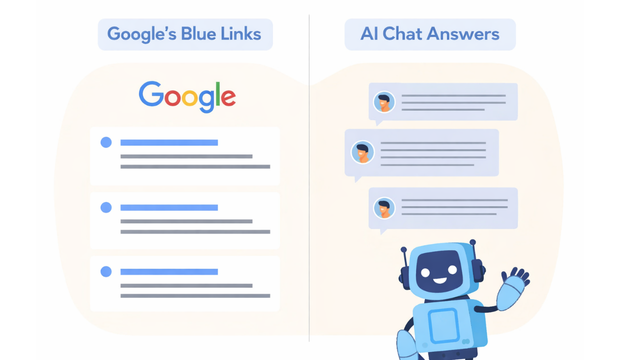
Traditional SEO aimed for clicks. AI search aims for answers. Today, users often get what they need without opening a single link. That changes the game. 

Integrated content marketing services, including structured articles, guides, and knowledge resources, play a key role in building authority that AI systems rely on.

Modern visibility means: 

  • Being quoted by AI 
  • Being referenced as a source 
  • Being included in summaries 
  • Being recognised as an authority 

This is where marketers must shift from traffic thinking to presence thinking. You’re no longer optimising only for humans. You’re optimising for machines that summarise you to humans. 

What Marketers Commonly Get Wrong About AI Search 

  1. Obsessing only over keywords: LLMs care more about concepts than exact phrases. 
  2. Writing fluffy thought leadership: AI prefers precise, structured, and factual content. 
  3. Ignoring entities: Brands, services, locations, and concepts must be clearly defined. 
  4. Brand Promotion Content: Many brands publish content without strategic blog writing services, leading to unstructured pages that AI systems struggle to interpret and extract answers from.
  5. Creating long content with no clear answers: AI extracts snippets; not essays. 
  6. Treating AEO as a separate channel: It must be embedded into your SEO strategy. 

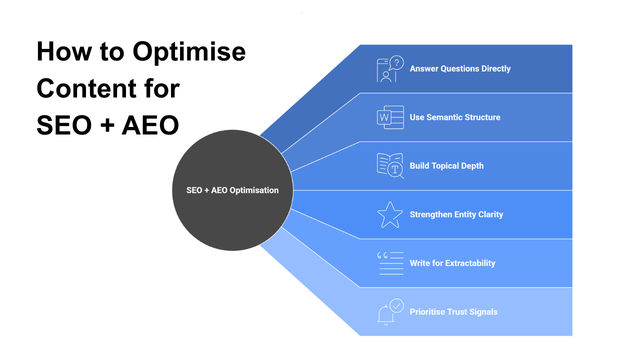
How to Optimise Content for Both SEO + AEO 

How to Optimise Content for SEO + AEO

Here’s what actually works: 

  1. Answer questions directly: Start sections with clear responses before expanding. 
  1. Use semantic structure: Headings, bullet points, and short paragraphs help LLMs parse meaning. 
  1. Build topical depth: Cover related subtopics instead of single keywords. 
  1. Strengthen entity clarity: Define your brand, services, and industry consistently. 
  1. Write for extractability: Create content that can stand alone when quoted. 
  1. Prioritise trust signals: Author bios, internal links, accurate data, and consistent publishing matter more than ever. 

These principles are part of a structured AEO strategy framework designed to maximise AI visibility.

SEO + AEO + GEO: The New Visibility Stack 

When combined with performance marketing and social media services, these strategies help reinforce brand visibility across search, social, and AI-driven discovery channels.

Modern search optimisation now has three layers: 

  • SEO – Get indexed and ranked 
  • AEO – Get extracted and answered 
  • GEO (Generative Engine Optimisation) – Get summarised and cited 

They don’t compete. They compound. Brands that win in AI search treat these as one integrated strategy. 

Why Reddit Visibility Matters in AI Search 

Reddit plays a major role in how LLMs understand real-world discussions. 

AI models frequently learn from: 

  • Reddit Q&A threads 
  • Expert discussions 
  • Community explanations 
  • Comparative debates 

Repeated mentions across Reddit help build: 

  • Entity association 
  • Topical authority 
  • Semantic relevance 

Appearing in Quora and Reddit conversations significantly increases your chances of being remembered by AI systems. 

As per an article from Nextleft, Reddit and Quora have seen explosive traffic growth, with some reports estimating Reddit up 600% and Quora up nearly 380% over recent periods as users seek real answers. 

So… Will AEO Replace SEO? 

No. AEO depends on SEO foundations such as crawlability, authority, and structured content. Without SEO, there is nothing for AI to learn from and without AEO, your SEO content never becomes the answer. 

The future belongs to brands that: 

  • Build authority 
  • Structure knowledge clearly 
  • Write for humans and machines 
  • Think beyond rankings 

Because in the age of AI search, visibility isn’t about position. It’s about being remembered by the model. 

Final Takeaway 

If your strategy is still focused only on ranking pages, you’re already behind. 

Modern marketing requires optimisation for: 

  • Search engines
  • Answer engines
  • Generative systems 

SEO gets you discovered.
AEO gets you quoted.
GEO gets you summarised. 

Together, they determine whether your brand exists inside the AI-driven web.  

Want to See How Visible Your Brand is Inside AI Search?

Whether you need expert SEO services, content marketing services, or guidance to optimize for AEO, building an integrated visibility strategy is essential for success in AI-driven search. Get in touch with Sudha Solutions today and build a strategy designed for the AI-driven web. 

Frequently Asked Questions

Will AEO replace SEO?

No. AEO builds on SEO. Search engines still rely on indexed, authoritative content. AEO simply helps that content become the answer inside AI systems.

What is the difference between SEO and AEO? 

SEO focuses on ranking pages in search results. AEO focuses on structuring content so AI engines can extract clear answers.

Can small businesses appear in AI Overviews? 

Yes. Authority is topical, not brand-size dependent. Clear structure, consistent publishing, and strong entity signals matter more than company scale. 

Do I still need keywords for AI search? 

Yesbut keywords alone are insufficient. AI prioritises topics, context, and relationships over exact phrases. 

How long does it take to appear in AI Overviews? 

There’s no fixed timeline. Most brands see inclusion after building topical depth, improving structure, and strengthening authority signals over several weeks or months. 

What type of content performs best in AI search? 

  • FAQs 
  • Explainers 
  • Comparison guides 
  • How-it-works articles 
  • Clear definitions 
  • Structured lists 
Categories
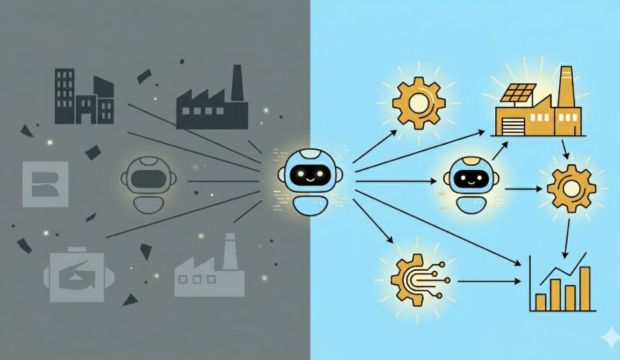
AI Overview

It’s Not Popularity: How AI Decides Which Brands Deserve Visibility

Search is no longer the only front door to the internet. Today, millions of people discover tools, products, services, and companies through AI search engines like ChatGPT, Claude, Gemini, Perplexity, and AI Overviews in Google Search. These systems summarise, recommend, and explain, and in doing so, they choose which brands are worth mentioning. And that’s where frustration begins. 

Marketers, founders, and SEOs often ask: 

  • Why does AI always mention the same brands? 
  • Why are smaller or newer companies ignored, even when they’re objectively good? 
  • Is AI biased toward big brands? 

The common assumption is popularity. But that’s not quite right. AI visibility is not driven by hype, ad spend, or even classic SEO alone. It’s driven by data representation, entity confidence, and statistical certainty.

Here we break down how AI systems decide which brands deserve visibility, why some brands are consistently surfaced while others remain invisible and what this shift means for SEO, marketing, and brand building going forward. 

Quick Takeaway for Busy Readers 

AI systems tend to cite brands that: 

  • Have strong third-party corroboration (press, reviews, Wikipedia, industry sites)
  • Are easy to retrieve and parse (indexable pages, clean structure, clear entities)
  • Minimize hallucination risk (consistent facts across many sources)
  • Already appears in high-ranking pages for the query class 

For Google AI Overviews specifically, Ahrefs found that 76.10% of AI Overview citations come from pages ranking in the top 10 organic results. 

The Biggest Misconception: “AI Mentions Popular Brands”


AI Brand Mentions

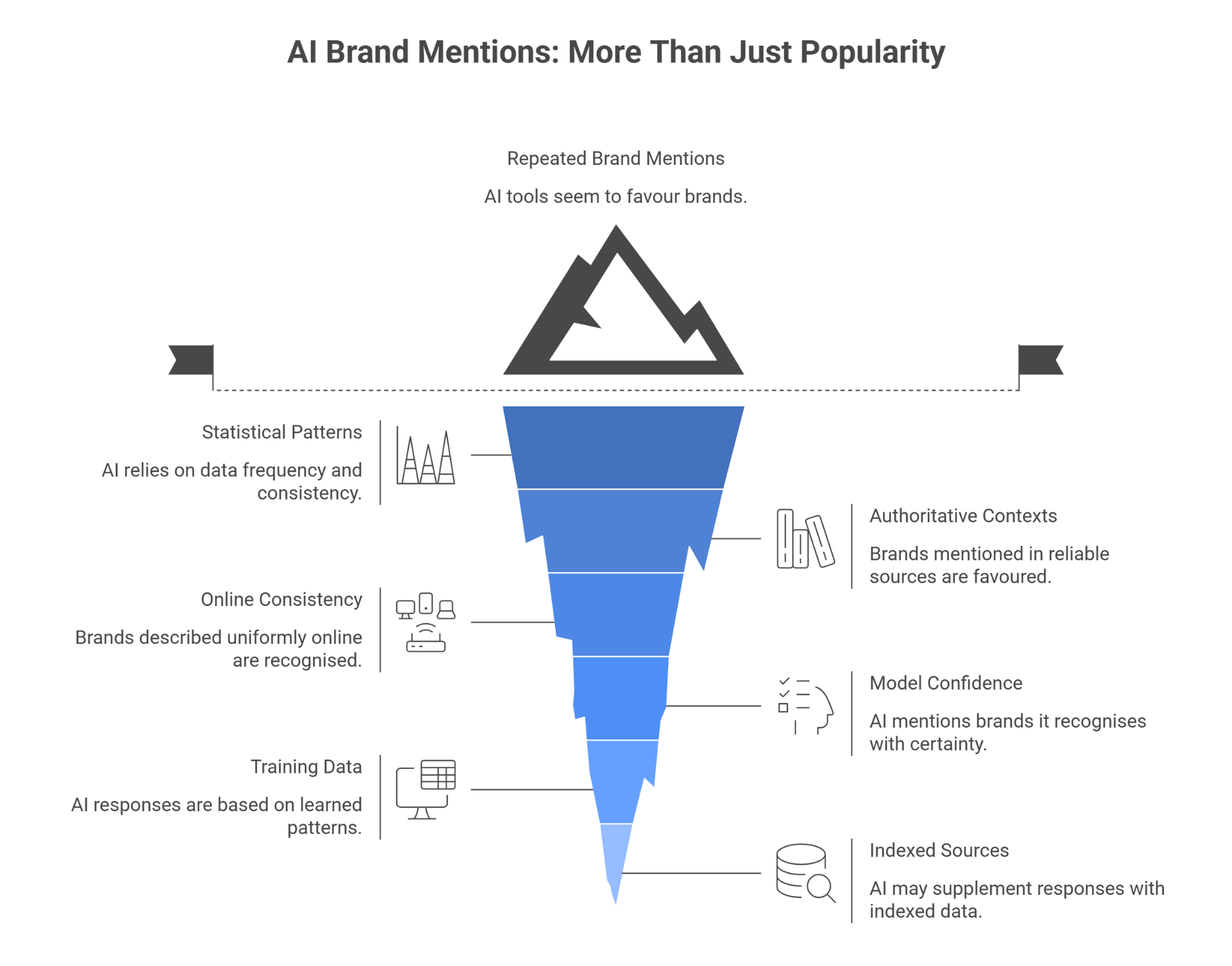
At first glance, AI tools may feel like they “pick favourites.” You ask a question, and the same brands show up again and again, while equally capable competitors are invisible. 

But that still feels intuitive, isn’t it? If a brand is widely known, AI would naturally mention it, right? Not quite. 

AI doesn’t “select” brands like a human does. Instead, it decides based on statistical patterns in data: 

  • How often a brand appears in authoritative contexts 
  • How consistently it’s described online, and 
  • Whether the model recognises it with confidence. 

At a fundamental level, many AI tools don’t search the web in real time. Instead, they generate responses based on patterns learned during training and then may supplement those with retrieval from indexed sources. 

This means AI doesn’t favour popular brands, it only mentions brands that exist clearly and consistently in its “data universe.”

What the Data Shows: Brand Mentions Beat Traditional SEO 

Here’s what data reveals about how AI picks sources: 

1) AI Overviews strongly overlap with top Google results 

Ahrefs analysed 1.9 million citations from 1 million AI Overviews and found that 76% of citations came from pages in the top 10 organic results. Businesses strengthening their organic visibility often rely on SEO expert services to ensure their pages remain discoverable and eligible for AI citation sources.”

That has two implications: 

  • If you are not visible in search, you are often not even in the candidate set. 
  • Traditional SEO still feeds AI visibility, especially for Google AI Overviews.
     

2) Top Brands Capture Most AI Citations 

  • The Top 50 brands account for nearly 28.9% of all AI citations. 
  • 26% of brands have zero mentions in AI Overview results. 
  • AI systems often use encyclopedic or forum sources like Wikipedia and Reddit with high frequency. 

This clearly indicates a visibility winner-takes-most pattern. Not because big brands are inherently superior, but because they are well-represented in training and retrieval data.
 

3) Source Diversity Matters

Building Brand Authority

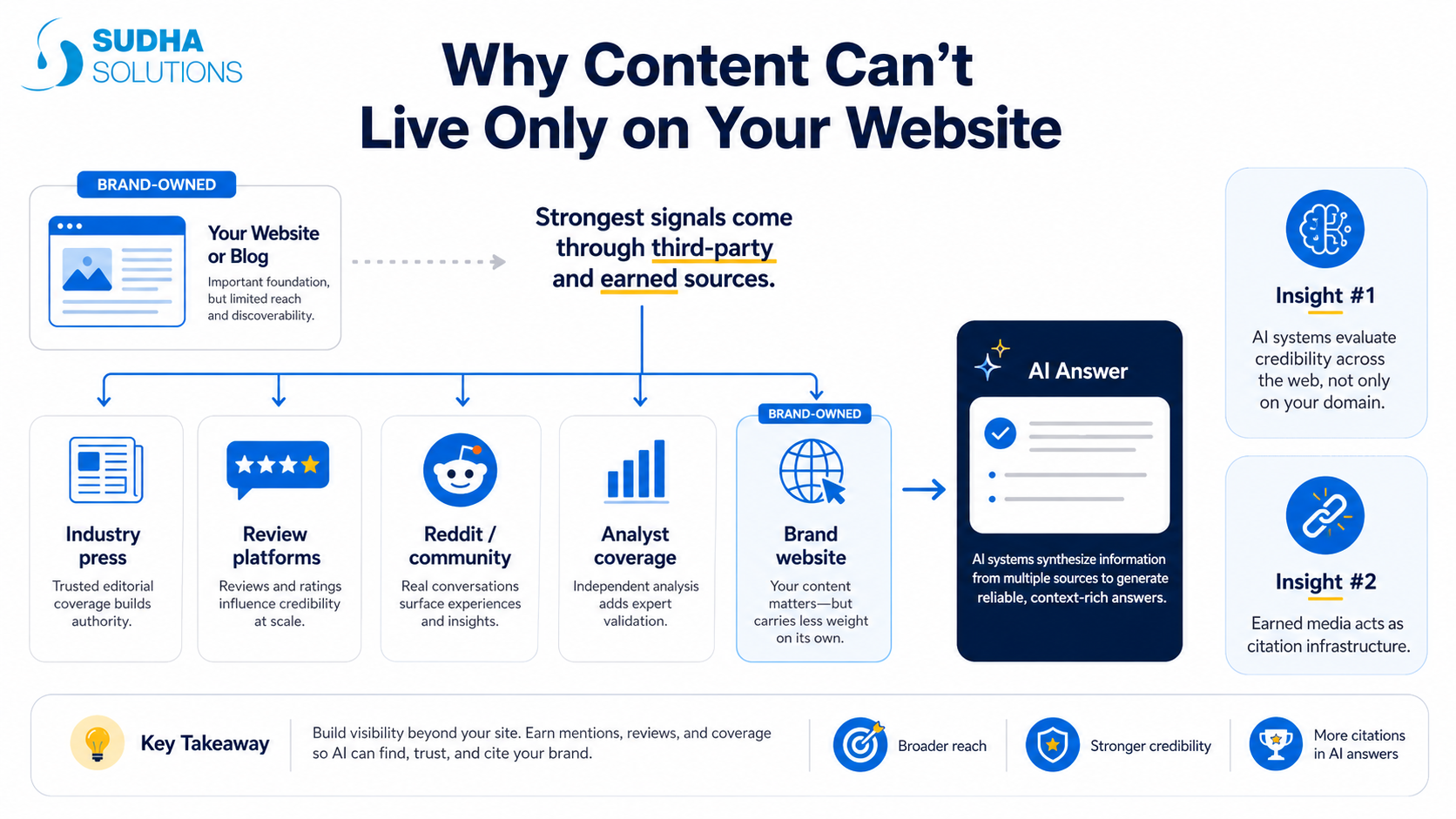
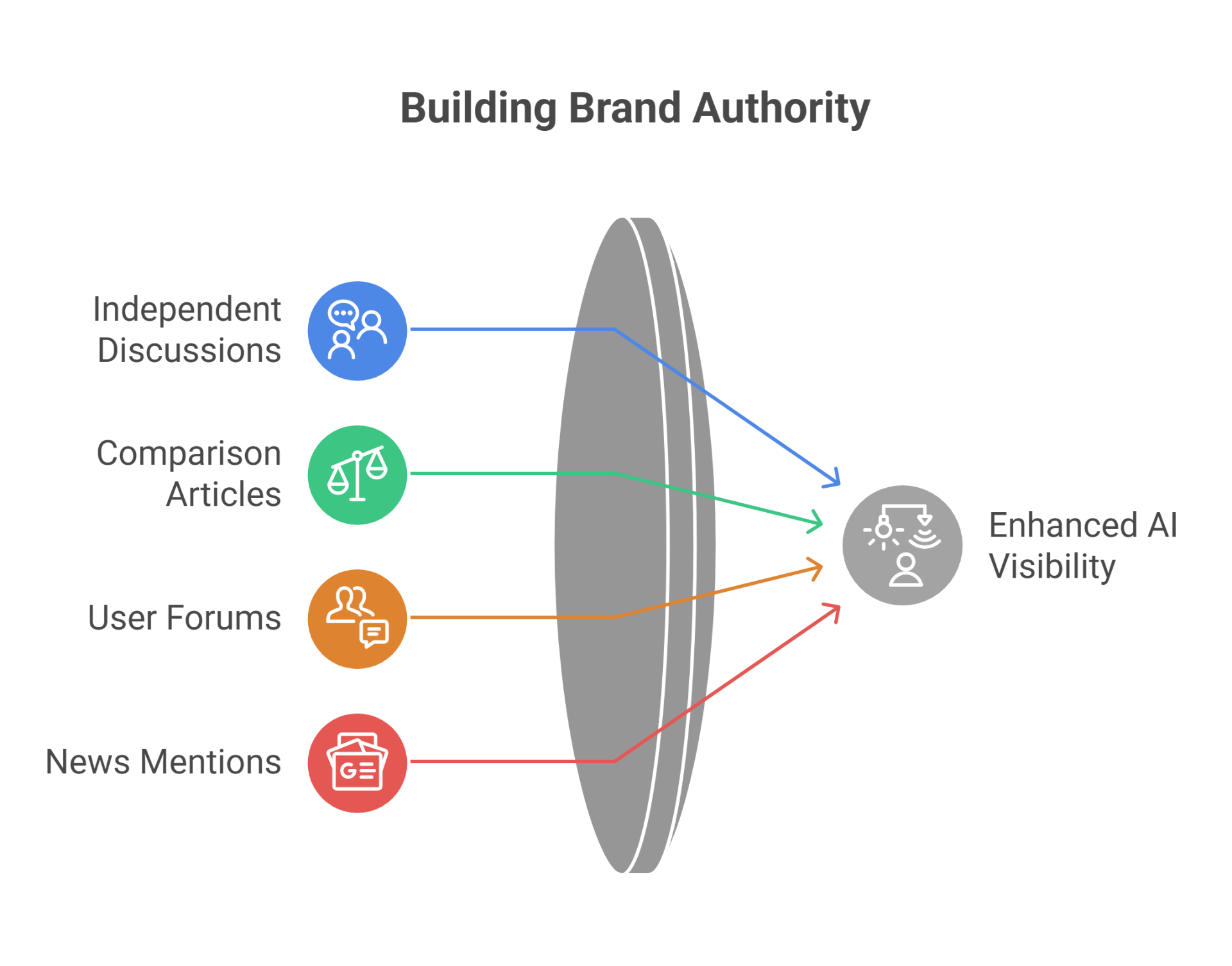
A brand appearing only on its own website isn’t enough. AI engines value third-party mentions like independent discussions on industry sites, comparison articles, user forums, and news. Nearly 6.5x more AI citations come from third-party sources than from self-hosted content. 

Together, this data suggests that AI visibility is less about outperforming competitors and more about being consistently recognised across the web.

AI Doesn’t Rank Brands. It Recognises Them 

What’s really happening here is not a new version of SEO. It’s a different system entirely. AI visibility behaves far more like knowledge graph inclusion than traditional search rankings. 

Large language models (LLM) don’t think in terms of “best page wins.” They organise information as entities and relationships.

  • Brands become entities. 
  • Topics become nodes. 
  • Mentions, descriptions, and repeated associations become edges connecting them. 

The stronger and more consistent these connections are, the safer it is for AI to reference that brand. And this is why co-occurrence matters so much. 

When a brand repeatedly appears near the same concepts, problems, and solutions across independent sources, it becomes anchored in the model’s internal knowledge structure. From an AI’s perspective, mentioning such a brand isn’t a recommendation; it’s a factual completion. 

Understand that: 

Ranking determines whether content is discoverable.
>And, entity inclusion determines whether a brand is quotable. 

And because AI systems are fundamentally risk-averse, they default to entities that already exist clearly within this knowledge graph: brands that are well-defined, consistently described, and corroborated across the wider web. 

And this is why many brands that rank well still fail to appear in AI answers. They rank as pages, but they don’t exist as entities. 

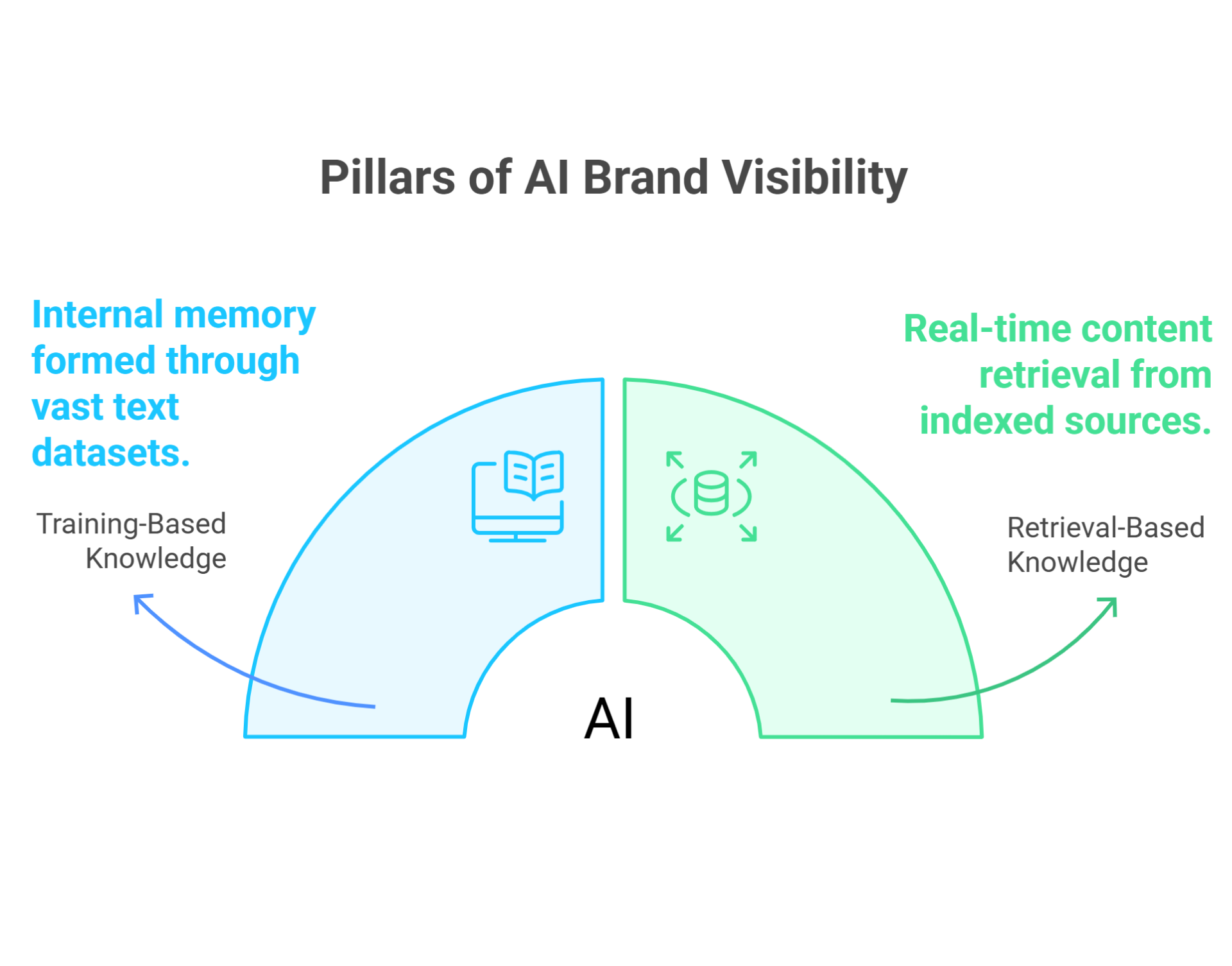
The Two Pillars of AI Brand Visibility

Pillars of AI Brand Visibility

1) Training-Based Knowledge (Internal Memory)

Large language models such as ChatGPT are trained on vast collections (precisely, 570GB of datasets) of publicly available text: websites, articles, documentation, forums, encyclopedias, and books. 

During training, the model learns: 

  • Which words commonly appear together 
  • Which entities are repeatedly mentioned in reliable contexts 
  • How concepts, brands, and categories relate to one another 

If a brand appears frequently and consistently in high-quality contexts, the model forms a stable internal representation of that brand. If a brand appears rarely, inconsistently, or only on its own website, the representation is weak or non-existent. 

In practical terms: 

If the model hasn’t seen enough credible mentions of a brand, it cannot confidently mention it later. Researchers call this problem the Existence Gap,” where brands absent from training data remain invisible to AI outputs.

2) Retrieval-Based Knowledge (Live or Indexed Sources)

Many AI systems use retrieval-augmented generation (RAG), pulling content from search indexes and selected sources in real time. 

These systems look for: 

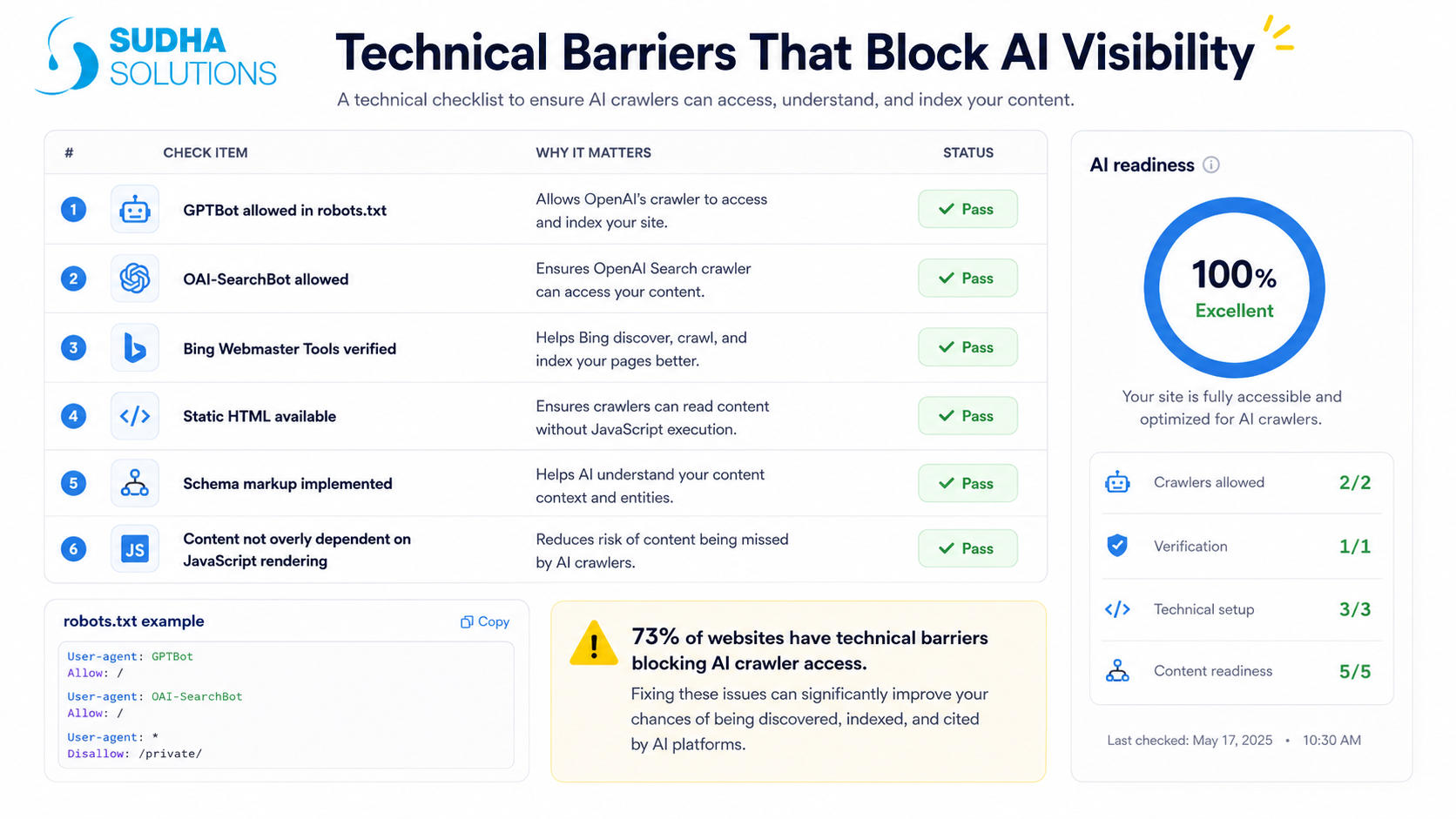
  • Well-structured content (which AI can interpret easily) 
  • Clear entity identification (WHOIS data, consistent brand name usage, schema markup) 
  • Third-party credibility (trusted publications, industry sites) 
  • Context-specific relevance (how strongly a brand is associated with the user’s query) 

When these signals are strong and clear, brands become eligible for selection. However, if the signals are weak or inconsistent, AI often skips them entirely.

What Does AI Actually Look for In Your Brand Content?

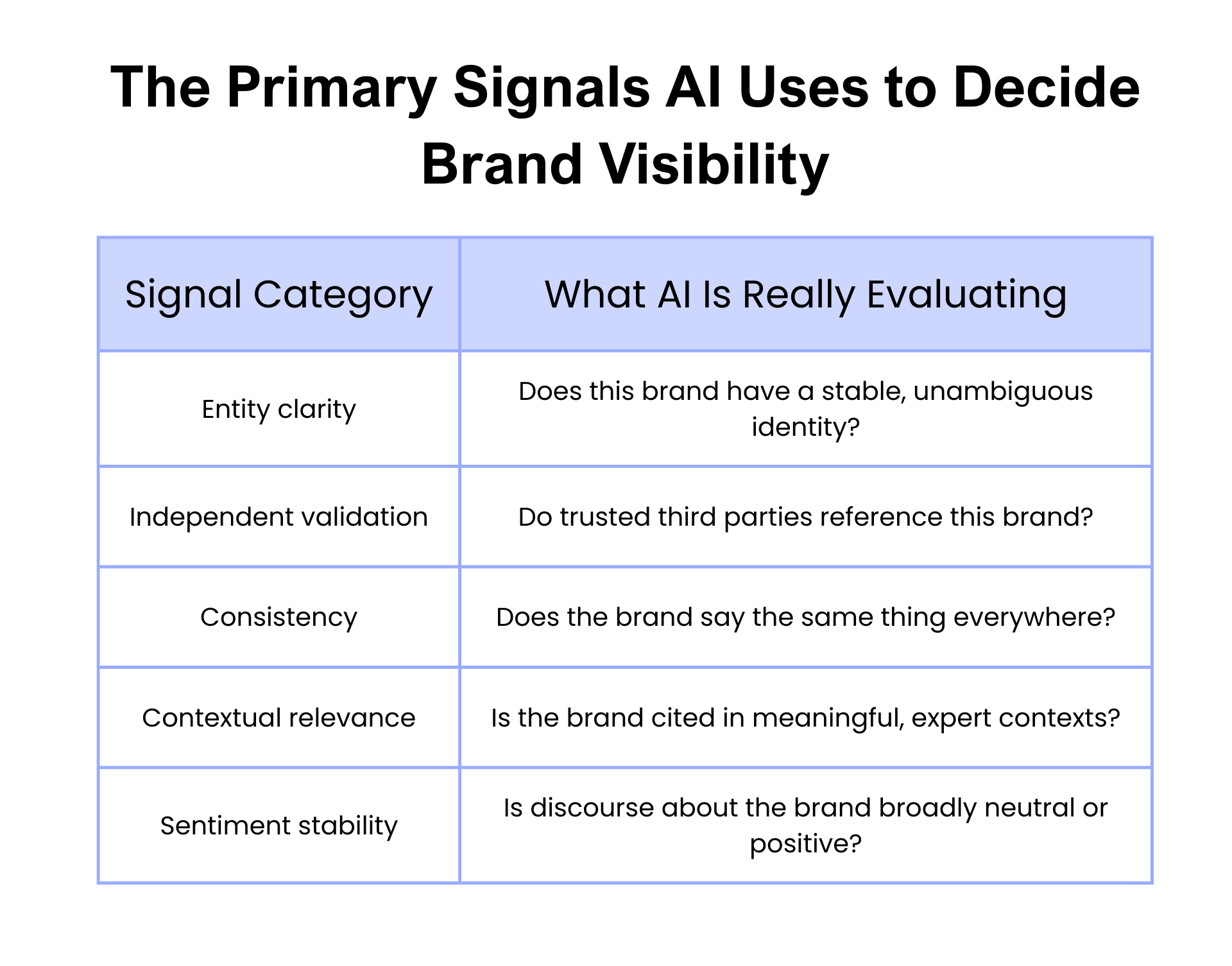
Through many studies, a clear pattern has emerged. AI visibility correlates strongest with brand legitimacy signals, not marketing signals. 

These signals consistently appear across multiple independent studies: 


primary signals AI uses to decide brand visibilityBut notice what’s missing from the list? 

  • Keyword density 
  • Posting frequency 
  • Social engagement metrics 

Those still matter but indirectly. They are no longer decisive. 

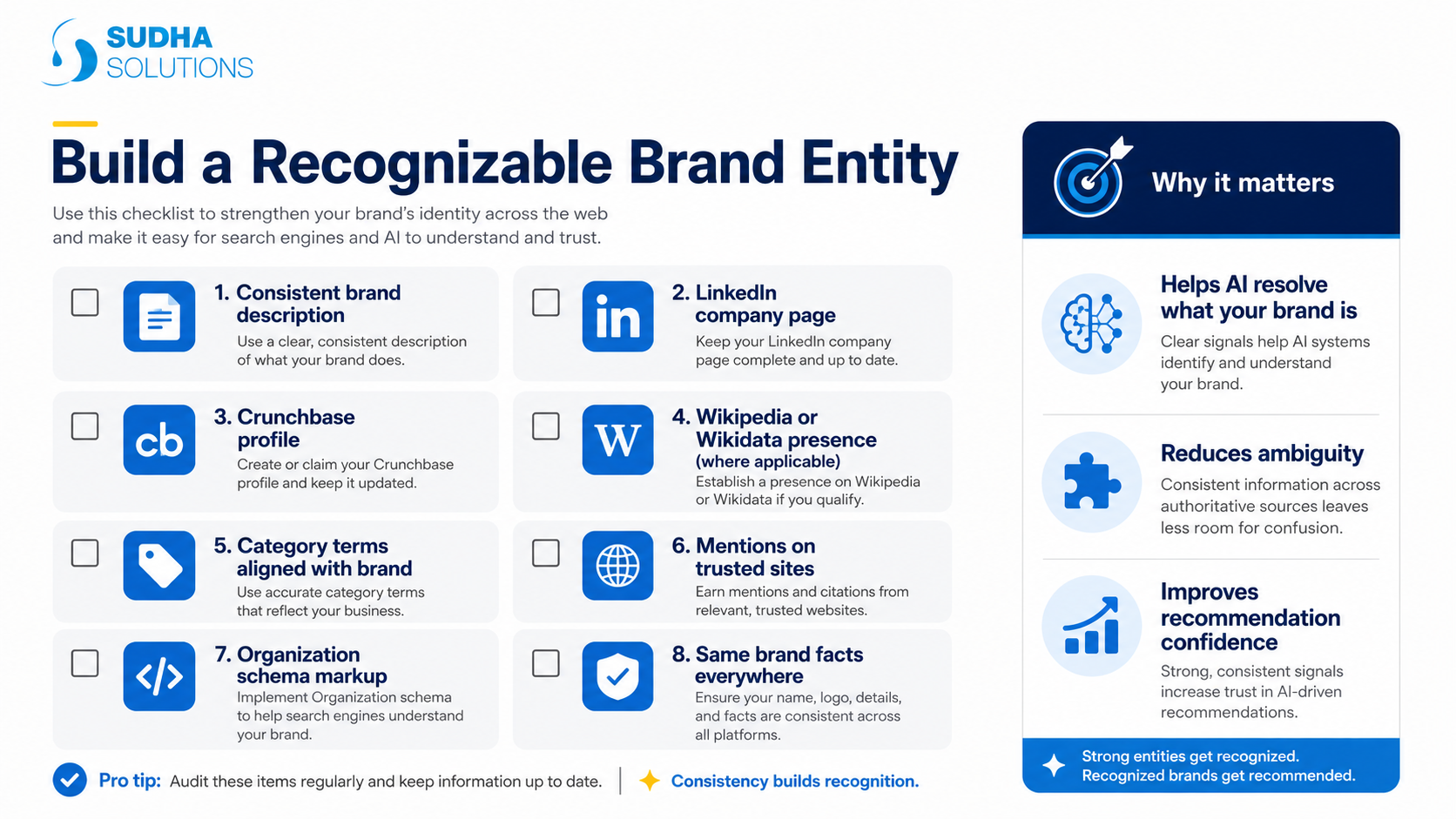
Entity Authority: The Foundation Most Brands Ignore 

Entity confidence answers a simple question: 

“Are we sure this brand is real, distinct, and stable?” 

AI gains confidence when a brand: 

  • Is mentioned consistently with the same name 
  • Has a clear category association 
  • Appears across multiple independent sources 
  • Is described similarly in different contexts 

Inconsistent branding, such as variations in name, positioning, or description, weakens entity confidence. 

From an AI’s perspective, uncertainty is a risk. And risk is better avoided. 

Contextual Relevance: How Brand Associations are Built 

AI doesn’t just track whether a brand is mentioned, it tracks where and why. A brand mentioned repeatedly in discussions about a specific topic becomes statistically tied to that topic. 

You might’ve noticed the pattern: 

  • whenever “secure phones” are discussed Apple surfaces. 
  • Whenever, CRM Platforms are discussed Hubspot is mentioned. 

These associations are built through cooccurrence, meaning, how often a brand appears near certain keywords, concepts, and questions. So, if a brand is rarely discussed in meaningful topical contexts, AI has no reason to surface it. 

Brand Mentions Have the Strongest Correlation

In a study of over 75,000 brands, one factor stands out clearly: 

Visibility Factor  Correlation with AI Mentions 
Branded Web Mentions  0.6644 
Branded Anchors (anchor text links)  0.527 
Branded Search Volume  0.392 
Domain Authority  0.137 
Backlinks  0.056 

Source: AI Brand Visibility Studies (useomnia.com) 

In short, 

  • Brand mentions correlate more strongly with AI visibility than backlinks 
  • The context of the mention matters more than the source’s raw authority 

AI cares more about brand mentions in context than traditional SEO metrics like backlinks or domain authority. Brands that show up across authoritative conversations and not just ranking pages, win visibility. 

E-E-A-T Is Not a Guideline. It’s a Filtering System

EEAT: Publishing research-driven articles through expert blog writing helps demonstrate the experience, expertise, and trust signals that AI systems prioritise. 

But AI evaluates EEAT differently. 

How AI Interprets EEAT Signals 

  • Experience: Is the brand discussed by real users and practitioners? 
  • Expertise: Is the brand associated with technical or indepth explanations? 
  • Authority: Do reputable sources reference the brand? 
  • Trust: Is the information consistent across sources? 

Brands That Win AI Visibility Do This Well: 

  • Attribute content to real experts 
  • Publish first-hand experience 
  • Reference primary sources 
  • Maintain historical consistency 
  • Avoid exaggerated claims 

This is not about “optimising for Google,” it’s about being safe for AI to quote.

Why Many “SEO-Successful” Brands Are Becoming Invisible 

Here’s the uncomfortable truth: 

Many brands that mastered SEO between 2015–2022 optimised for exploitation, not credibility. 

They: 

  • Scaled content faster than expertise 
  • Optimised keywords instead of knowledge 
  • Prioritised volume over clarity 

AI systems answer this with irrelevance. They ignore you. If AI cannot confidently summarise what you stand for, it simply chooses someone else over you. This is because AI visibility is no longer a ranking outcome. It’s an editorial decision. 

AI behaves like a conservative editor asking: 

  • Is this claim consistent with the wider knowledge base?
  • Does referencing this brand reduce or increase uncertainty?

Brands that lose visibility behave like: 

  • Content farms 
  • Growth hackers 
  • Overextended platforms 

Brands that win visibility behave like: 

  • Reference works 
  • Trusted advisors 
  • Domain specialists 

In an AI-first ecosystem, visibility isn’t earned by publishing more, it’s earned by being clear, consistent, and safe to reference.

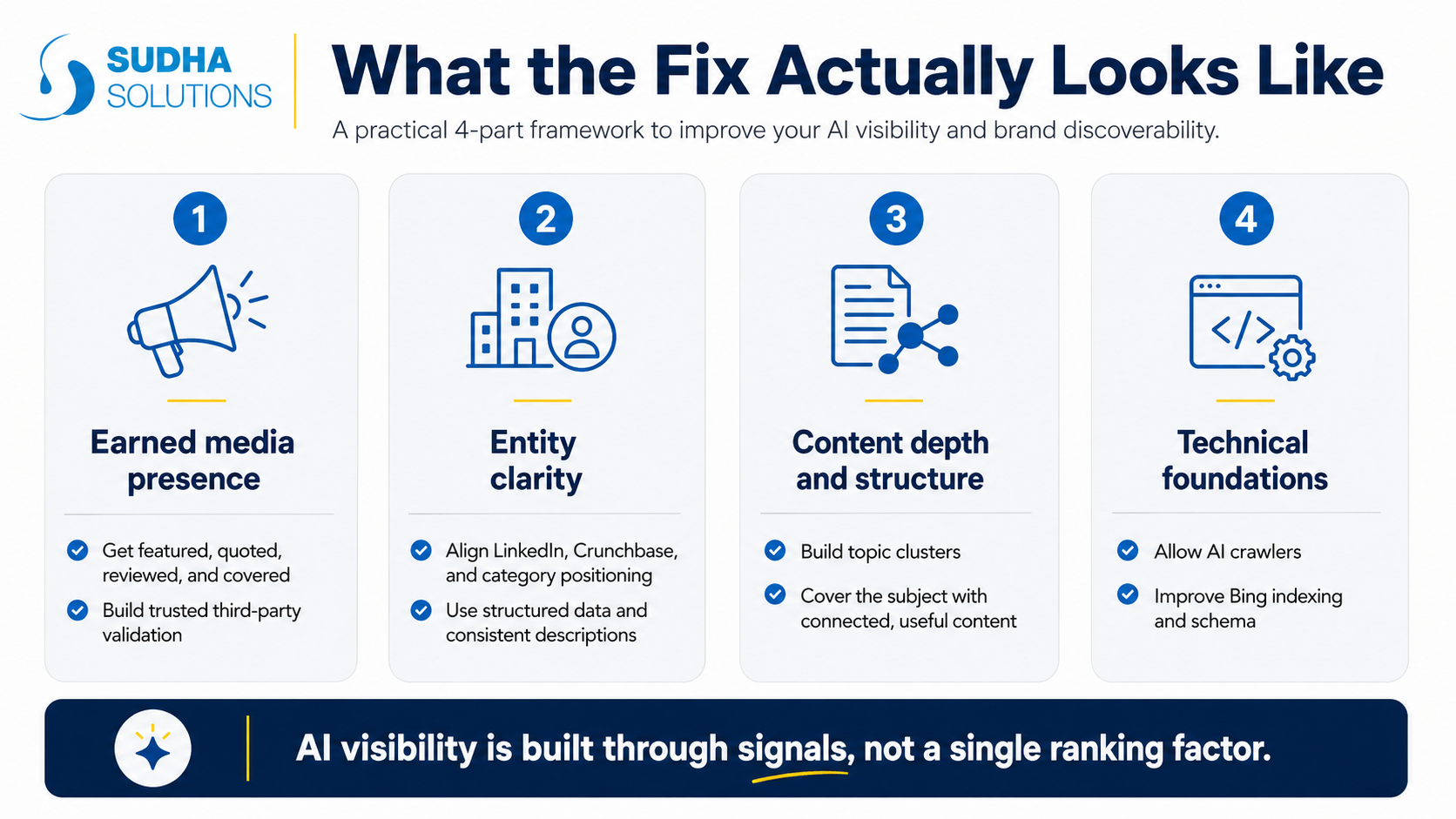
How Brands Can Increase AI Visibility?
1. Narrow Your Narrative

Define what you are known for, not everything you sell. 

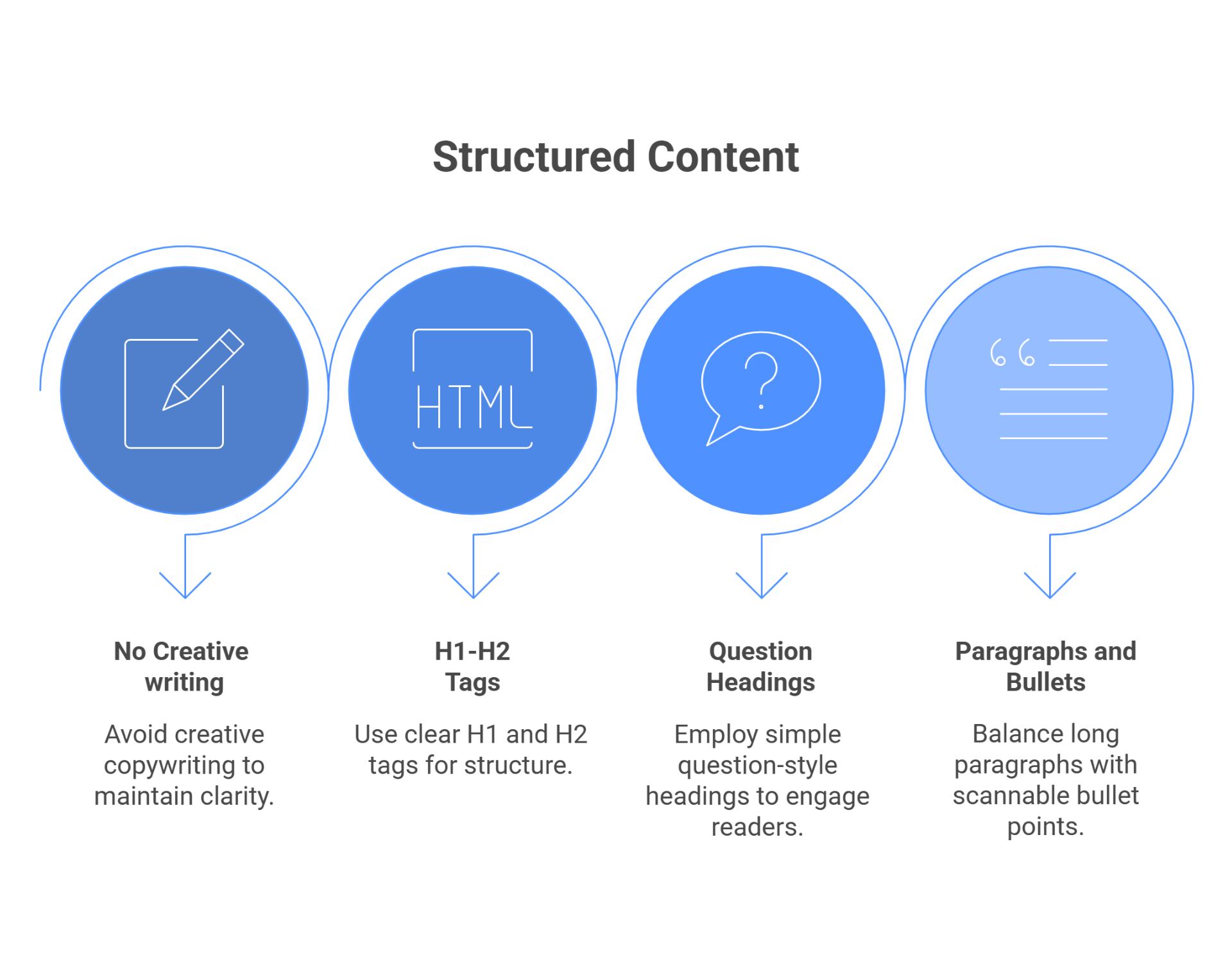
2. Structure Your Content

Content Structure

AI engines struggle with chaos. The more structured, clear and consistent your content is, the higher the chances of AI picking your brand. 

  • Avoid overly creative copywriting that obscures meaning 
  • Clear H1-H2 Tags 
  • Simple Question-style Headings 
  • Perfect balance of long-detailed paragraphs and scannable bullet pointers 

AI loves content that’s easy to skim, summarise, and reuse. Organizations aiming to improve AI readability often invest in expert blog writing services to ensure their content is clearly structured for both search engines and generative AI systems.

3. Invest in Attribution

Make expertise visible: 

  • Authors 
  • Credentials 
  • Case studies 

First-party research

4. Engineer Consistency

Your About page, PR quotes, profiles, and content should sound like the same organisation.

5. Earn Mentions

Prioritise being referenced in: 

  • Editorial mentions 
  • Industry comparisons 
  • Community discussions 
  • Reviews and case studies 

6. Diversify Across Contexts and Platforms

Being cited on a blog, a YouTube review, and a Wikipedia page dramatically increases the chance AI draws from your brand. 

7. Measure the Right Thing

Track: 

  • AI mentions 
  • Citation frequency 
  • Brand sentiment in generated answers 

Traffic alone is no longer a sufficient signal.

Final Thoughts 

AI doesn’t “choose” brands the way humans do. It calculates probability, forming links between topics and entities based on evidence in training data and indexed sources. 

So, while popularity helps, it’s not the root factor. Instead: 

  • AI prefers brands with strong data representation 
  • Consistent, contextual mentions matter more than links 
  • Authority is built through third-party visibility 
  • Structured, unambiguous information helps AI understand your brand 

To succeed in the AI era, marketers must evolve beyond classic SEO and embrace GEO, optimising not just for rankings, but for recognition in the neural fabric of AI systems. 

If you want a deeper breakdown of how GEO and AEO work in practice, including strategies, tools, and how they differ from classic SEO, read our detailed guide on AEO & GEO optimization. 

At Sudha Solutions, our content marketing experts help brands strengthen entity authority, earn credible mentions, and improve AI-driven visibility. Is your brand struggling with AI citations, too? Get in touch with us today!