Sudha Solutions

Categories
AEO Optimization AI Overview General SEO

From SEO to AIO: The Shift Every Brand is Ignoring

You’re still ranking… so why is traffic not moving?

Because, Search behaviour has shifted from click-based discovery to AI-generated answers.

Your rankings are stable, some even improving. But traffic isn’t following.

Rather, it’s flat. In some cases, even declining. Conversions don’t fully align with organic performance.

And yet, most teams are still optimising the same way they did two years ago.

But here’s the disconnect:

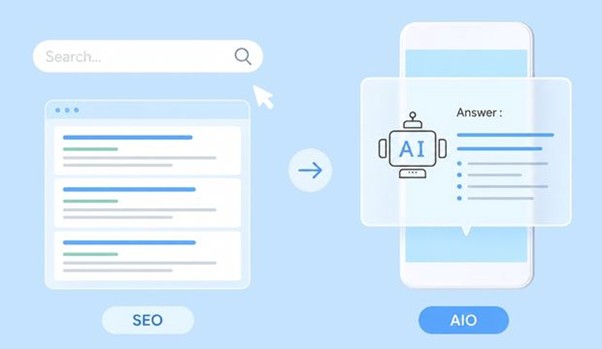
SEO didn’t die, distribution did and brands relying only on traditional search engine optimization services are now missing the AI-driven answer layer reshaping visibility.

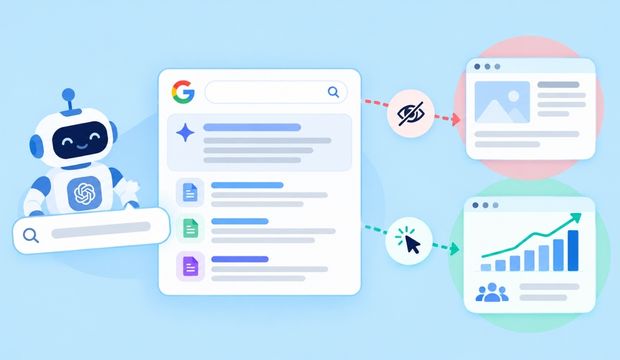
A growing share of queries now never lead to a website click. Across Google’s evolving SERP experience, 58% of searches end without a click, as users get answers directly on the results page or within AI-generated summaries.

Visibility is no longer about ranking. It’s about being part of the answer.

In 2026, SEO expert services alone are no longer enough; brands also need AEO services and AI Overview Optimization to maintain discoverability.

This blog breaks down what’s driving this shift, where your traffic is going, and how leading brands are adapting.

Key Takeaways (read this first if you’re scanning)

  • Ranking stability ≠ traffic stability anymore
  • AI systems now intercept and synthesise search results before clicks happen
  • Visibility is shifting from “position in SERP” → “presence in AI-generated answers”
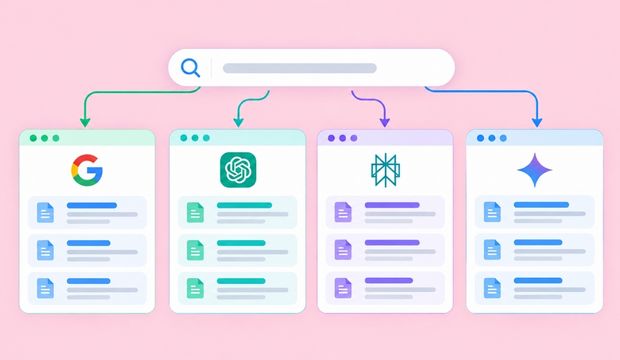
  • Chat-based search (ChatGPT, Perplexity, Gemini) is becoming a parallel discovery layer
  • SEO is not obsolete; it’s just no longer the complete system
  • Winning now depends on citability, structure, and entity clarity, not just keywords

Where Did Your Search Traffic Actually Go?

The assumption that “search demand is down” is incorrect.

The truth is, demand has redistributed.

A growing portion of research and discovery now happens inside AI systems rather than traditional SERPs.

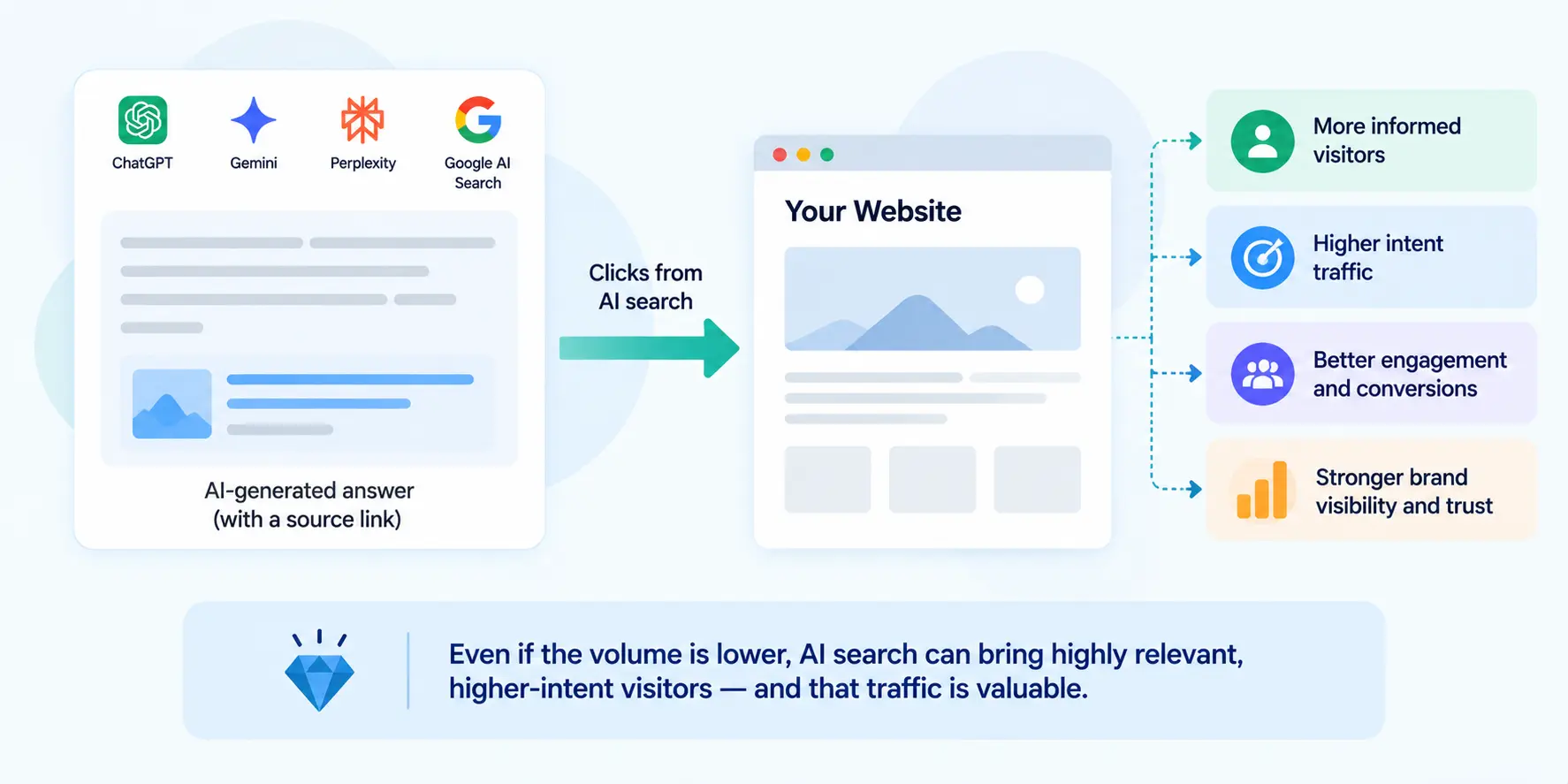
Data from Depthera’s 2026 State of AI Search report confirms that 25% of organic traffic has permanently migrated from traditional search engines to AI assistants like ChatGPT, Perplexity, Claude, and Gemini.

Did you know:

And because most AI search sessions end without a click, your website analytics are almost certainly undercounting the influence AI search has on your brand perception.

These buyers are forming opinions about your brand or your competitor’s based on what an AI tells them, not based on your website experience.

And that’s where the blind spot is:

Your analytics show “lost traffic,” but in reality, it has moved into systems you are not tracking.

And the question worth sitting with: What is ChatGPT saying about your brand right now, to the people who matter most?

Is Ranking #1 on Google Still Worth It?

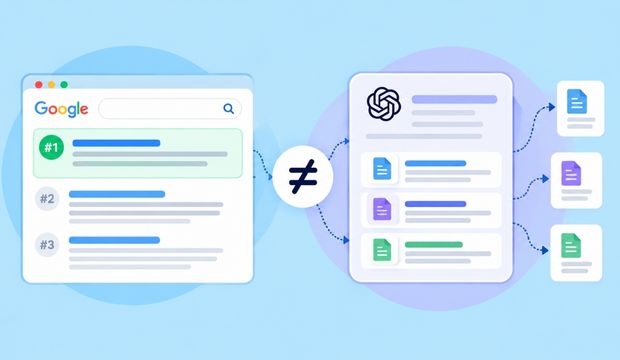
Yes, but it no longer guarantees results. In modern AI search optimization determines whether that ranking converts into traffic.

For years, the model was linear: keyword → ranking → click → conversion

That chain is now consistently breaking at the “click” stage.

The reason? AI Overviews and generative summaries now sit above traditional results and answer the query directly.

Data says:

Bottom line: Ranking still matters. But without being cited in AI-generated answers, its impact is significantly reduced.

What works in 2026 is:

  • SEO for ranking
  • AIO/AEO for citation and visibility within AI responses

The new bottleneck is not ranking. It is inclusion in the answer layer. And that’s what makes Artificial Intelligence Optimization (AIO) becomes crucial.

What is AIO, and How Is It Different from SEO?

What is AIO, and How Is It Different from SEO

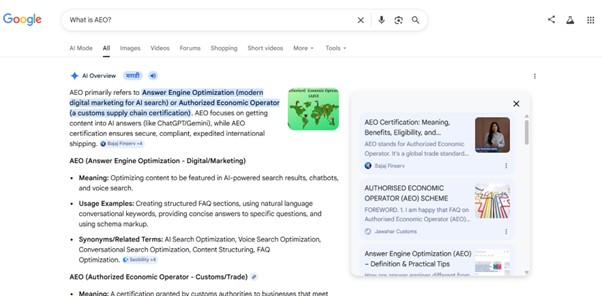
AIO: AI Overview Optimisation (or more broadly, AI Optimisation) is the practice of structuring your content so that AI systems can understand, trust, and cite it when answering user queries. For businesses adapting early, AIO services and answer engine optimization are becoming essential extensions of SEO.

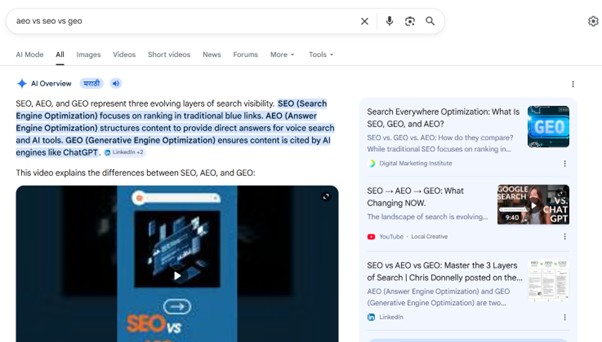
It sits within a wider family of disciplines including AEO (Answer Engine Optimization) and GEO (Generative Engine Optimisation).

The core principle across all of them:

SEO gets you found. AIO gets you chosen; by the machine that’s answering your buyer’s question. This shift is why brands are increasingly adopting an AI-first marketing strategy rather than relying solely on traditional SEO.

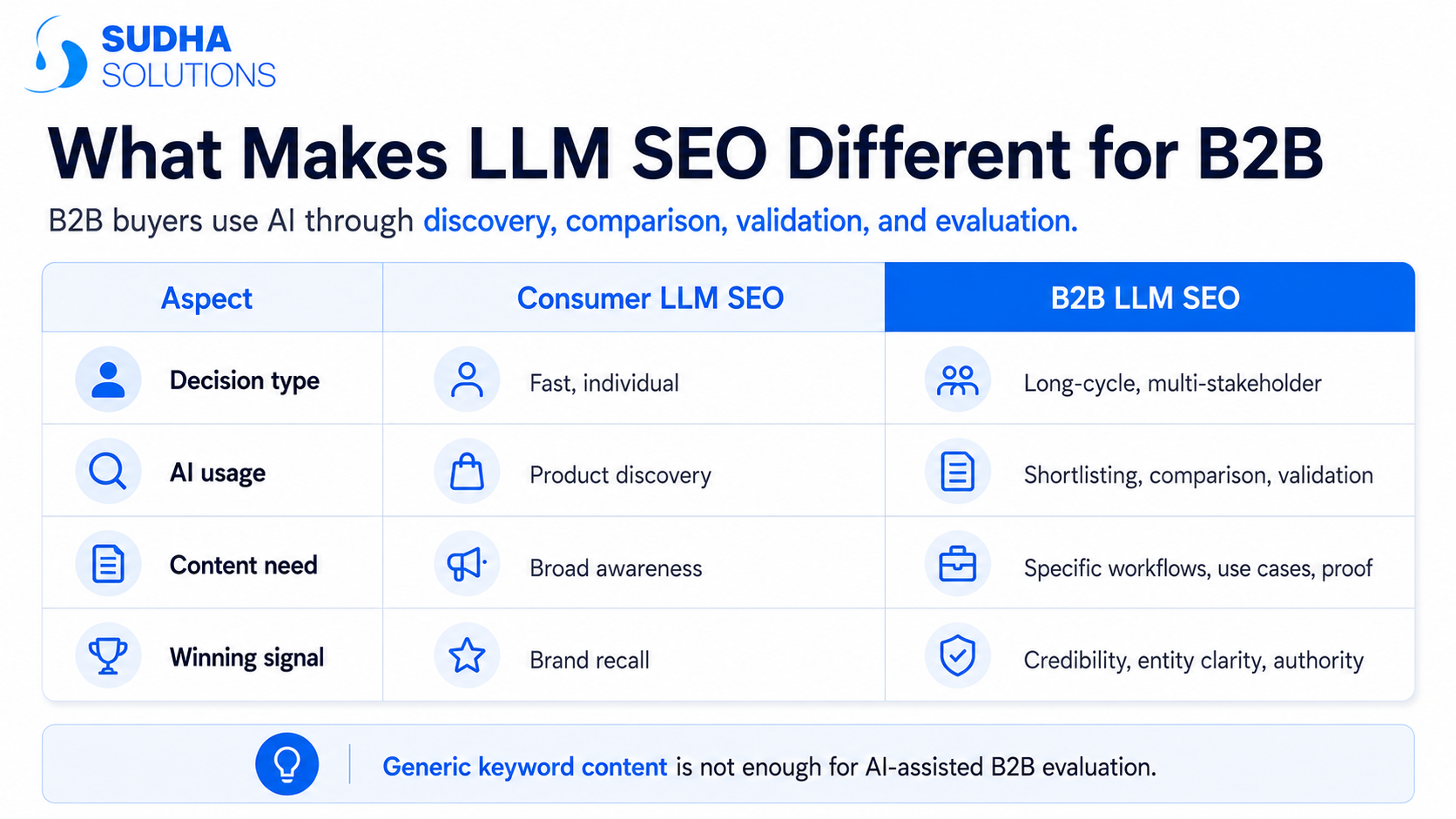
Traditional SEO was built around keywords, backlinks, and click-through rates. AI search evaluates content differently. It doesn’t just look for keyword matches — it looks for semantic clarity, direct answers, structured information, and signals of trustworthiness across the wider web.

Quick glance:

Dimension SEO AIO
Discovery Model Keyword → ranking → click Query → synthesis → answer
Content Evaluation Keywords + backlinks Clarity, structure, trust signals
User Journey Multiple site visits Often zero-click, single answer
Content Structure Narrative, depth-first Answer-first, structured (FAQs, tables, lists)
Content Placement Value Value spread across page Highest value in first 30% (drives majority of citations)

According to AirOps’ April 2026 research, the content formats that earn the most AI citations share specific structural characteristics:

  • Comparison pages with 3 or more tables earn 25.7% more citations
  • Validation pages with 8 or more list sections earn up to 26.9% more citations
  • Shortlist pages averaging 10 words or fewer per sentence earn 18.8% more citations
  • Early-discovery content that includes 5–7 statistics earns a 20% higher citation likelihood

And perhaps the most actionable single stat: 44.2% of all LLM citations come from the first 30% of a piece of content (Growth Memo, Feb 2026 cited in Digital Applied). Your introduction is now your most strategically important not just for human readers, but for AI systems deciding whether to cite you.

It also means that dense paragraphs, fluffy intros, and keyword-stuffed preambles are actively working against you in AI search. The brands winning citations lead with the answer, then provide depth.

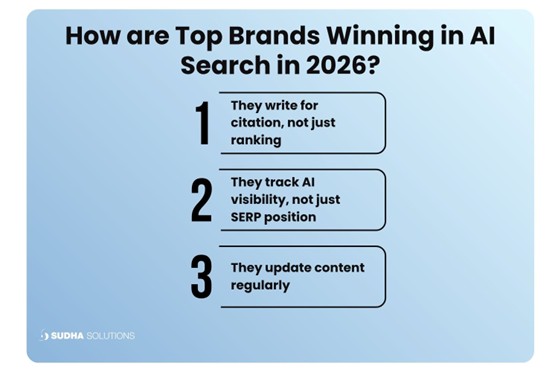
How are Top Brands Winning in AI Search in 2026?

How are Top Brands Winning in AI Search in 2026

Depthera’s 2026 market analysis paints a clear picture of where the market is right now:

  • 31% of companies have fully integrated AEO strategies into their core marketing stack
  • 39% are currently building the internal infrastructure (teams, tools, processes) to support it
  • 30% remain solely reliant on traditional SEO, facing diminishing returns

The brands outperforming right now are doing three things consistently:

  1. They write for citation, not just ranking. A strong AI citation strategy depends on structure, trust signals, and semantic clarity. Their content is structured around direct questions, answered concisely in the opening paragraphs, with data and specifics; not vague claims.
  2. They track AI visibility, not just SERP position. Effective brand mention monitoring helps brands understand how AI systems currently perceive and describe them. They’re monitoring what ChatGPT, Perplexity, and Google AI Overviews say about their brand, not just what position they hold on page one.
  3. They update content regularly. Pages updated within 2 months earn 28% more AI citations than older content. Content freshness, which was always important for SEO, is even more critical for AI citation.

How Do You Actually Start Optimising for AI Search in 2026?

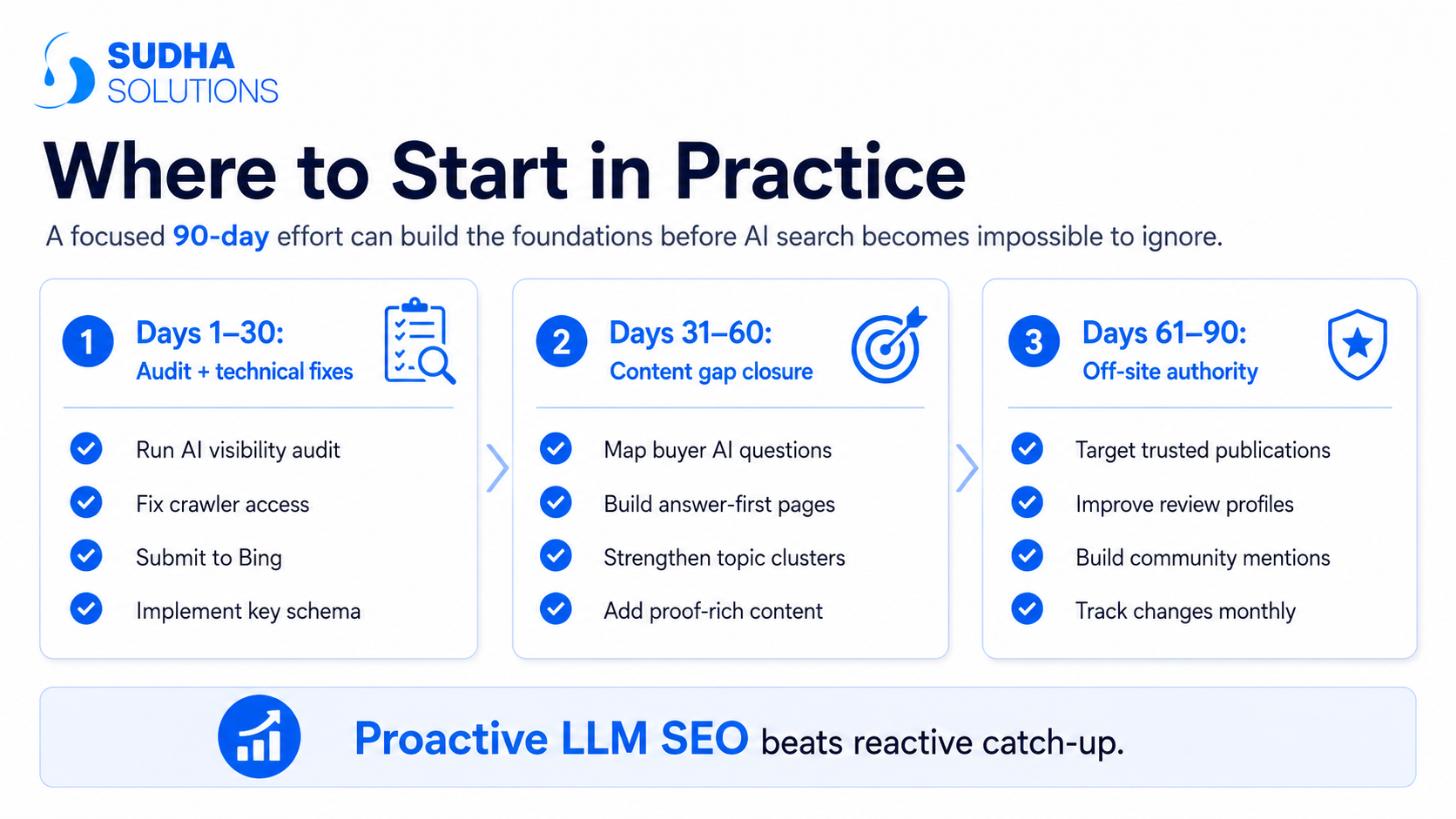
This is where a structured AI visibility audit becomes the first practical step.

Step 1: Audit your highest-traffic content for AI-readiness

Go to your top 20 pages. Ask: Does this content answer a specific question directly in the first two paragraphs? Does it include concrete data, comparisons, or clear definitions? Is it structured with headers that read like questions? If the answer is no to any of these, you have actionable quick wins.

Step 2: Restructure your content brief

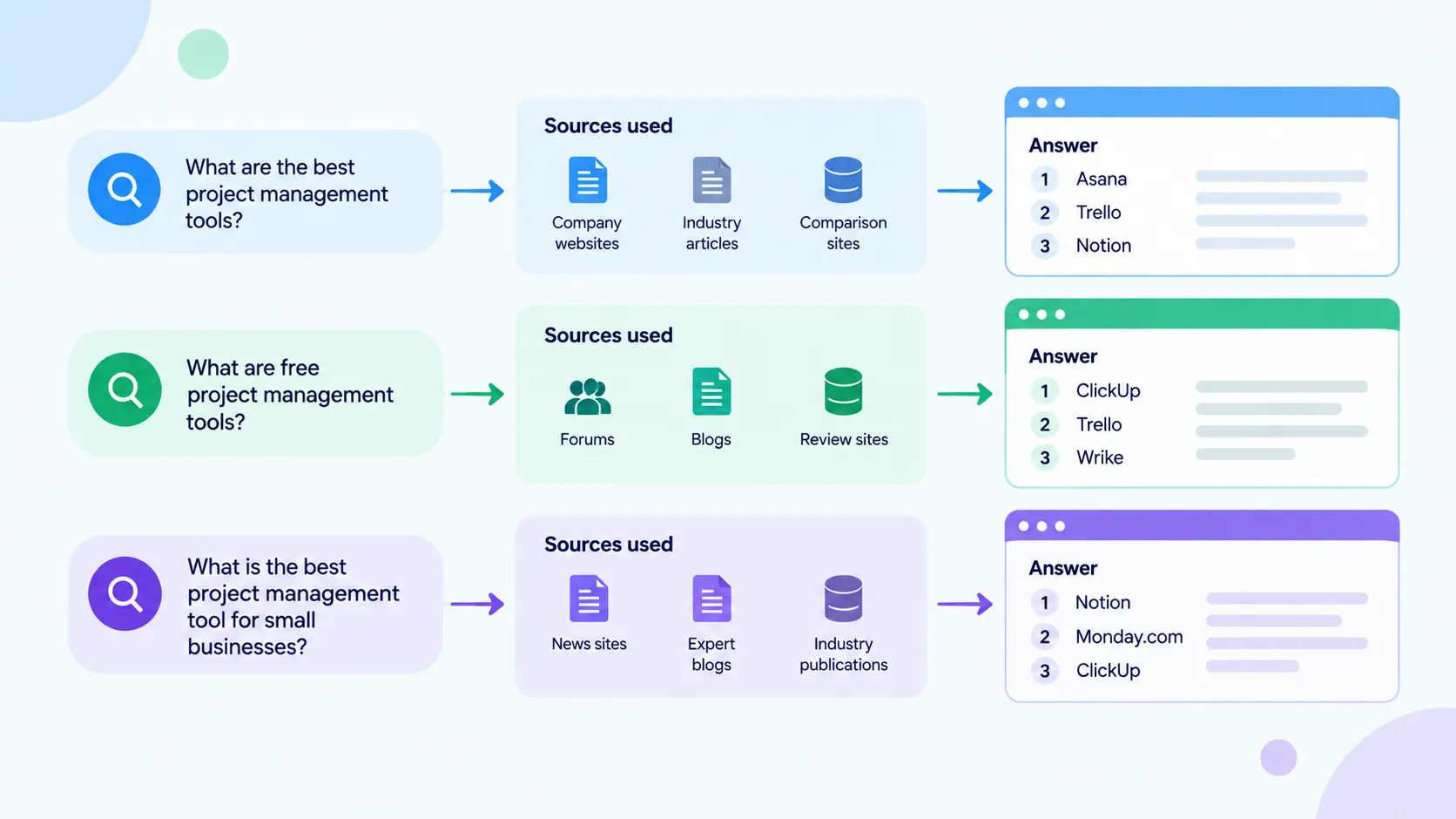
Stop briefing content around keywords. Start briefing it around questions; the exact questions your buyers are typing into ChatGPT or asking Perplexity. Between 65% and 85% of ChatGPT prompts have no matching keyword in Semrush’s database. If your content strategy is purely keyword-driven, it has a blind spot that covers the majority of AI search behaviour.

Step 3: Implement structured data

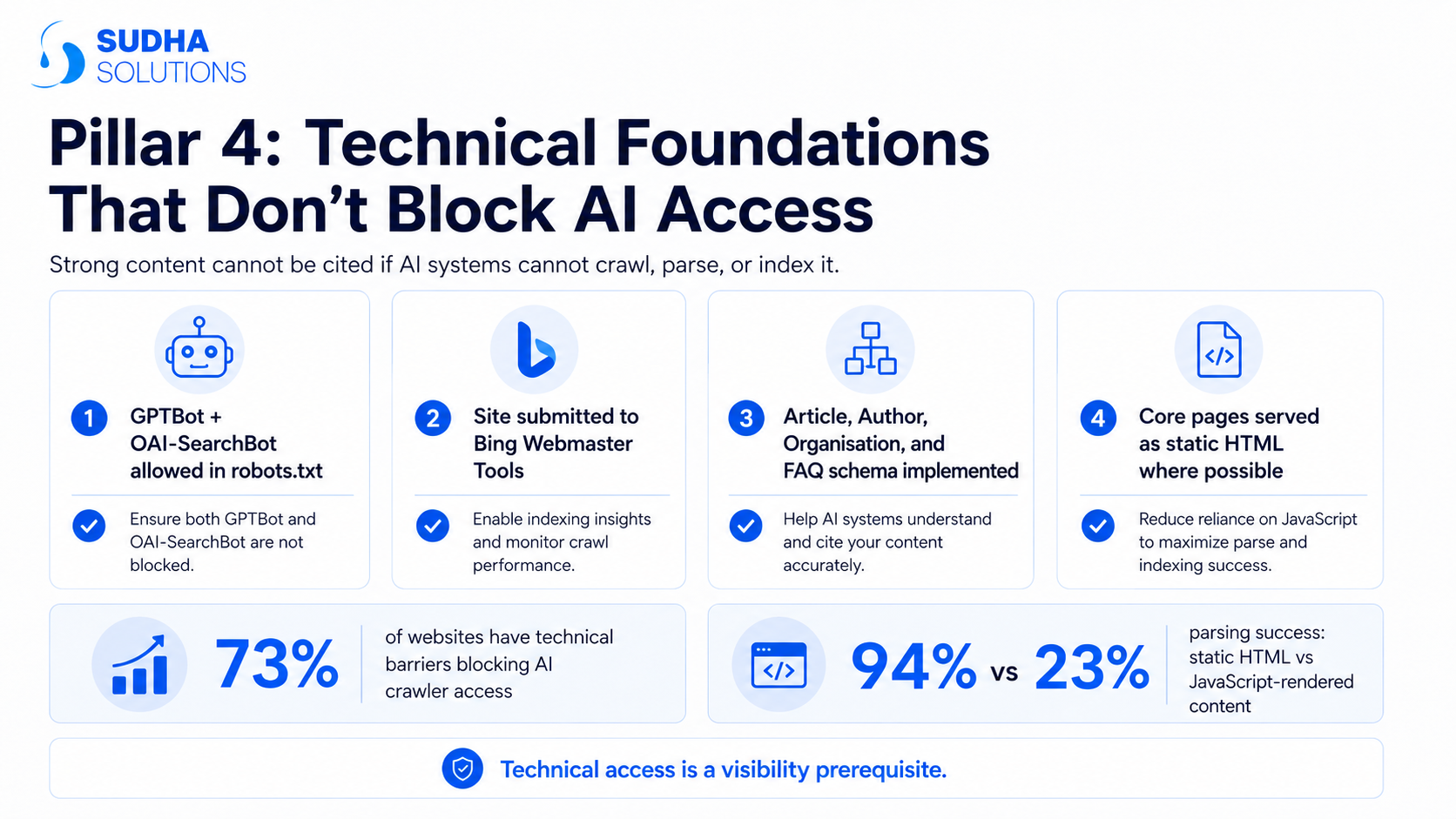
FAQPage schema, Article schema, and HowTo schema are the most directly relevant for AI citation. These tell AI systems exactly what your content means, who it’s for, and what question it answers. This is not a technical nice-to-have; it’s a baseline for AI visibility.

Step 4: Build your AI visibility baseline

Before you can improve AI visibility, you need to measure it. Ask ChatGPT, Perplexity, and Google AI Overview the 10 questions your ideal buyer is most likely to ask about your category. Note whether your brand appears, which competitors are cited, and how your brand is described. Run this monthly. This gives you a directional benchmark while the tooling market matures.

Step 5: Refresh before you create

Before briefing new content, prioritise updating existing content that’s over three months old. 85% of AI Overview citations go to content published in the last two years, with 44% specifically from 2025.

Final Thoughts

Winning in 2026 is no longer about choosing SEO vs AEO; it’s about integrating both into one visibility system.

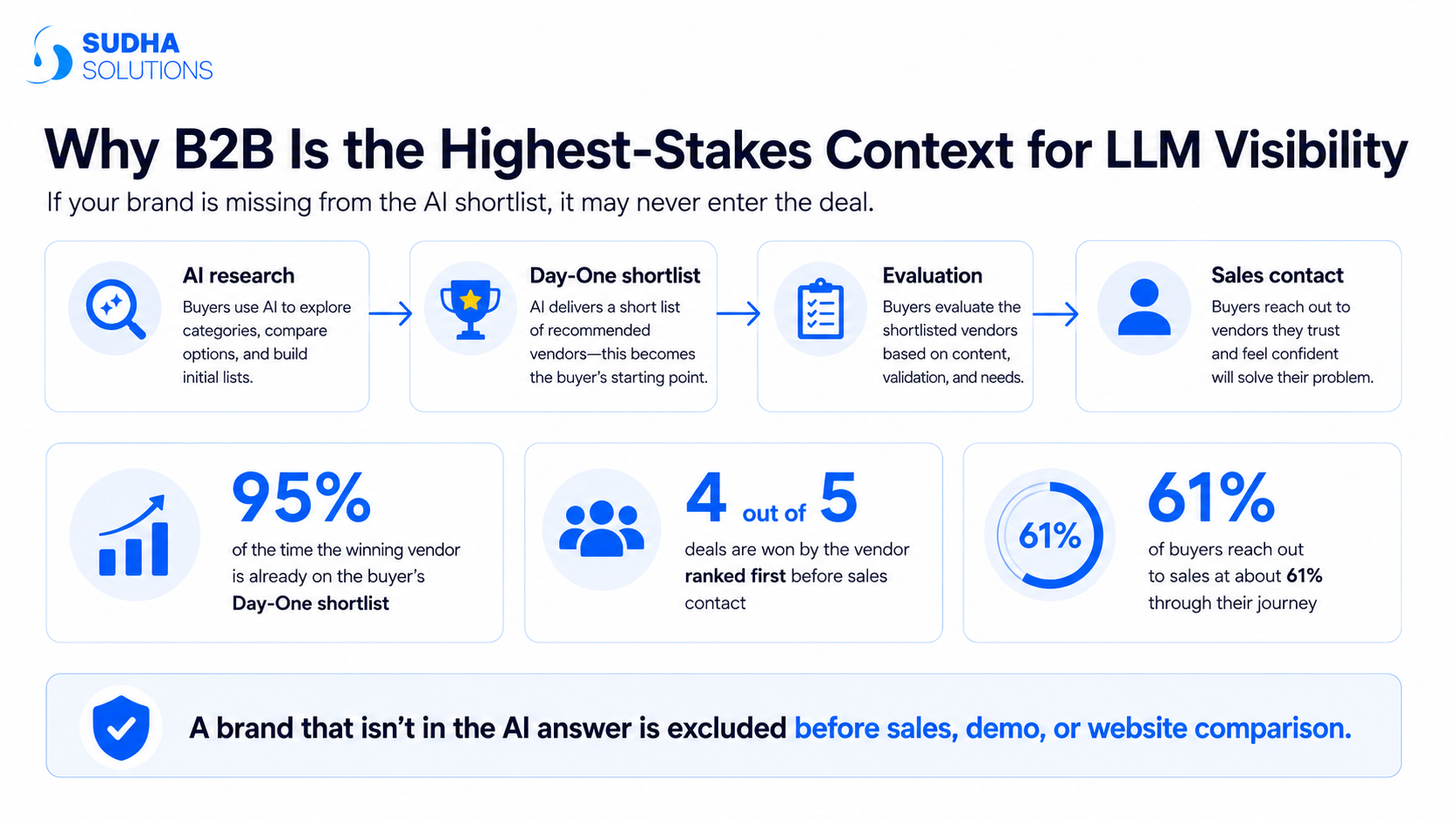
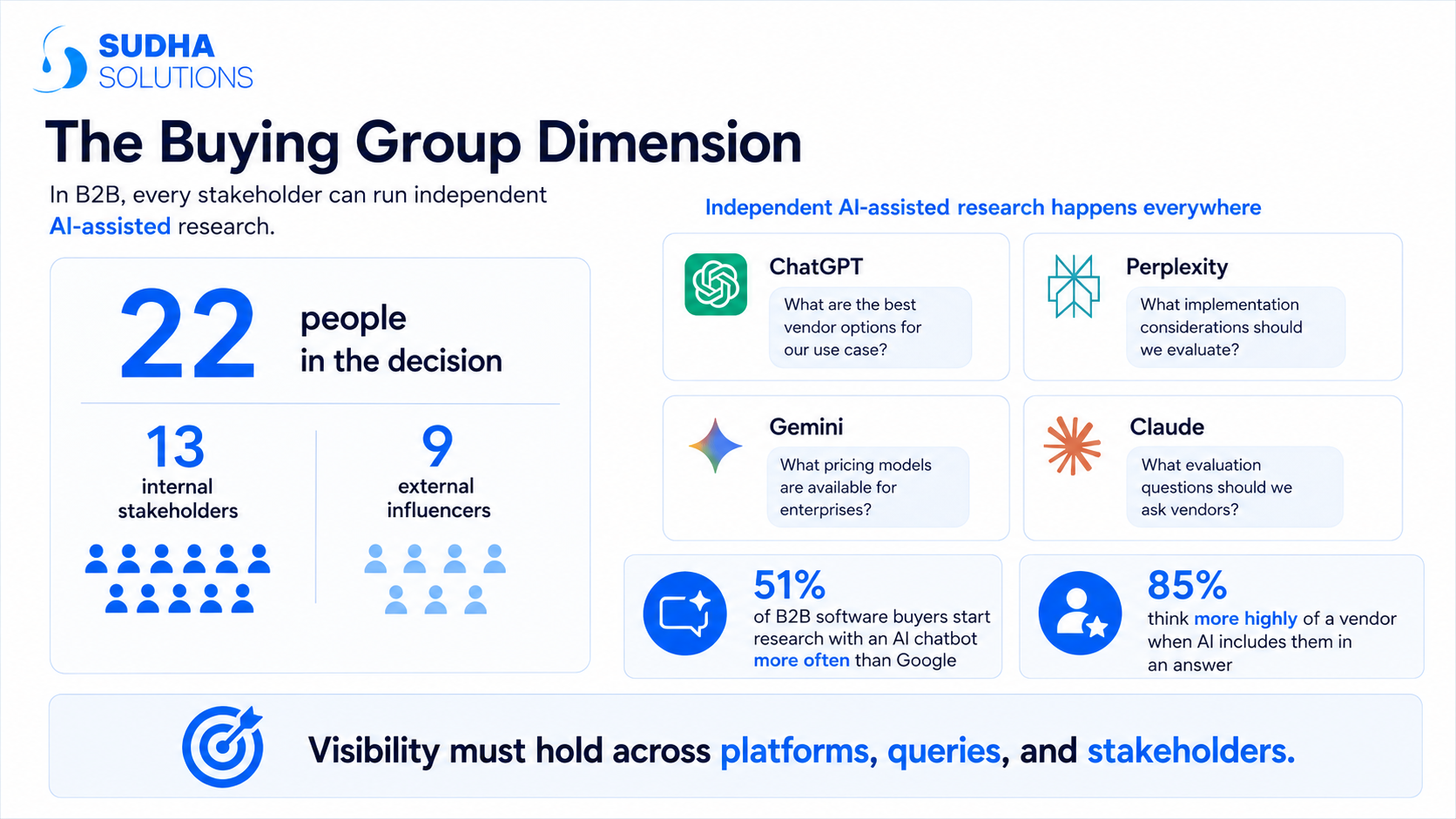
The shift from SEO to AIO is the operating reality of 2026. Your buyers are already using AI to research, compare, and shortlist. The question is whether your brand appears in those conversations or your competitor does.

The good news: 70% of the market hasn’t fully made this transition yet. The brands that move now are building moats.

If you’re unsure where your brand currently stands in AI search, or what it would take to start earning citations at scale, talk to us.

At Sudha Solutions, we work with marketing teams to audit AI visibility, identify content gaps, and build the kind of structured, citation-ready content strategy that performs across both traditional search and AI platforms.

The AI has already formed an opinion about your brand. The only question is whether that opinion is helping you or your competitor.

Categories
AEO Optimization General SEO

You Have Customers. You Have Revenue. So Why Does Growth Feel This Hard?

You didn’t get here by accident. You built something real, but scaling now requires more than founder instinct. It requires a structured go-to-market strategy, supported by SEO expert services, performance marketing services, and systems that consistently generate qualified growth.

You built something people actually wanted. You closed your first deals. Hit your first million. Maybe your second or third. And for a while, it felt like things were working.

But lately? It’s different.

You’re doing more, more outreach, more campaigns, more hiring, and the results aren’t keeping up. Deals are taking longer. Your team is stretched. And somewhere in the back of your mind, there’s a question you haven’t said out loud yet:

Are we doing this right?

That question is worth taking seriously. Because at the stage you’re at, somewhere between proving the idea and actually scaling the business, the way you go to market matters more than almost anything else.

Here’s What Nobody Tells You When You Cross $1M ARR

The thing that got you here was probably you.

Your relationships. Your hustle. Your ability to explain the product better than anyone else and convince people to take a chance on it. That’s real, and it worked.

But it doesn’t scale.

You can’t be in every sales conversation. You can’t personally follow up with every lead. And the customers who found you early, the ones who were already half-convinced before they even spoke to you, aren’t the ones coming in now.

The new pipeline is colder. Slower. More skeptical. And your team is trying to sell to them the same way you sold to the early ones – which is why it’s not working.

This isn’t a team problem. It’s a system problem. And the system is called your go-to-market.


What “Go-To-Market” Actually Means (Without the Jargon)

Today, effective go-to-market execution often combines content marketing strategy, professional UI UX design, and lead generation strategy to ensure every customer touchpoint reinforces trust.

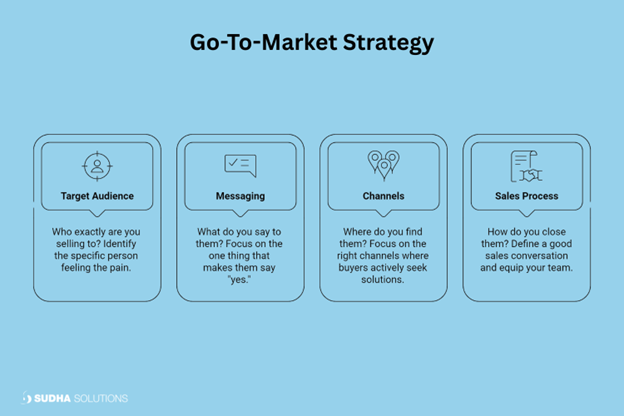
Strip away all the buzzwords and a go-to-market strategy answers four simple questions:

Who exactly are you selling to? Not “businesses with 50–500 employees.” That’s not specific enough. Who is the actual person feeling the actual pain your product solves – and what’s happening in their world right now that makes them ready to buy?

What do you say to them? Not a list of features. Not a category claim. What’s the one thing that makes someone think “yes, this is exactly what I’ve been looking for” – and are you actually saying that, clearly, everywhere they encounter you?

In 2026, that visibility increasingly depends on answer engine optimization, ensuring your brand is not only discoverable in search, but also trusted enough to be cited by AI assistants.

Where do you find them? Not every channel. The right channel. Where does your buyer go when they’re actively trying to solve this problem? That’s where you should be. Everywhere else is noise.

How do you close them? What does a good sales conversation look like? What does a bad one look like? Does your team know the difference – and do they have the tools to run it well without you in the room?

If you have clear, honest answers to all four; great. Most companies at your stage don’t. And that gap is quietly costing them.

The Signs Your Go-To-Market Is Leaking

You don’t always know it’s broken. It shows up in smaller ways.

  1. Leads come in, but they don’t convert the way early customers did. Your first buyers already believed in the problem. They were easy. The ones coming in now need more convincing; and your funnel wasn’t built for that.
  2. Your sales team is busy, but the pipeline doesn’t show it. This usually means messaging. When what you say is vague, every salesperson compensates differently. One over-explains. One discounts. One just talks more. None of it is consistent, and none of it scales.
  3. Marketing and sales aren’t really aligned. They’re in the same company, maybe even the same room. But marketing is building one thing and sales is saying something different. Leads come in that sales doesn’t trust. Sales closes deals that marketing didn’t plan for. And both teams feel like the other one doesn’t get it.
  4. You’re everywhere, but nothing is compounding. Google. Events. Cold email. A newsletter. It’s a lot of activity. Without structural systems like a pillar page SEO strategy, even strong marketing activity can remain fragmented instead of compounding authority over time. But if none of it is connected, if there’s no common thread pulling someone from “I found you” to “I’m ready to buy”, you’re spending energy without building momentum.
  5. Deals are taking longer than they used to. Sometimes this is the market. But often it’s that your buyers need more reassurance before they commit, and you’re not giving it to them between conversations.

If two or more of these sound familiar, your go-to-market needs work.

What Fixing It Actually Looks Like

You don’t need to rebuild everything. You need to find where it’s breaking and fix that first.

1.    Start with who you’re really selling to

Go back to your best customers – the ones who stuck around, paid on time, maybe even sent you referrals. What do they have in common?

Not just their industry or company size. Go deeper. What was going wrong in their business before they found you? Who made the decision to buy? How long did it take them?

That pattern is more valuable than any market research report. It tells you exactly who you should be targeting – and just as importantly, who you should stop spending time on.

2.    Then look at what you’re saying

This is where content marketing experts become critical, aligning your website, sales narrative, and brand positioning into one strategic growth message.

In practice, this often means building content that ranks and converts, messaging that not only attracts the right audience but also moves them toward a decision.

Ask three people on your sales team this question: “Why do customers choose us over other options?”

If you get three different answers, that’s your problem right there. Because if your own team can’t articulate it clearly and consistently, imagine what it sounds like to a buyer who’s also talking to your competitors.

Clear messaging doesn’t mean a better tagline. It means everyone, your website, your sales team, your proposals, your follow-up emails, is saying the same thing. A thing that’s true, specific, and actually matters to the person reading it.

3.    Then fix your channels

Whether through performance marketing agency execution, seo services in mumbai, or AI-first discoverability, channel depth matters more than channel quantity.

The bigger question is whether your current mix reflects the right balance of performance marketing vs content marketing, so you’re not just generating traffic but building sustainable pipeline momentum. Deeper presence on the right channels usually is.

The right channel is wherever your buyer goes when they’re actively looking to solve the problem you solve. If you don’t know where that is, ask your best customers how they found you. The answer is usually in that conversation.

4.    Then build a sales process that works without you

Document what a good sales conversation looks like. What questions get asked. What objections come up. What a good fit looks and sounds like versus a bad one.

When that knowledge lives only in your head, your team is guessing. When it’s written down and practised, it becomes a system – and systems scale in a way that individuals don’t.

The Honest Truth About This Stage

Scaling from $1M to $10M ARR is genuinely hard. Not because the market isn’t there, and not because your product isn’t good enough.

It’s hard because the rules change.

What got you to $1M, speed, instinct, founder energy, starts working against you as you try to grow. You need structure now. That structure increasingly includes a strong brand authority strategy, where how your business is discussed across search, AI, and digital ecosystems directly impacts growth. Not the kind that slows you down, but the kind that lets other people carry the weight alongside you.

The founders who get through this stage well aren’t the ones with the biggest budgets or the most aggressive targets. They’re the ones who got honest, early, about what was actually breaking; and fixed it at the root instead of patching over it.

Where Sudha Solutions Comes In

We work with founders at exactly this stage; businesses that have proven the idea and are now trying to scale it properly.

What we do is full-funnel: strategy and execution together. Because a great strategy that nobody executes is just a document. And execution without strategy is just expensive trial and error.

We help you figure out what’s breaking, build the system to fix it, and run it with you; so growth stops feeling like something that happens to you and starts feeling like something you’re in control of.

If this piece made you think about your own business, we’d love to hear what you’re working through.

[Let’s talk →]

Just a real conversation about where you are and what might help.

Frequently Asked Questions


What is a go-to-market strategy?

A go-to-market strategy is a clear plan for who you’re selling to, what you’re saying to them, where you reach them, and how you convert them into customers in a way that can scale beyond the founder.

How do you know if your go-to-market strategy is broken?

You’ll usually see signs like declining conversion rates, longer sales cycles, inconsistent messaging across your team, and growing effort that doesn’t translate into proportional revenue.

Why are my leads not converting like they used to?

Because early customers were already problem-aware and easier to convince, while newer leads are colder, more skeptical, and require clearer positioning, stronger messaging, and more structured nurturing.

How do I define my ideal customer profile (ICP) more precisely?

Look at your best existing customers and identify shared patterns in their problems, buying triggers, decision-makers, and outcomes, then focus your efforts on finding more of those specific profiles.

How do I align marketing and sales teams effectively?

Alignment comes from shared definitions of the ideal customer, consistent messaging, agreed qualification criteria, and regular feedback loops so both teams work toward the same revenue outcomes instead of separate goals.


Categories
AEO Optimization AI Overview General SEO

How AI Decides Which Brands to Cite (And Why Most Don’t Make It)

Are you outranked by worse content? Or even after following all the winning rules of writing content, you’re invisible to AI?

You’ve followed every SEO rule.
You’ve written long-form content.
You’ve optimised keywords, added backlinks, and improved readability.

And yet… competitors with seemingly weaker content show up in AI answers and you don’t.

Don’t worry, this is not because your content quality is not up to par.
It’s more likely because your content is structured for traditional search engines and not LLMs.

Today, platforms like ChatGPT, Google Gemini, and Perplexity AI have not only replaced the traditional Google searches but have become the primary search engine of 44% users.

And these platforms don’t rank results; they select and cite them.

That means you’re not competing for rank anymore. You’re competing for selection.

And here is exactly how your brand can dominate AI visibility in 2026 and beyond.

TL; DR

Ranking #1 no longer guarantees traffic or visibility. AI engines prioritise content they can easily extract, verify, and trust. To get cited, brands must combine AEO with SEO; focusing on structure, entity clarity, and consistent presence across third-party platforms.

Why Ranking #1 No Longer Guarantees Visibility

Marketers, did you know? For every 100 clicks a #1 ranking once earned, AI Overviews can now cut that by ~35–58 clicks. The rest are absorbed by AI-generated summaries that answer the user’s query without them ever needing to visit your website.

Organic click-through rates on queries with AI Overviews dropped a staggering 61% between June 2024 and September 2025, falling from 1.76% to just 0.61%. Pew Research found that when an AI summary is present, users are about half as likely to click a link at all.

McKinsey has framed this shift bluntly, describing AI search experiences as the “new front door to the internet.” Their consumer survey data shows that roughly half of consumers already prefer AI-augmented search or assistants for complex decisions.

The irony is this: Semrush data shows that ChatGPT primarily cites pages ranking in positions 21 and beyond in traditional organic search about 90% of the time.

This means:

  • Even if you rank #1 on Google, AI may ignore you
  • Lower-ranked but better-structured content gets cited

The rules have changed. Ranking is no longer the goal. Being selected in AI answers is.

What is AEO (Answer Engine Optimization) and Why It Matters Now

What is AEO (Answer Engine Optimization)

Answer Engine Optimization (AEO) is the practice of structuring and enhancing your content so that AI-powered search platforms (AIO, ChatGPT, Perplexity, etc) select it as a cited source when generating answers.

Unlike traditional SEO, which optimises for ranked links on a results page, AEO targets the retrieval layer: the moment an LLM selects which sources to pull into its answer generation.

The content must be easy to retrieve, understand, extract from, and attribute.

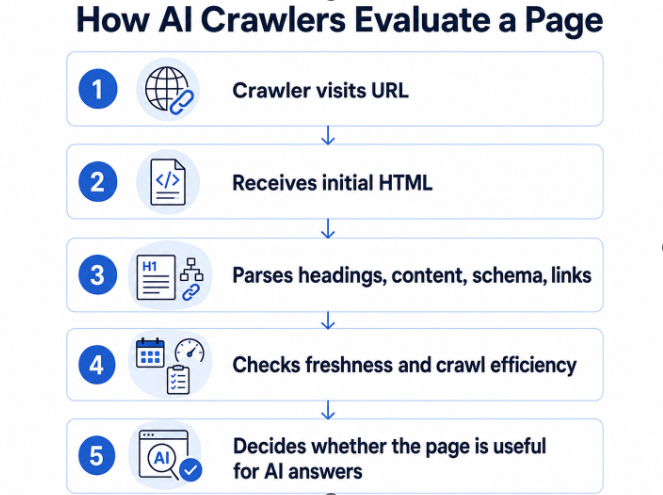
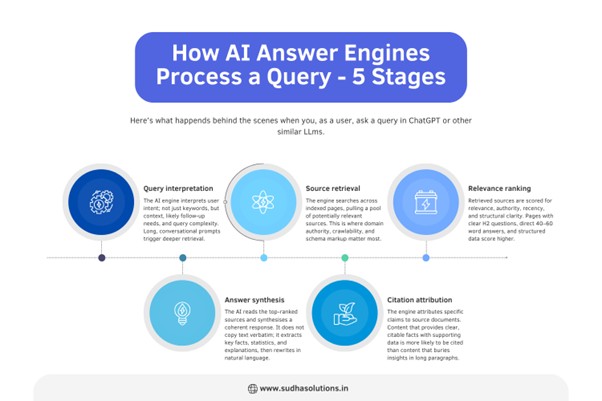
How AI Answer engine

The market has already recognised AEO’s importance. 42% of B2B content marketers report reallocating budget from traditional SEO content to AEO-optimised content. And 98% of CMOs say they are investing in AEO this year.

The bottom line?

  • SEO drives the organic traffic that pays the bills today.
  • AEO builds the brand authority that protects your visibility as AI search grows.

And you need both, but AEO is where the early-mover advantage lies right now.

Comparison: Why One Brand Gets Cited and Another Doesn’t

BRAND A – Gets Cited

BRAND B – Gets Ignored

FAQ schema on every key page No structured schema on any page
Comparison pages with structured tables Long paragraphs, no direct answer blocks
40–60 word direct answers under each H2 Case studies locked in PDFs, not HTML
Updated profiles on review platforms Review platforms empty or outdated
Active in reddit threads with genuine advice No community presence on forums
Original research published and widely cited No original data or research published
Notable press mentions No external media mentions in 12+ months
Content distributed across 8+ publications Content only published on own domain


Takeaway:
The difference is rarely about content quality. It’s almost always about content structuredistribution, and discoverability signals. Brand B might actually have better content but AI can’t extract, attribute, or verify it.

Why Do Some Brands Appear More Often in AI Recommendations?

This is the question at the centre of every marketing strategy conversation in 2026.

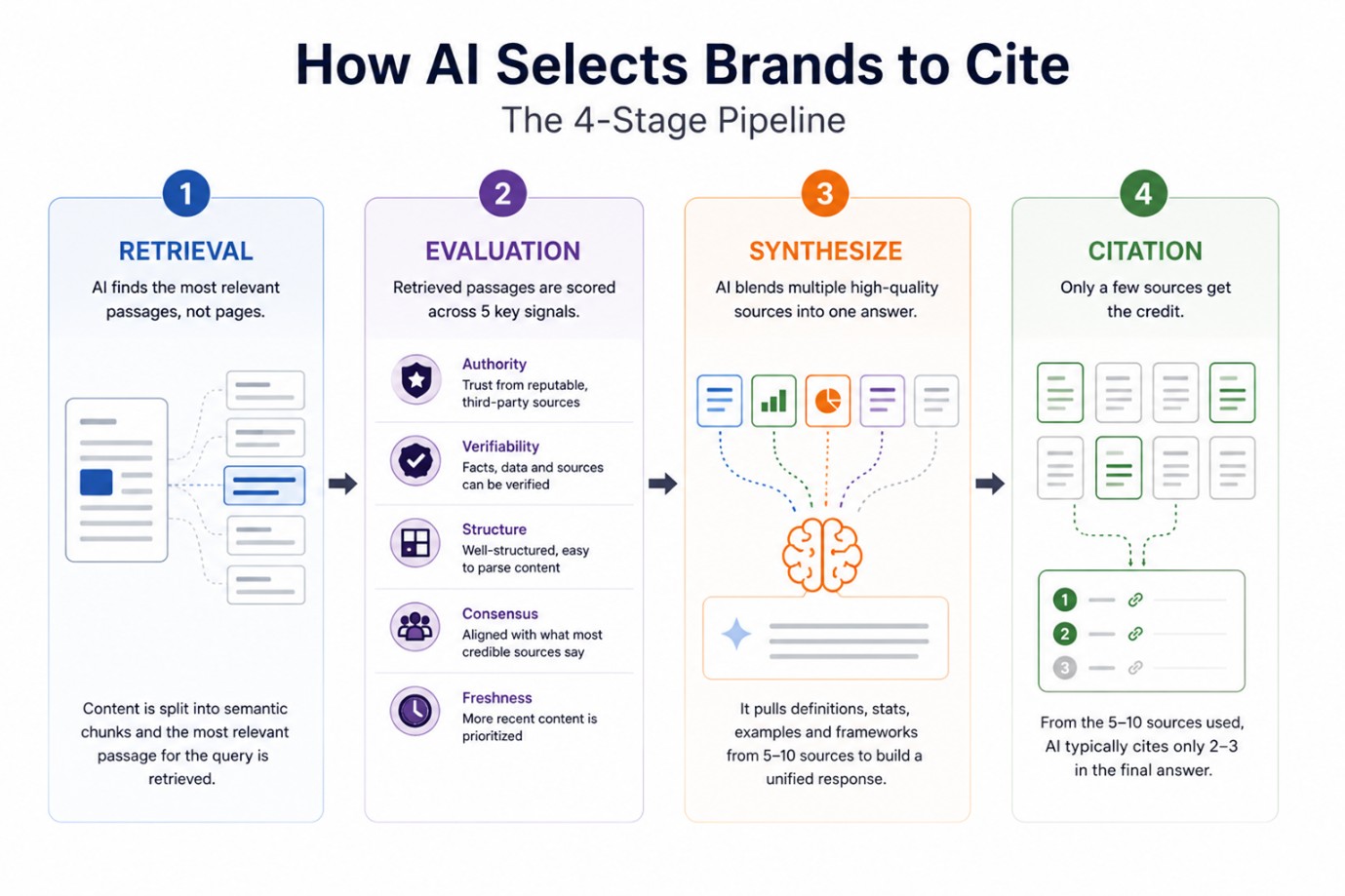
AI systems follow a 3-stage pipeline: Retrieve → Evaluate → Synthesize → Cite

Let’s break down each layer with deeper insights, research, and real examples.

Stage 1: Retrieval

AI breaks your content into semantic chunks and retrieves the most relevant passage not the most relevant page. The unit of competition is no longer your article. It’s the best paragraph on the internet for that specific question.

This means query-intent match matters more than keywords. A page targeting “AI SEO tips” won’t be retrieved for “why is my content not showing in AI answers” even if it covers the same ground.

Stage 2: Evaluation

Retrieved passages are then scored across five signals:

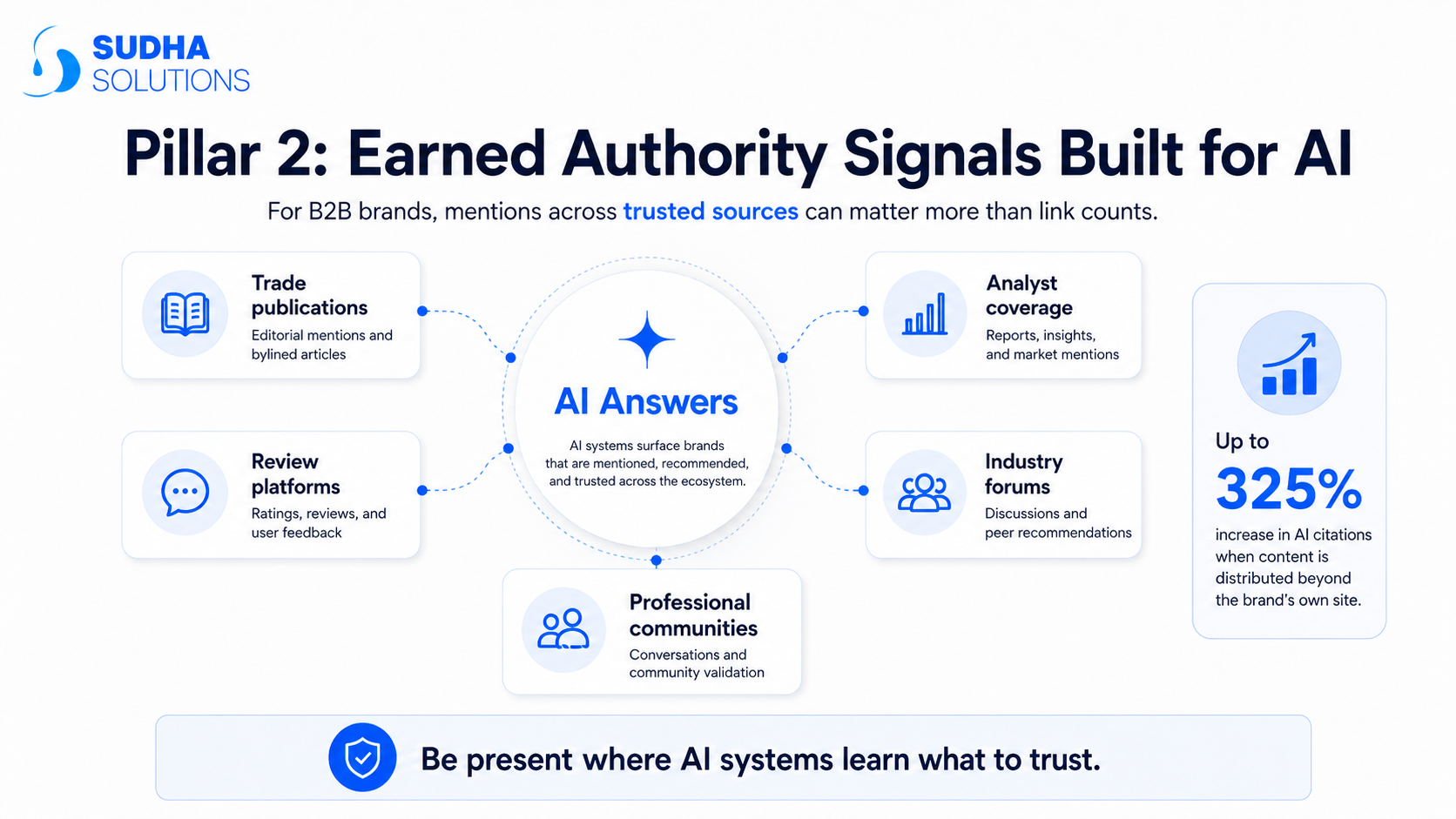
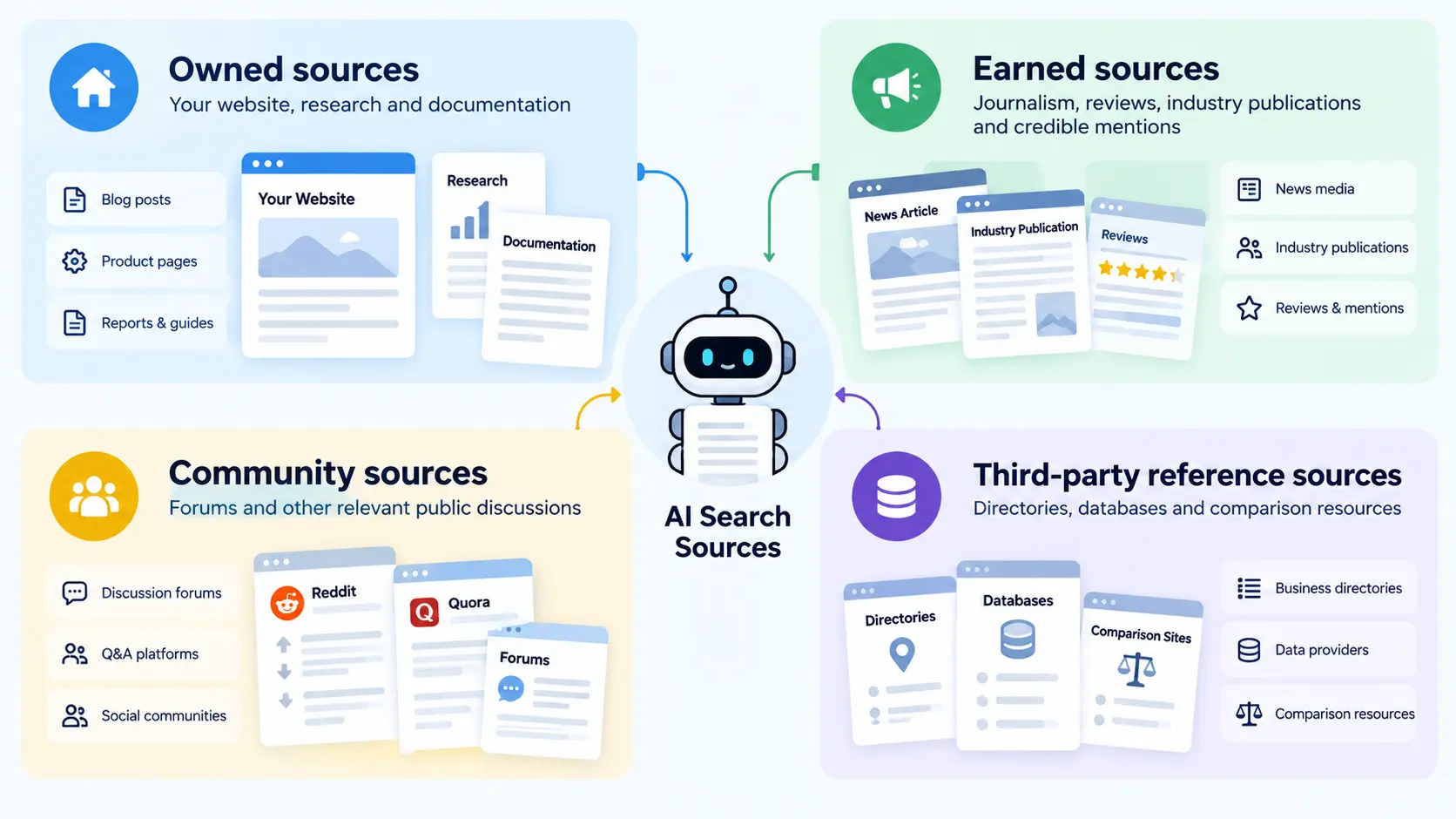
  • Authority: AI is “overwhelmingly biased toward earned media and authoritative third-party sources.” Mentions in news sites, research papers, and industry blogs outweigh owned content every time.
  • Verifiability: Only half of AI-generated statements are fully supported by citations today. AI actively avoids content it can’t verify. No data, no citation.
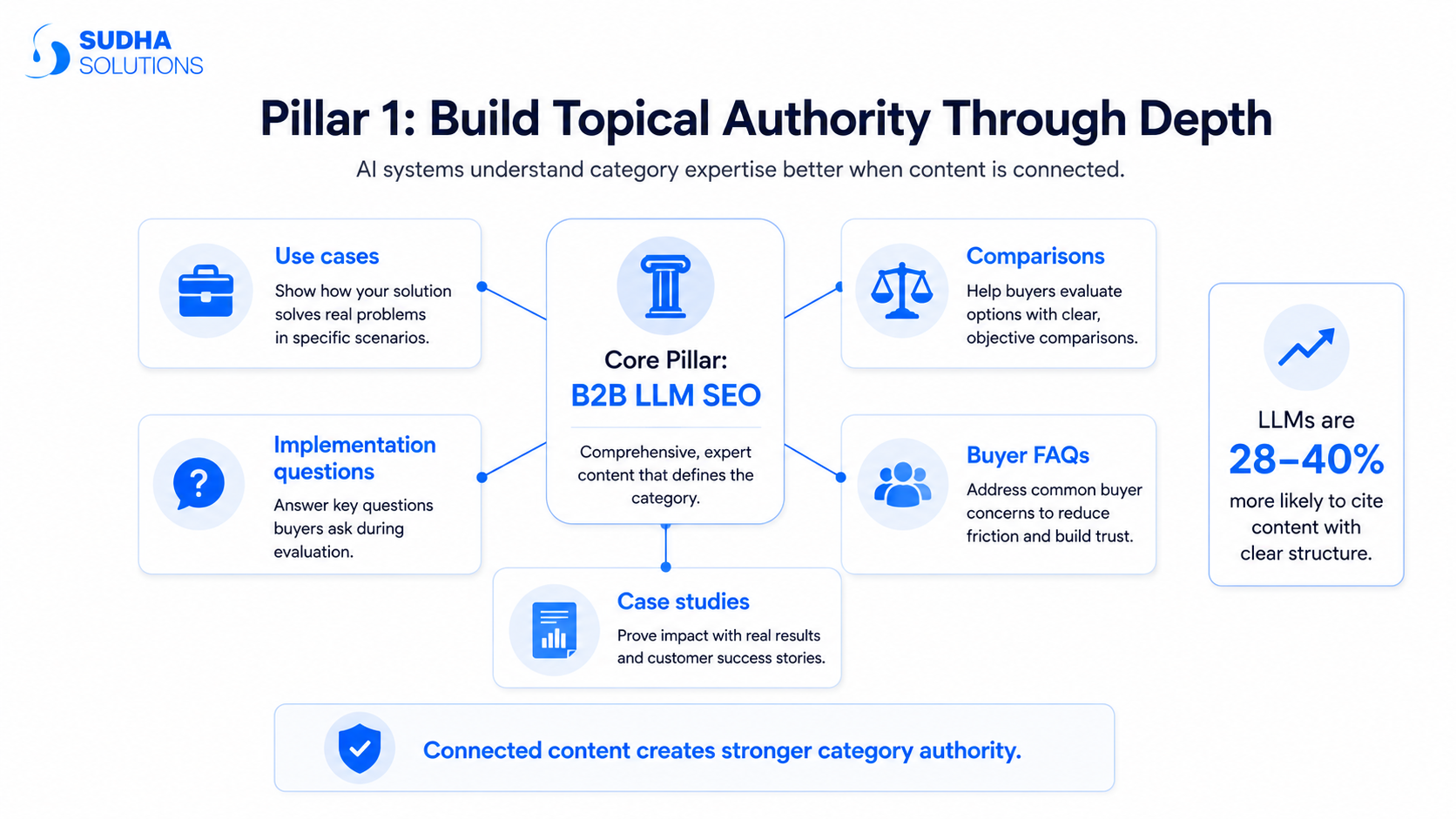
  • Structure: AI isn’t reading; it’s only parsing. Pages with structured formats and schema markup are 30–40% more likely to be cited. Question-based headings with 50–120 word answer blocks are the target format.
  • Consensus: AI compares sources and trusts repetition. If ten sites say the same thing, confidence is high. If only yours says it, it may be ignored entirely. Being right isn’t enough; you need to be aligned with the ecosystem.
  • Freshness: A blog updated in 2026 will consistently out-prioritise the same content last touched in 2023.

Stage 3: Synthesize

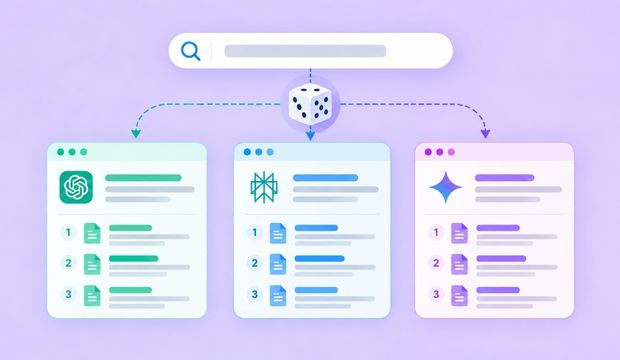
AI doesn’t pick one winner. It blends 5–10 sources into a single unified response; pulling a definition from one site, a statistic from another, a framework from a third. The goal isn’t to be the only source cited. It’s to be included in the blend.

Stage 4: Citation

Even after synthesis, AI cites only 2–3 sources from the 5–10 it used internally. ChatGPT only cites 15% of the pages it retrieves. Citations are concentrated among a small set of high-visibility domains that pass authority checks faster and appear more consistently across the retrieval pool.

There is also a documented big-brand bias marketers talk about: AI systems systematically prefer established, widely-referenced domains. Smaller brands need stronger signals, not just better content.

You’ll learn more on this in our other blog: It’s Not Popularity: How AI Decides Which Brands Deserve Visibility

So, the best content doesn’t win. The most usable, trusted, structured, and verifiable content wins; distributed widely enough that AI encounters it, recognises it, and has the confidence to attribute it.

Why Most Brands Fail to Get Cited By AI?

Why Most Brands Fail to Get Cited By AI

1. No structured schema markup

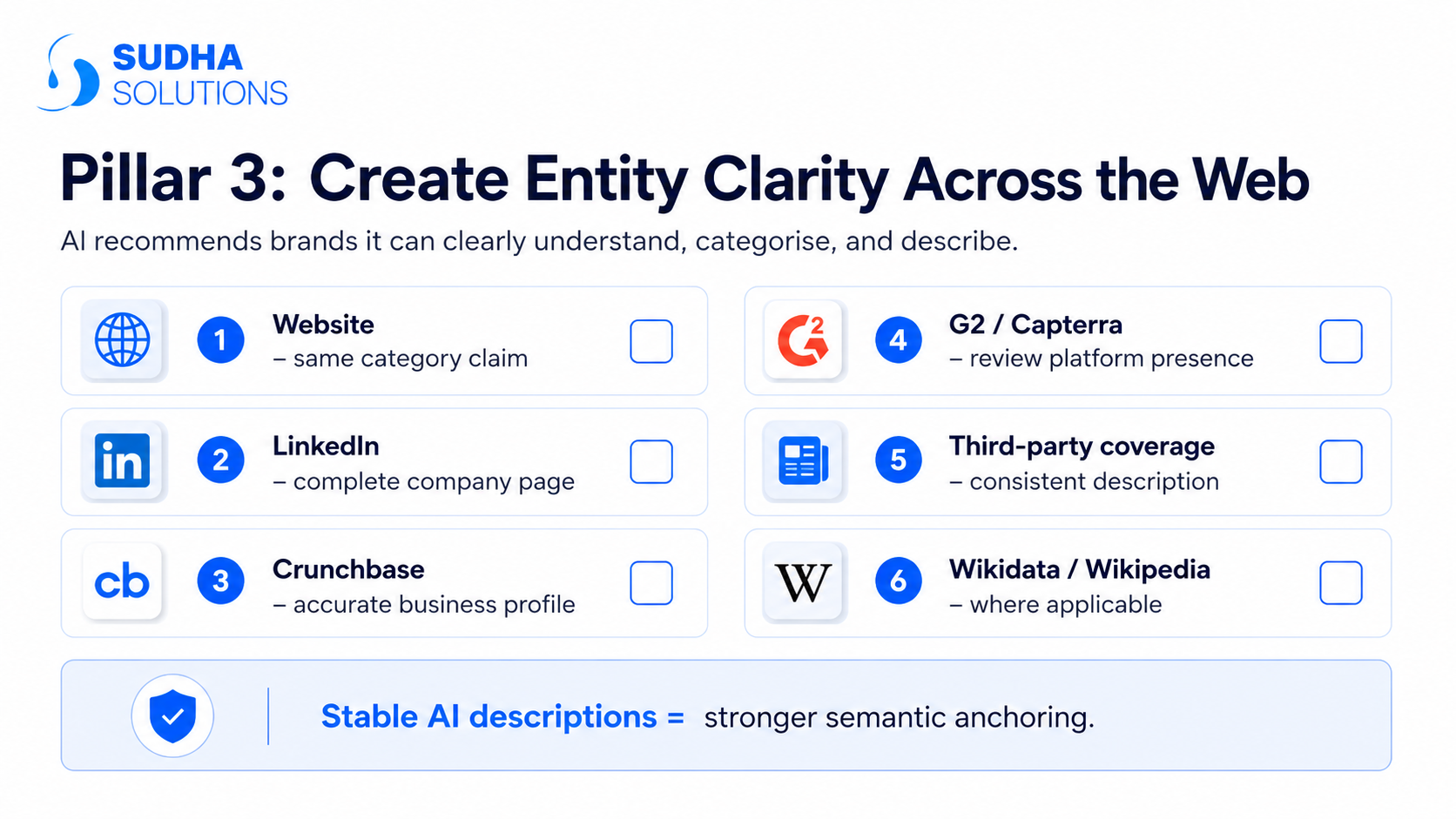
Brands must have a full Organization schema including sameAs properties, founder, and contactPoint. Without it, the AI is essentially “guessing” who you are and what you do. This is the single most fixable technical gap.

2. Content buried in PDFs

Most B2B expertise are invisible to AI because it resides in non-HTML formats. White papers, case studies, and research locked in PDFs are computationally expensive for AI to parse and often ignored entirely.

3. Optimised for keywords, not questions

Traditional SEO content is structured around keywords. AI engines are structured around questions and direct answers. Content that doesn’t mirror how users actually ask questions in ChatGPT or Perplexity won’t be retrieved for those queries.

4. High authority, low citations

Studies show that brands with strong domain authority but minimal recent mentions in news, Wikipedia, and industry sources perform poorly. AI treats them as “old guard” rather than “currently relevant.” Freshness of brand mentions matters.

5. Zero community presence

Domains with millions of brand mentions on Quora and Reddit have roughly 4× higher chances of being cited than those with minimal activity. Brands that exist only on their own website are invisible to the community validation layer AI engines prize.

6. Unclear site navigation hierarchy

If brands fail to use SiteNavigationElement schema, it’s difficult for AI agents to understand the hierarchy of a site’s services. If AI can’t navigate your site like a user can, it defaults to ignoring it.

How to Optimise Your Content for AI Citations: Checklist You Can Actually Follow

Structured Data (Core Extraction Layer)

  1. Organisation schema with sameAs links (socials, Wikipedia, Wikidata; entity grounding)
  2. FAQPage schema on key pages (top extraction source after TL;DR blocks)
  3. Article + Author (Person) schema (clear authorship + credibility signals)
  4. Review / Product schema (if applicable) (ratings + trust metadata for AI summaries)

Answer-First Content (Primary Citation Layer)

  1. TL;DR (40–60 words) at top (most frequently extracted block)
  2. Question-based H2s (real queries) (“What is…”, “How to…”, “Why does…”)
  3. Direct answer under each H2 (40–60 words) (before any explanation)
  4. Short paragraphs (2–4 sentences max) (improves extraction + readability)
  1. No fluff introductions (immediate answer delivery only)

Content Structure (Parsing + Clarity Layer)

  1. Clear hierarchy (H1 → H2 → H3 + clean formatting) (helps AI chunk content correctly)
  2. Tables / bullets for comparisons & steps (AI prefers structured blocks)
  3. Statistics + data clearly presented (numbers = high citation probability)

Credibility & Authority (Trust Layer)

  1. Cited sources + original data points (external validation + uniqueness)
  2. Author credibility + publication dates visible (E-E-A-T signals for LLMs)
  3. Balanced, transparent content (include limitations, methods, or alternatives)

Related read: How to Optimize for AI-Powered Search: Strategies for Google, ChatGPT & Perplexity

Why Reddit Is Suddenly Dominating AI Citations

Why Reddit Is Suddenly Dominating AI Citations

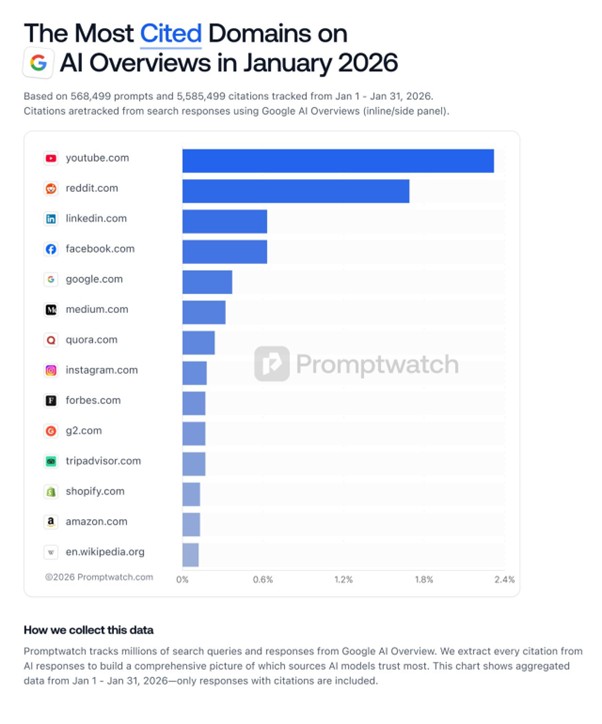
Source: Promptwatch

If you haven’t taken Reddit seriously as a marketing channel, 2026 is the year that changes. Reddit has emerged as one of the most consistently cited domains across major AI platforms and understanding why reveals something important about how AI thinks.

  1. Authentic experience over marketing copy

AI platforms are constantly asked “What’s the best X?” or “Should I use Y?” These are opinion-seeking queries that require real human experiences. Reddit is the largest repository of authentic human opinions on the internet; something corporate landing pages cannot replicate.

  1. Built-in quality signals via upvotes

Reddit’s upvote system provides a quality signal AI systems can leverage. A comment with 200 upvotes is statistically more likely to contain accurate, useful information than a random blog post and AI models appear to weight this accordingly.

  1. Google’s $60M licensing deal

Did you know, Google’s annual licensing agreement gives it access to Reddit’s content for AI training and retrieval, reinforcing Reddit’s position in AI Overviews and AI Mode? This deal also formed strong citation signals for other generative AI models.

  1. Structured disagreement; something AI values

Reddit threads contain structured disagreement with multiple perspectives and diverse viewpoints, thanks to authentic human-led opinions. AI engines need this to build balanced answers, and it’s rare on polished brand websites where every piece of content is positively framed.

What this Means for Your Brand?

Reddit citations aren’t just available to consumer brands. Authentic participation in niche subreddits with genuine answers to real questions, not promotional content is now a measurable component of AI visibility strategy.

Think of it as community PR, not advertising. The prompts that currently drive Reddit citations are exactly the prompts your potential customers are asking. Tap into that.

Wondering how you can optimise AEO for Reddit and Quora? We have the perfect how-to guide for you – How to Optimize for AEO: Ranking Reddit & Quora Content in AI Search

Final Thoughts

AI search has already shifted from ranking to selection. AI platforms are selecting 2–5 sources to synthesise into answers that 44% of searchers now accept as their final destination; no click required, no scroll needed.

If your brand isn’t cited, the issue isn’t content quality. It’s structure, authority, and distribution.

The solution is not replacing SEO, but layering AEO + GEO:

  • Structure content for extraction (direct answers, schema)
  • Build entity clarity and authority
  • Expand presence across trusted platforms

More on these in our blog – AEO/GEO Optimization Strategy: Best Practices, Tools, and How it Differs from Classic SEO

Your goal? To make your content easy for AI to retrieve, understand, and cite.

At Sudha Solutions, we execute this end-to-end right from schema and restructuring to community strategy to AI visibility tracking, so your brand gets selected in AI engines and not just ranked.

Contact us today if you want us to audit your current AI citation visibility, identify exactly why you’re being skipped, and build a prioritised AEO roadmap tailored to your brand

Frequently Asked Questions

Why is my brand not appearing in ChatGPT even though I rank on Google?

Because ChatGPT does not rank pages; it selects sources. If your content lacks clear answers, structured formatting, schema, and strong external mentions, it won’t be cited even if it ranks #1 on Google.

Do I still need traditional SEO if I’m investing in AEO?

Yes. SEO helps you get discovered and indexed, while AEO makes your content extractable and citable. You need both working together.

Should I prioritise ChatGPT, Google AI Overviews, or Perplexity for AEO?

  • ChatGPT: easier entry, doesn’t rely heavily on rankings
  • Google AI Overviews: strongly tied to top 10 rankings
  • Perplexity: favors research content and sources like Reddit

One AEO structure works across all. So, we recommend optimising for all three simultaneously. 

How long does it take to start appearing in AI citations after making AEO changes?

Expect early mentions in 2–4 months if you fix structure and schema quickly. Consistent visibility across platforms usually takes 6–12 months.

How do I measure my brand’s AI citation performance?

Track:

  • How often your brand is mentioned in AI answers
  • Which pages get cited
  • Your share of citations vs competitors
    Tools like Semrush AI Visibility or manual prompt tracking can help.


Categories
AEO Optimization General SEO

How to Build a Content Marketing Engine with a Small Team

Small marketing teams in 2026 face a brutal paradox: the expectation to post daily on social media, publish long-form articles, grow a newsletter, optimise for both Google and AI search engines, and still find time to track what’s actually working, all with two or three people wearing five hats each.

The brutal truth? Most small teams don’t fail because they lack creativity or budget. They fail because they lack a system. Building a structured content marketing engine; one that turns small, consistent effort into compounding visibility; is now an absolute must-have for B2B brands. In 2026, it’s the single biggest lever a lean team can pull.

And this guide is your blueprint to achieve that.

Key Takeaways

  • Content marketing generates 3x more leads than outbound at 62% lower cost.
  • A documented strategy alone produces 3x more leads per dollar than undocumented content activity.
  • 94% of marketers use AI in content creation; small teams save 1+ hour per task on average.
  • The #1 2026 content question isn’t “what to publish”, it’s what to create, expand, consolidate, or retire.
  • Repurposing one piece of content into multiple formats is how lean teams compete with 10x larger competitors.
  • Teams that track revenue attribution (not just traffic) receive 3.1x higher budget increases from leadership.
  • Short-form video delivers the highest ROI of any content format; blogs remain top-5 for ROI and planned investment.

Why Content Marketing Is Your Highest-Leverage Bet in 2026

Before building the engine, you need to believe in the engine. The numbers make a compelling case.

  • 3x More leads than outbound marketing, at 62% lower cost – Demand Metric, 2026
  • The average return for every $1 spent on content marketing is $7.65 SQ Magazine, 2025
  • The average SEO ROI, compounding over 3 years – Averi / FirstPageSage, 2026
  • 23% Small businesses are more likely to see ROI from blog posts than average – HubSpot State of Marketing, 2026

Unlike paid ads, which stop generating leads the moment you stop spending, content is a compounding asset. A well-optimised blog post published today will still drive organic traffic in 2028. That’s a fundamentally different economics model, and it disproportionately favours teams who commit early and stay consistent.

“CMOs are judged more on what the actual business outcomes are not on how much is produced.”

– Robert Rose, Chief Strategy Advisor, Content Marketing Institute

As a small team, you don’t need to out-publish the enterprise. You simply need to out-strategise them.

Build Your Lean Content Strategy First (Before You Create Anything)

Did you know? Teams with a documented content strategy generate 3x more leads per dollar spent than those without one. Yet, sadly, only 47% of B2B marketers and 37% of B2C marketers have written theirs down.

Your documented strategy should be a living 1-2-page reference that defines:

  • Define a Narrow, High-Value B2B Audience

Instead of “marketing managers.” Try: “Priya, 34, Head of Marketing at a 40-person B2B SaaS company, under pressure to prove pipeline contribution, reads LinkedIn at 7am and prefers quick tactical frameworks over theory.”

  • Set Revenue-Tied SMART Goals

Not “increase traffic.” Instead: “Generate 120 qualified inbound leads per month by Q3 via organic search and email, measured through pipeline attribution in the CRM.”

  • Focus on the “Big 5” Buyer Questions

Cost/pricing, comparisons vs. competitors, problems your product solves, reviews from real users, and “best of” lists in your category. These 5 topics drive the highest purchase intent traffic, according to IMPACT’s Endless Customers research.

  • Audit and Optimise Existing Content Quarterly

The central content question in 2026 is no longer “what should we publish next?”, it’s knowing what to create, expand, consolidate, or retire based on performance data. Years of blogging often produce mixed-quality archives. Pruning underperformers boosts your entire domain’s authority.

Do you know about the virality trap?

If your primary goal is “go viral,” stop. Viral moments rarely translate into long-term B2B sales. They spike interest but don’t push through the pipeline. The solution? Always anchor every piece of content to an outcome you can compound over 12-36 months.

The Small Content Team Structure That Actually Works

The average content marketing team in 54% of B2B companies is just 2-5 people. And 42% of B2C marketers say one person handles all content types. If that’s you, you’re not behind. You just need to structure roles cleanly.

Core Role #1: Content Manager / Strategist

  • Publish 3+ pieces/week, focused on buyer questions
  • Interview internal subject matter experts
  • Manage email marketing + workflows
  • Own analytics, attribution, and reporting
  • Oversee AEO + GEO optimization

Core Role #2: Video & Visual Generalist

  • Produce short-form video for Reels, LinkedIn, YouTube Shorts
  • Create visual assets (carousels, infographics)
  • Repurpose long-form content into video scripts
  • Manage Canva brand kit and visual templates

You don’t need to hire both on day one. Start with one generalist, build the system, then bring in a video specialist once content velocity demands it.

For the rest? Build a contributor ecosystem: freelance writers who understand your niche, a designer on retainer for 5 hours/month, and crucially internal voices. Your customer success rep has real user stories. Your product manager knows what’s shipping next quarter. Micro-collaboration keeps content rooted in business reality, not marketing imagination.

Well said by Jay Acunzo, Content Marketing Strategist & Author, “Actually talk to your customers. Use the language that they use. Talk about the things they talk about. Never feed salad to a lion.”

The 5-Stage Content Marketing Engine for Lean B2B Teams

Most small teams don’t fail because they lack creativity but because they operate reactively. The brands winning in 2026 treat content as a repeatable production system, not a series of one-off projects.

5 stage content marketing engine

The Repurposing Multiplier

This is the highest-leverage habit for a lean content team. One strong pillar piece: say, a 2,000-word guide, can power an entire week of content across every channel your audience touches.

one pillar blog

A consistent, lower-volume publishing schedule beats irregular publishing bursts every time. Long gaps erode audience loyalty and algorithmic momentum. Aim for steady over spectacular.

How Small Teams Should Use AI in Content Marketing

  • 80% of marketers plan to use AI in content creation in 2026 – HubSpot State of Marketing, 2026
  • 68% of businesses report higher content ROI since incorporating AI – DemandSage, 2026
  • 86% of marketers say AI saves more than 1 hour on creative tasks – HubSpot, 2026

Think of AI as scaffolding: it supports the build, but the design is still yours.

Use it to remove the grunt work including:

  • first drafts
  • outline structures
  • SEO briefs
  • email subject line variants
  • social post reformats

and invest your human hours in the irreplaceable parts such as

  • original insight
  • case studies
  • brand voice
  • strategic judgment
  • and real-world examples

…no AI can source.

Fun fact: 67% of content marketers use AI tools daily, but only 19% track AI-specific KPIs. The teams closing this measurement gap see 2.4x better content ROI. Don’t just adopt AI; audit what it’s actually doing for your outputs.

If you want to learn how to track your brand mentions across AI and the internet, we’ve just the perfect guide for you.

The Right Content Formats Lean B2B Brands Should Use in 2026

A lean B2B content strategy in 2026 focuses on high-impact, reusable formats rather than volume.

Right Content Formats Lean B2B Brands Should Use in 2026

  1. Pillar + Cluster Content:
    Build one in-depth “pillar” page supported by 8-10 related articles. This structure improves discoverability in AI-driven search and establishes authority. Update regularly instead of constantly creating new pieces.
  2. Short-Form Video:
    30-90 second videos are the primary distribution channel. Record one long video and repurpose it into multiple clips for platforms like LinkedIn and YouTube Shorts. Prioritise clear, insight-driven messaging.
  3. Founder/Expert POV Posts:
    Text-based posts from individuals outperform brand content. Share opinions, lessons, and real data to build trust and visibility.
  4. Case Studies:
    Essential for conversions. Use a simple format: problem → solution → measurable results. Repurpose each case study into multiple formats like carousels and videos.
  5. Data Insights / Mini Reports:
    Short, insight-rich reports (not long PDFs) attract attention and backlinks. Even small datasets work if the conclusions are sharp.
  6. Newsjacking + Opinion content:
    React quickly to industry trends on LinkedIn or X (formerly Twitter) with original, opinionated perspectives. Speed and relevance drive engagement.
  7. Email Newsletters:
    A core owned channel for distribution and retention. Share curated insights, original thinking, and key content weekly. Newsletters build direct audience access, reduce reliance on algorithms, and reinforce authority.

The Key Shift to Understand In 2026:

  • Distribution > creation
  • Personality > brand
  • Proof > promises
  • Speed + consistency > perfection

The Content Marketing Tool Stack for Small Teams in 2026

Category Recommended Tool(s) Why It Earns Its Place
Analytics Google Analytics 4 Foundational traffic and conversion data
Visuals Canva Pro (~$15/mo) Brand kit, AI features, templates (designer not needed)
AI Writing Claude / ChatGPT / Jasper Drafts, repurposing, briefs, email variants
SEO Research Semrush or Ahrefs One competitive tool + Search Console is sufficient for most small teams
Editorial Planning Notion or Trello Content calendar, briefs, and workflow templates
Social Scheduling Buffer or Later Automate publishing; reclaim time for creation
Email Marketing Beehiiv or Mailchimp Build and own your subscriber list
Behaviour Analytics Hotjar Scroll maps reveal where content loses readers

Measure ROI the Right Way

87% of content teams track traffic. Only 31% track revenue attribution.

That gap is why so many content marketers struggle to justify budget increases and why the teams that close it receive higher budget increases from leadership.

The formula is simple:

(Revenue Generated – Total Investment) ÷ Total Investment x 100 = Content ROI.

The challenge is accurately defining “total investment”. Include everything from team hours, tool costs, and freelancer fees, not just distribution spend. Many teams undercount this and overstate ROI, which erodes executive trust when results don’t match projections.

Review results monthly, adjust your content calendar quarterly, and never optimise based on single-datapoint anomalies. Content ROI often peaks after 24-36 months, so stay onboard.

Conclusion: Build the Engine, Then Let It Run

A content marketing engine has to be assembled piece by piece. And this guide will help you do it right. Because, only when done right, it becomes your brand’s most durable competitive asset.

In 2026, the divide isn’t between big-budget brands and scrappy startups. It’s between brands that treat content as an asset and those that treat it as a task. The former compounds. The latter exhausts.

  • Start with one documented strategy.
  • Build one repeatable workflow.
  • Choose one primary format.
  • Then systematically expand.

The engine starts small. The returns compound.

The system is clear. Execution is the hard part.
If you want a team that’s already done the heavy lifting, we’re ready when you are.

Frequently Asked Questions

How do I start content marketing with a team of 1–2 people?

Start content marketing with a 1–2 person team by focusing on one platform, one audience, and a simple weekly publishing system built around high-value, reusable content.

How much should a small business spend on content marketing in 2026?

A small business in 2026 typically spends about 5–10% of its marketing budget on content, scaling based on revenue, goals, and how central content is to growth.

How do you measure content marketing ROI for a small team?

Measure content marketing ROI by tracking a few core metrics such as traffic, leads, conversions, and revenue, and linking them to specific pieces of content using analytics tools.

Is content marketing still effective in 2026 with AI-generated content everywhere?

Yes, content marketing is still effective in 2026, but only when it emphasizes originality, expertise, and human insight rather than generic AI-generated output.

What’s the difference between SEO and GEO, and do small teams need both in 2026?

SEO focuses on ranking in traditional search engines, while GEO (Generative Engine Optimization) focuses on visibility in AI-generated answers, and small teams should prioritize SEO first while gradually adapting content for GEO.

How do you repurpose content without it feeling repetitive to your audience?

Repurpose content effectively by changing format, angle, or audience context such as turning a blog into short videos, infographics, or email insights, so it feels fresh rather than repetitive.

Categories
AEO Optimization General SEO

Reddit & Quora for AI SEO: Do They Really Increase Your Chances of Being Cited?

Search is no longer just about ranking pages.

With the rise of AI-powered interfaces, the way information is discovered and presented has fundamentally changed. Instead of showing a list of links, these systems generate direct answers by synthesising information from multiple sources.

This shift introduces a new priority for brands and marketers. It is no longer just “How do I rank?” but increasingly “How do I get cited in AI-generated answers?”

Industry analyses, including studies by platforms like SEMrush, suggest that AI-generated responses frequently draw from a combination of high-ranking webpages, forums, and community-driven platforms. Among these, Reddit and Quora consistently appear as prominent sources.

This creates a significant shift in influence.

A detailed Reddit thread or a well-structured Quora answer can shape how AI systems respond to a query, sometimes more than brand-owned content. In this blog, we will understand why this is essential for any business investing in SEO, content marketing, or AEO (Answer Engine Optimization).

Why Do AI Models Trust Reddit and Quora More Than Brand Websites?

Large language models are trained on extensive datasets such as Common Crawl and curated collections like The Pile. These datasets include vast amounts of publicly available web content, including forums and Q&A platforms. As a result, Reddit and Quora are not peripheral sources, but integral parts of the data ecosystem AI systems learn from.

However, their influence is not only due to training data. It is driven by the type of signals they provide.

1. Authentic Human Experience

Authentic Human Experience

Reddit and Quora capture first-hand experiences:

  • Users share successes and failures
  • Responses include context, constraints, and trade-offs
  • Discussions evolve through multiple perspectives

This aligns closely with Google’s E-E-A-T framework, particularly the emphasis on “Experience,” where first-hand knowledge is prioritised.

2. Community Validation and Consensus

Community Validation and Consensus

Both platforms incorporate built-in feedback systems:

  • Reddit uses upvotes and comment engagement
  • Quora ranks answers based on relevance and user interaction

These mechanisms help surface responses that the community finds useful or credible.

From an AI perspective, this creates a form of distributed validation. Content that is consistently upvoted or endorsed signals relevance and reliability across multiple users, making it more attractive for inclusion in generated answers.

3. Structured and Extractable Information

Structured and Extractable Information

Quora’s format is inherently structured. Questions are clearly defined, and answers often follow logical, explanatory patterns.

Reddit, while less structured, offers depth through layered discussions. A single thread may contain multiple viewpoints, comparisons, and clarifications.

Together, they provide:

  • Clarity and structure for extraction (Quora)
  • Depth and diversity of perspective (Reddit)

This combination makes them particularly valuable for AI systems attempting to generate comprehensive responses.

4. Signals from the Search Ecosystem

Recent developments reinforce the importance of these platforms.

Google’s reported data licensing agreement with Reddit, valued at approximately $60 million annually, highlights the strategic importance of real-time, user-generated content in search. At the same time, both Reddit and Quora consistently rank for high-intent queries across industries.

Their strong presence in search results increases their likelihood of being accessed by both users and AI retrieval systems.

What Does the Data Say About Reddit and Quora in AI-Generated Answers?

Research across AI search platforms reveal consistent patterns in citation behaviour.

Reddit and Quora frequently appear in responses related to:

  • Product comparisons
  • “Best options” queries
  • Experience-driven recommendations
  • Educational and explanatory topics

Platform Strengths

Platform

Strongest Use Cases

Why It Performs Well

Reddit Product comparisons, reviews, decision-making queries Real user experiences, community consensus
Quora Educational queries, career, finance, technology Structured answers, clarity, authority signals

This distribution reflects how different query types require different types of information.

The Zero-Click Shift

AI search is accelerating the trend towards zero-click interactions, where users receive complete answers without visiting external websites.

In this environment:

  • Visibility is no longer limited to rankings
  • Influence comes from shaping the answer itself

Forum discussions often contribute to this influence layer. Even when a brand is not directly cited, the insights and narratives from Reddit and Quora can shape how AI systems frame responses.

How Should Brands Actually Use Reddit for AI SEO?

how should brands actually use reddit

Reddit requires a different strategic approach compared to traditional content platforms.

Why Reddit Operates Differently

Reddit prioritises community trust over brand authority.

  • Users are highly sensitive to promotional intent
  • Authenticity is valued over polished messaging
  • Subreddits function as specialised knowledge communities

Each subreddit has its own culture, expectations, and standards. Successful participation depends on understanding these nuances.

Common Mistakes Brands Make

Many brands approach Reddit as a distribution or backlink channel, which often leads to poor results.

Common mistakes include:

  • Posting promotional content or inserting links without context
  • Using brand accounts that lack credibility within the community
  • Ignoring subreddit guidelines and norms

These actions typically result in downvotes, removal of content, or account restrictions.

What Works on Reddit

Effective Reddit participation focuses on contribution rather than promotion.

Content that performs well includes:

  • Detailed, experience-based responses
  • Honest comparisons between options
  • Explanations of limitations and trade-offs
  • Participation in ongoing discussions

Highly upvoted posts and comments are more likely to rank in search results and, consequently, be referenced by AI systems.

Building a Sustainable Reddit Presence

A structured approach involves:

  • Identifying relevant subreddits within your category
  • Observing discussions before contributing
  • Participating consistently with valuable insights
  • Avoiding overt brand positioning

Over time, this creates a presence that integrates naturally into community conversations.

Is Quora Still Relevant for AI SEO in 2026?

Quora Still Relevant for AI SEO in 2026

Despite shifts in user behaviour, Quora continues to hold strategic value in AI-driven search.

Why Quora Remains Important

Quora offers several advantages:

  • High domain authority and consistent indexing
  • Clear question-answer structure
  • Evergreen content that remains relevant over time

A well-written answer can continue to appear in search results and influence AI responses long after it is published.

What Makes a Quora Answer Effective

Answers that are more likely to be surfaced or referenced by AI systems typically share the following characteristics:

  • A direct answer at the beginning
  • Logical structure with clear sections
  • Comprehensive coverage of the topic
  • Credibility signals such as author expertise or consistency

Formatting also plays an important role. The use of bullet points, subheadings, and specific examples improves readability and extractability.

Also Read: How to Optimize for AEO: Ranking Reddit & Quora Content in AI Search

Reddit vs Quora: Which Should You Prioritise?

The choice between Reddit and Quora depends on your category and audience intent.

Category Recommended Platform Reason
Health and wellness Quora Structured, credibility-driven answers
Product comparisons Reddit Community opinions and real experiences
B2B and SaaS Quora Professional context and detailed explanations
Consumer goods / D2C Reddit Peer recommendations and social proof
Finance and investing Both High intent and strong presence across platforms

Using both platforms strategically allows brands to cover a wider range of query types and user intents.

Can Forum Participation Build Your AI Citation Footprint?

Forum participation can be understood as part of a broader concept often referred to as distributed AEO.

Instead of relying solely on owned content, brands build presence across multiple platforms where conversations already exist.

How This Works

  • Each contribution adds to your brand’s contextual presence
  • Repeated mentions across threads reinforce visibility
  • AI systems encounter these signals across different queries

Over time, this creates a compounding effect. Your brand becomes part of the informational landscape that AI systems draw from.

Forum Presence vs Owned Content

It is important to note that forum participation does not replace traditional SEO or content marketing.

Instead:

  • Owned content builds authority and control
  • Forum participation builds context and visibility

Both are necessary for a comprehensive AI SEO strategy.

What Should Growth Marketers Do to Get Started?

A structured approach can help translate this strategy into action.

1. Audit Existing Conversations

  • Search for your category on Reddit and Quora
  • Identify recurring questions and themes
  • Analyse how competitors are being discussed

2. Identify High-Intent Questions

Focus on queries such as:

  • “Best tools for…”
  • “Is X worth it?”
  • “X vs Y”

These represent decision-stage intent and are more likely to influence AI-generated responses.

3. Contribute Meaningfully

  • Provide detailed, experience-based insights
  • Avoid overt promotion
  • Focus on helping the user rather than selling

4. Maintain Consistency

  • Participate regularly rather than sporadically
  • Build credibility over time
  • Engage with responses and follow-up questions

5. Monitor Impact

  • Test queries on AI platforms
  • Track whether forum content appears in responses
  • Observe shifts in brand mentions and narratives

What Are the Limitations of This Strategy?

While effective, forum participation is not a shortcut.

Key limitations include:

  • It requires time and consistent effort
  • Inauthentic participation can lead to negative outcomes
  • Results are indirect and may take time to become visible

This approach is best suited for:

  • Brands in research-driven categories
  • Businesses experiencing rising acquisition costs
  • Organisations investing in long-term AEO strategies

Final Verdict

Reddit and Quora can significantly increase the likelihood of being reflected in AI-generated answers. However, their impact does not come from traditional link-building.

Their value lies in:

  • Providing authentic, experience-driven content
  • Offering community-validated insights
  • Ranking well in search and being easily accessible
  • Aligning with how AI systems generate and synthesise answers

In the current search landscape, visibility is no longer limited to owned platforms. It extends to wherever meaningful conversations take place.

Reddit and Quora are not simply traffic sources. They are part of the broader information layer that shapes how AI systems understand and present knowledge.

Understanding and participating in this layer is becoming an essential component of modern SEO and content strategy.

Frequently Asked Questions

Do Reddit and Quora help in AI SEO?

Yes, Reddit and Quora often appear in AI-generated answers because they provide real user experiences, structured content, and community validation signals.

Why do AI tools like ChatGPT or Gemini cite Reddit?

AI models rely on diverse, human-generated data. Reddit offers authentic discussions, multiple viewpoints, and high engagement, making it a trusted source.

Is Quora still useful for SEO in 2026?

Yes, Quora remains valuable due to its structured Q&A format, high domain authority, and ability to rank for informational queries that AI systems use.

How can brands use Reddit for AI SEO without getting banned?

Brands should avoid promotion and instead contribute helpful, experience-based insights, engage in discussions, and follow subreddit guidelines.

What type of content on Reddit gets picked by AI?

Detailed answers, comparisons, honest reviews, and highly upvoted discussions are more likely to be surfaced and cited by AI systems.