
The Rules of Search Have Changed. Have You?
If you built your website traffic on SEO a few years ago and things feel a little… off lately, you’re not imagining it. The way people search for businesses, products, and answers has shifted drastically and in 2026 your brand can no longer ignore it. To stay competitive, many businesses are now investing in structured SEO strategies and AI visibility optimization services.
Google still processes roughly 8.5 billion searches every day meaning the audience is there but how they search, and how they find you, is a different story. Nearly 60% of all Google searches are now “zero-click”, meaning users get their answer right on the results page and never visit your website at all.
So where does that leave your small business?
In this guide, we will explain you in simple terms about SEO, AEO, and AIO which will help you understand how you can make your business visible in the AI era.
SEO vs. AEO vs. AIO: Basic Definitions
You’ve probably heard SEO your whole digital marketing life. AEO and AIO are newer, and the internet loves to make them sound more complicated than they are. Here’s the simplest version:
What is SEO
According to SEMRush, SEO stands for search engine optimization. It is the process of making your website more visible in search engines like Google without paying for ads. Businesses often rely on professional SEO expert services to improve rankings, technical performance, and long-term visibility.
What is AEO in SEO
Answer Engine Optimization (AEO) is the practice of optimizing content so that it is selected and presented as a direct answer by AI-driven search engines, voice assistants, and conversational platforms like ChatGPT, Perplexity, and Google AI Overviews. To consistently appear in AI-generated answers, brands are increasingly adopting dedicated AEO services
What is AIO in SEO
Artificial Intelligence Optimization (AIO) is the practice of structuring digital content so it can be efficiently crawled, interpreted, and referenced by AI models such as ChatGPT, Gemini, and AI-powered search engines.
Think of it this way:
- SEO gets you discovered.
- AEO gets you selected.
- AIO gets you cited.
SEO in 2026: Still Essential, But No Longer Enough
Let’s be clear: SEO isn’t dead. Anyone telling you this is trying to sell you something. Your website still needs clean structure, relevant keywords, fast load times, mobile optimisation, and local SEO if you serve a specific area.
What has changed is that SEO alone is no longer enough.
Google’s algorithm in 2026 heavily rewards E-E-A-T (Experience, Expertise, Authoritativeness, and Trustworthiness). That means thin content, keyword stuffing, and link schemes are losing their value fast.
What works now is genuinely helpful, well-organized content written by someone who clearly knows what they’re talking about.
For small businesses, the honest SEO priority list looks like this:
- Keep your Google Business Profile updated (critical for local search)
- Make sure your site loads fast on mobile
- Write content that actually answers your customers’ real questions
- Build a handful of quality backlinks from local or industry sources
“SEO is the base layer. But it’s no longer the ONLY layer.”
If you want to understand how this shift impacts modern visibility, read our detailed guide on SEO vs AEO and how they work together in 2026.
AEO: Writing to Be the Answer, Not Just the Link
Here’s where many small business owners are leaving traffic on the table without realising it.
According to a study by Ahrefs’ featured snippets — those direct answer boxes at the top of Google — now appear on over 12% of all search queries. Voice assistants pull almost exclusively from these.
If your competitor’s page answers a question more clearly than yours, they get read aloud to potential customers while your page sits quietly on page one.
Here’s the fix
The First 40–60 Words Rule
Whenever you address a question in your content, give a clear, direct answer in the first 40–60 words before going into detail. Search engines and AI systems are scanning for that crisp, usable response. If you bury your answer three paragraphs deep, you’re invisible to these systems.
Here’s a practical example. If you run a plumbing business in Austin, instead of a generic “About Our Services” page, consider a FAQ-style blog post: “How much does it cost to fix a leaking pipe in Austin?” and answer it directly in the first two sentences.
SEO optimizes for rankings. AEO optimizes for selection.
Also Read: What is AEO? Why Your Business is Invisible to ChatGPT in 2026
AIO: Getting AI to Trust (and Cite) Your Business
This is the frontier, and if you get ahead of it now, you’ll have a meaningful advantage.
When someone asks ChatGPT or Google’s AI Overview, “What’s the best HVAC company in Charlotte, NC?” how does the AI decide what to say?
It pulls from sources it deems credible, consistent, and well-structured across the web. That means your job is to become that source. This is where structured AEO and AI optimization services play a critical role in helping brands get cited across AI platforms
A few practical ways to build AIO-readiness:
Schema markup is now non-negotiable: Schema is code added to your website that tells search engines (and AI systems) exactly what your business does, where you’re located, what your hours are, and more. If you haven’t implemented schema yet, this is your highest-leverage technical move right now.
Consistency across the web builds AI trust: Make sure your business name, address, phone number, and description are identical on your website, Google Business Profile, Yelp, Facebook, industry directories. AI systems cross-reference these signals to judge credibility.
Earn mentions, not just links: Being cited in local news, industry blogs, or community websites tells AI that real sources recognize your business as legitimate.
Brand visibility in AI tools like ChatGPT and Claude is becoming just as critical as search ranking.
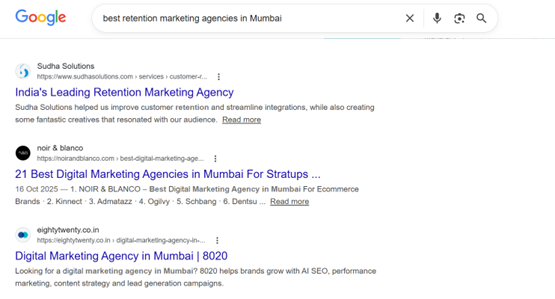
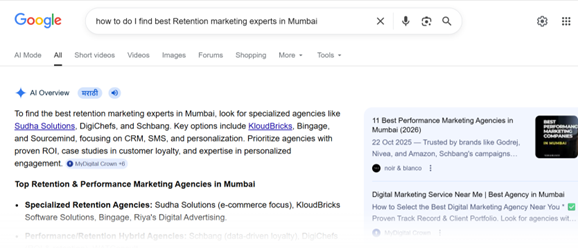
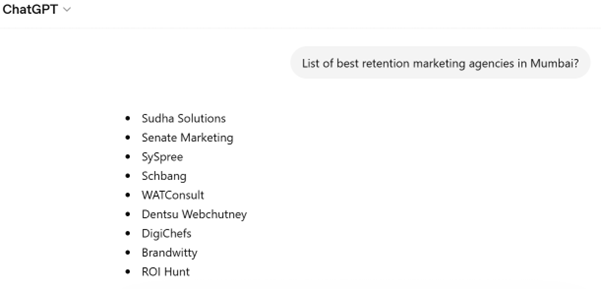
If you closely look at all the 3 examples, Sudha Solutions is ranking 1st in Google ranking while also being mentioned in AI overview and AI listicle. This should be the goal for your brand as well.
Do You Really Need All Three?
Here’s the honest take by our digital marketing expert: “In a nutshell, it’s all just SEO with very negligible differences.” And there’s real truth to that. If you write genuinely helpful content, keep your site technically clean, build real authority, and answer questions clearly, you’re already doing SEO, AEO, and AIO simultaneously.
The acronyms are different. The underlying mission remains the same: be the most helpful, credible, and clear source for your customers’ questions.
That said, being intentional about each layer does make a difference, especially for small businesses competing in crowded local markets.
Your 2026 Action Plan
Here’s a realistic starting point:
This month (SEO hygiene)
- Audit and update your Google Business Profile
- Check that your site loads in under 3 seconds on mobile
- Make sure your NAP (Name, Address, Phone) is consistent everywhere online
Next 60 days (AEO layer)
- Rewrite your top 3–5 service or product pages in a Q&A format
- Apply the 40–60-word rule: lead every section with a direct answer
- Add an FAQ section to your homepage or key landing pages
Ongoing (AIO foundation)
- Add or update schema markup
- Start building mentions: local press, guest posts, community sponsorships
Create one piece of genuinely authoritative content per month in your niche
Brief Summary
| Aspect | SEO | AEO | AIO |
| Primary Goal | Rank higher on search engines | Become the direct answer to a query | Get cited and used by AI models |
| Focus | Keywords, backlinks, rankings | User intent and direct answers | Structured, machine-readable content |
| Output | Website links (SERP listings) | Featured snippets, voice answers, AI summaries | AI-generated responses (ChatGPT, Gemini, etc.) |
| Content Style | Long-form, keyword-rich | Concise, clear, question-based | Context-rich, structured, semantically strong |
| Optimization Method | On-page SEO, backlinks, technical SEO | FAQs, schema, snippet optimization | Entity building, structured data, topical authority |
| User Interaction | Click-driven | Zero-click or minimal-click | No-click, AI-consumed |
| Success Metric | Rankings, traffic, CTR | Featured snippet wins, visibility | Citations, mentions in AI responses |
| Dependency | Search engine algorithms | Search + AI answer engines | AI models and LLM understanding |
Also Read: AEO/GEO Optimization Strategy: Best Practices, Tools, and How it Differs from Traditional SEO
The Bottom Line
You don’t have to choose between SEO, AEO, and AIO, you have to evolve. The small businesses that thrive in the next few years won’t be the ones who mastered one acronym. They’ll be the ones who understood that search is changing and adapted before their competitors did.
The audience is still out there, searching every single day. The question is how your customers can find your brand before they find your competitors.
Want to optimise your website for AI visibility? Contact us at Sudha Solutions.
We have helped numerous brands rank on both Google and AI platforms. Here is the data for one of our clients:
Satguru’s is a Mumbai-based e-commerce brand that sells God idols and home decor items. When they contacted us, their biggest challenge was to compete with the likes of Amazon and Flipkart for same similar products.
Our SEO + AEO strategy helped them not only rank above Amazon but also helped them appear on AI platforms like ChatGPT. These were the results
- 900% increase in organic sessions
- 273% increase in AI visibility
- 2x increase in top 3 keywords
Want similar numbers for your brand? Get on a call with us TODAY.
FAQs
Is SEO still relevant in 2026?
Yes, SEO remains essential as it forms the foundation for visibility, indexing, and discoverability across search platforms. However, it now works alongside AEO and AIO to ensure content is not just found but also selected and cited by AI systems.
How do AI search engines like ChatGPT rank websites?
AI engines don’t rank websites in the traditional sense; they prioritize content that is clear, authoritative, and contextually relevant. They select and synthesize information based on credibility, structure, and how well it answers the user’s query.
What is the future of SEO in the AI era?
SEO is evolving from keyword-focused optimization to intent-driven, entity-based, and AI-friendly content strategies. The future lies in creating content that can rank, answer, and be cited across both search engines and AI platforms.
Should businesses focus on SEO or AEO?
Businesses should not choose between SEO and AEO but integrate both into their strategy. SEO drives discovery, while AEO ensures your content becomes the answer users see first.