Sudha Solutions

Categories
AEO Optimization General SEO

How Do AI Assistants Choose Which Brands or Sources to Mention? (2026 Guide to AI SEO)

Not long ago, the goal of every digital marketer was simple: rank on page one of Google. Today, brands investing in SEO services, strategic content marketing, and advanced AEO services must now optimize not just for rankings, but for AI-driven visibility. Millions of people are skipping the search results page entirely and asking AI assistants like ChatGPT, Perplexity, Gemini, Copilot for direct answers. And those AI assistants don’t just list links. They name brands. They recommend products. They cite sources.

So, the question every marketer should be asking in 2026 is: How do AI assistants decide which brands to mention, and how do you make sure yours is one of them?

This guide breaks it all down. How AI generates answers, what signals influence which sources get cited, and the exact strategies you need to build visibility in the age of AI search.

What Is AEO & Why Does It Matter in 2026?
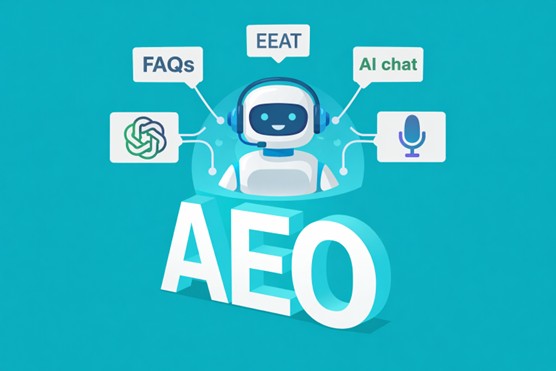
what is aeo and why does it matter

For businesses adopting AEO services in Mumbai, this means structuring content for AI citations while building on strong SEO and authority foundations.

The scale of this shift is hard to overstate.

ChatGPT alone now has 883 million monthly users and processes 2 billion queries every day.

Google’s AI Overviews reach 2 billion monthly users across 200 countries.

Gartner predicted that by 2026, traditional search engine volume would drop 25% as users turn to generative AI; and the data suggests that trajectory is very much on course.

If your brand isn’t showing up in AI answers, you’re already invisible to a rapidly growing segment of your audience.

How AI Assistants Generate Answers

Training Data vs Real-Time Retrieval

When you ask an AI assistant a question, the answer doesn’t come from a single source. It comes from multiple places or a combination of all.

The first is parametric knowledge: Everything the model learned during training. This is static information baked into the model at the time it was built. Brands and entities mentioned frequently across authoritative sources during training develop stronger “neural associations,” making them more likely to be recalled automatically.

The second is real-time retrieval, also known as RAG (Retrieval-Augmented Generation). When a query requires up-to-date or specific information, AI systems fetch content from the live web and use it to construct an answer. An Ahrefs research shows that 88% of the URLs that end up cited by ChatGPT are pulled directly from that search.

Role of Large Language Models (LLMs)

Large Language Models like GPT-4, Gemini, and Claude are the engines powering these AI assistants. They don’t retrieve and rank pages the way Google does. Instead, they synthesise information from multiple sources and generate a new, coherent response, citing the sources they found most useful.

This means visibility in AI search is not about a position on a results page. It’s about being the source the model trusts enough to reference. And that trust is built very differently from traditional SEO.

How AI Actually Decides Which Sources to Cite
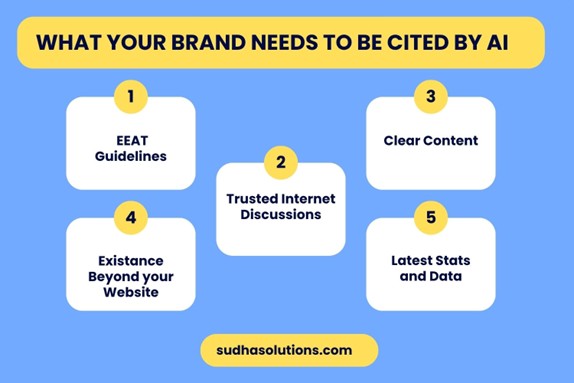
How AI Actually Decides Which Sources to Cite

Most people think AI citations work like Google rankings. They don’t.

AI systems are not “ranking pages” — they are building answers. And while doing that, they look for sources that feel trustworthy, useful, and easy to extract from.

Let’s break this down in a way that actually helps you act on it.

1. Trust Matters More Than Traffic (E-E-A-T in Action)

AI doesn’t just pick the most popular page. It looks for signals that answer:

  • Does this content come from someone who knows the topic?
  • Is it based on real experience or just generic writing?
  • Can this be trusted without double-checking?

This is where E-E-A-T (Experience, Expertise, Authority, Trust) comes in.

What this looks like in reality:

  • A fintech blog written by a CA or financial analyst
  • A healthcare article authored by a doctor or practitioner
  • A SaaS comparison written by someone who has actually used the tools

For example, if someone asks:
“What is the best way to send money abroad from India?”

AI is more likely to cite:

  • A guide written by someone who explains real transfer scenarios, fees, and timelines

Instead of:

  • A generic blog repeating definitions like “international remittance is…”

100% of content that earns consistent AI citations demonstrates clear E-E-A-T signals, including visible author credentials and transparent sourcing.

2. AI Trusts What the Internet Agrees On (Not Just What You Say)

Earlier, your website could build authority on its own. Now, your credibility is distributed across the web.

AI looks for patterns like:

  • Is this brand discussed on Reddit?
  • Are people recommending it on Quora?
  • Does it appear in comparisons or discussions?

Example:

If multiple Reddit threads say:

  • “Tool X is best for freelancers”
  • “Tool X has lower fees than competitors”

Even if your website doesn’t rank #1 AI may still say: “Tool X is commonly recommended for freelancers…”

That insight didn’t come from your website. It came from conversations.

3. Content That Answers Clearly Gets Picked Faster

AI is not reading your entire blog like a human. It scans and extracts.

So naturally, it prefers content that is:

  • Direct
  • Structured
  • Easy to summarise

What works best:

  • Clear headings that match questions
  • Direct answers in the first few lines
  • Bullet points and comparisons

Example:

Weak content: “International money transfers have evolved over the years…

Strong content: “The cheapest way to send money abroad is through fintech platforms like X because they offer lower FX margins and faster processing.

Insight: If AI can copy your answer in one clean snippet, you win.

4. AI Prefers Brands That Exist Beyond Their Own Website

One of the biggest shifts in SEO right now:

Your brand is no longer defined by your website.

It is defined by:

  • Where it appears
  • How often it is mentioned
  • What people say about it

Example:

Two brands:

  • Brand A: Great website, no external mentions
  • Brand B: Mentioned in blogs, Reddit, Quora, comparisons

AI is more likely to cite Brand B. Why? Because it sees independent validation.

5. Freshness Signals That You’re Still Relevant

AI systems don’t want outdated answers. They prioritise content that feels:

  • Updated
  • Active
  • Relevant to current context

Example:

If you write about: “Best study abroad options

And your content still talks about policies from 2022, AI may ignore it completely.

But if you:

  • Update visa rules
  • Add current fees
  • Reflect recent trends

Your chances of being cited increase significantly.

Insight: AI prefers living content, not static blogs.

How AI Chooses Between Brands (Real Decision Logic)

Here’s how AI actually thinks when generating answers:

Step 1: Find all relevant information

Step 2: Check which sources appear repeatedly

Step 3: Validate with trusted formats (forums, structured content, expert blogs)

Step 4: Build one combined answer

Example in action:

Query: “Best tools for email marketing for small businesses”

AI might combine:

  • A blog explaining features
  • A Reddit thread comparing tools
  • A Quora answer listing pros and cons

And then say: “Tools like Mailchimp, Brevo, and ConvertKit are commonly recommended…”

That recommendation is not coming from one source. It is coming from consensus across sources.

AI Search vs Google Search

Traditional SEO services in Mumbai still build discoverability, but AI search now requires deeper content marketing strategies that improve trust, extractability, and brand mentions across the web.

Traditional SEO

AI SEO

Rank on page 1 Get mentioned in answers
Focus on keywords Focus on context
Backlinks matter most Mentions + trust matter more
User clicks links User reads answers

What this means for you:

You are no longer competing for rankings. You are competing to be part of the answer.

So What Should You Actually Do?

This is where integrated SEO services in Mumbai, authority-led content marketing, and structured AEO services in Mumbai become essential for brands competing in AI search.

  1. Build Authority, not Just Content

Write like an expert, not a content writer.

  1. Be Present where Conversations Happen

Reddit, Quora, forums, communities.

  1. Answer Real Questions

Think:

  • “Is X worth it?”
  • “X vs Y”
  • “Best option for…”
  1. Make your Content Extractable

Clear structure = higher chances of being picked.

  1. Stay Updated

If your content feels outdated, AI ignores it.

Final Thoughts

AI does not “rank” your brand. It decides whether to trust and include you.

And that decision is based on:

  • What you say
  • What others say about you
  • How clearly you say it

If your brand is part of meaningful conversations across the internet,
you are already closer to being cited.

Frequently Asked Questions

How do AI assistants decide which brands to recommend?

AI assistants analyse patterns across multiple sources, including blogs, forums, and expert content. They prioritise brands that appear consistently across trusted and relevant discussions.

Can small brands get mentioned in AI-generated answers?

Yes, smaller brands can be cited if they provide high-quality, experience-driven content and appear in relevant discussions across platforms like blogs, forums, and communities.

What role does content format play in AI citations?

Content that is easy to scan, clearly structured, and directly answers questions is more likely to be picked by AI systems for citations.

How important is brand consistency across platforms for AI visibility?

Very important. Consistent messaging and mentions across websites, forums, and third-party platforms help AI systems recognise and trust your brand.

Is ranking on Google still important for AI visibility?

While rankings help with discoverability, AI visibility depends more on trust, relevance, and how widely your content is referenced across the web.
Categories
General SEO

WhatsApp Marketing for D2C Brands: The Most Underused Channel in India

If you are running a D2C brand in India, you are probably spending a significant chunk of your budget on Meta ads, Google ads, and maybe some influencer collaborations. And then you are sending email campaigns that maybe has a 15% open rate. 

Meanwhile, most of your customers are casually checking WhatsApp 23 to 25 times a day. 

That gap is exactly where most D2C brands are losing money without realising it. This is where WhatsApp marketing for D2C brands becomes a game changer. 

WhatsApp is not a customer support tool. It is not just for sending order confirmations. For brands that use it correctly, it is a full-funnel revenue channel that quietly outperforms almost every other marketing channel they are running. 

Let’s break down why, and more importantly, how. 

The Numbers That Should Make You Stop and Think

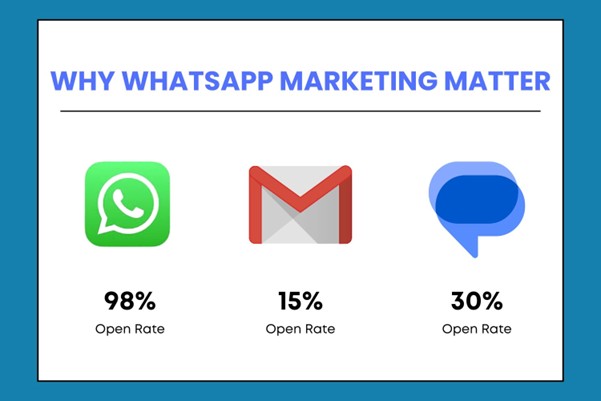
why whatsapp marketing matter

Before strategy, let’s just look at the data. 

Channel  Open Rate  CTR  Time to Read 
WhatsApp  98%  3x higher  Within minutes 
Email  ~15%  Baseline  Hours to days 
SMS  ~30%  Low  Variable 

India has 500 to 530 million active WhatsApp users. People spend around 195 minutes per week on the platform globally. 

This is not a small difference between channels. This is a fundamentally different category of channel. 

And yet, most brands are not leveraging WhatsApp marketing services or WhatsApp automation effectively. 

Why WhatsApp Works Differently from Every Other Channel 

Here is what makes WhatsApp genuinely unique. 

When your message lands on a customer’s WhatsApp, it sits right next to messages from their family and friends. That context, personal, trusted, and immediate, is something no email subject line or Instagram ad can replicate. 

“WhatsApp is where Indians already talk to people they trust. That context is worth more than any subject line optimisation.” 

People do not go to WhatsApp to browse. They go there to talk to friends and family. When your brand earns a place in that inbox, you are not just another notification. You are part of a trusted conversation. 

Brands like Nykaa and Mamaearth have already invested heavily in WhatsApp marketing for ecommerce, especially for retention and repeat purchases. They understood early that owning a customer’s phone number, with their permission, is a long-term brand asset. 

The WhatsApp Business API: What You Need to Scale

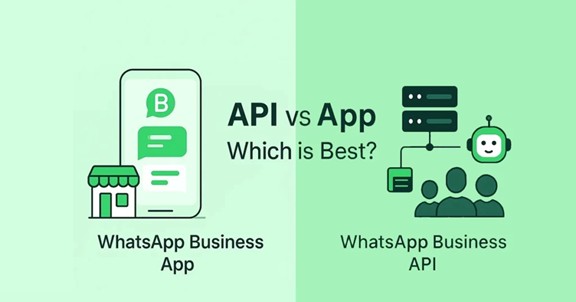
WhatsApp Business API

If you are using the regular WhatsApp Business App to manage marketing for a growing D2C brand, you are already hitting a ceiling. To scale, you need the WhatsApp Business API. 

It enables: 

  • WhatsApp automation services 
  • Chatbots for customer journeys 
  • Broadcast messaging at scale 
  • CRM and Shopify integration 

This is where most brands shift from manual effort to a scalable WhatsApp marketing strategy. 

Here is the difference: 

Feature  Business App  Business API 
Broadcast to thousands  No  Yes 
Shopify / WooCommerce integration  No  Yes 
Automated flows and chatbots  No  Yes 
Green tick verification  No  Yes 
Analytics and reporting  Basic  Advanced 

Getting set up is faster than most brands expect. Some platforms approve your account within 30 minutes, and full green tick verification takes 3 to 5 business days. 

The green tick matters more than people realise. It signals to customers that your business is legitimate, which directly impacts how much they trust and open your messages. 

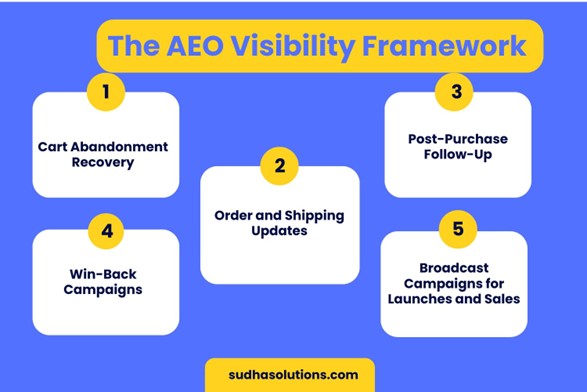
The 5 Flows That Actually Generate Revenue

AEO Visibility framework1

You do not need to build all of these at once. But each one is a direct line to revenue.

Cart Abandonment Recovery

This is the highest ROI use case in WhatsApp marketing for ecommerce. 

Channel  Cart Recovery Rate 
WhatsApp  18% to 30% 
Email  6% to 8% 

The rupee math  

500 abandoned carts per month x Rs 1,200 AOV x 20% recovery = Rs 1.2 lakh in recovered revenue every month.  

Revenue you were previously just letting walk out the door. 

A simple three-message sequence, sent at the right intervals, does most of the work. This is where WhatsApp automation services directly impact revenue

Order and Shipping Updates

Customers want to know where their order is. When they do not hear from you, they flood your support inbox. Automated shipping updates on WhatsApp improve customer experience and dramatically cut down WISMO (Where Is My Order) tickets.

Post-Purchase Follow-Up

After someone buys, WhatsApp is a natural place to ask for a review, suggest a complementary product, or offer a loyalty reward. Brands like The Moms Co. use post-purchase flows to build long-term relationships rather than treating the transaction as a finish line.

Win-Back Campaigns

Got customers who have not bought in 90 days? A personalised WhatsApp message converts dormant customers at 3 to 5 times the rate of email win-back campaigns. A strong WhatsApp marketing strategy can revive inactive users at scale.

Broadcast Campaigns for Launches and Sales

With a 98% open rate and messages read within minutes, your launch day communication actually lands on launch day. Not three days later when someone finally checks their inbox. 

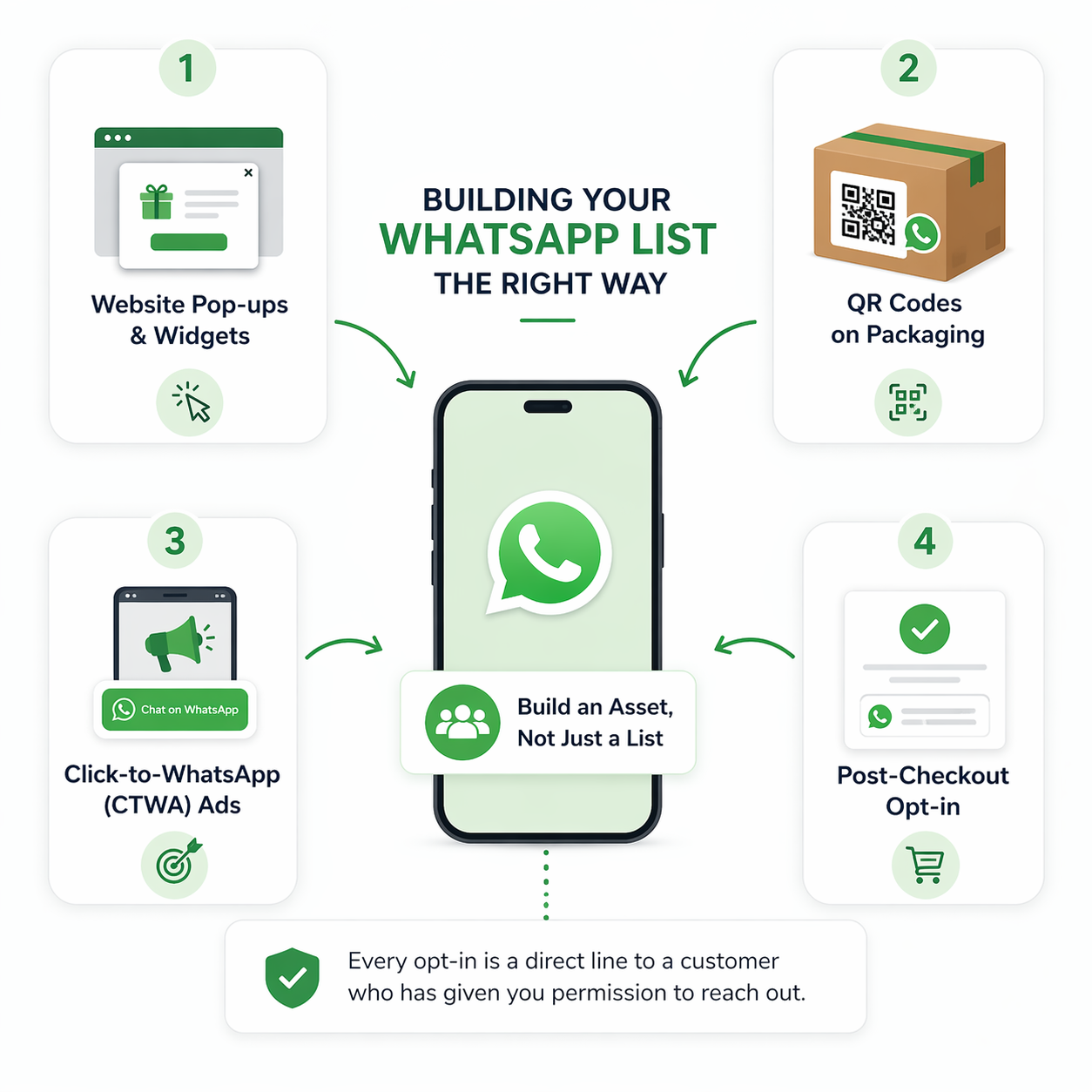
Building Your WhatsApp List the Right Way 

A lot of brands are confused about growing their subscriber list. The good news is there are several natural touchpoints where customers are already willing to opt in. 

building your whatsapp list

  • Website pop-ups and widgets: A simple prompt offering exclusive offers or order updates. Works best when the value exchange is clear. 
  • QR codes on packaging: When someone receives their order, a QR code on the box takes them directly to a WhatsApp opt-in. Low friction, high intent moment. 
  • Click-to-WhatsApp (CTWA) ads: Move people directly from a Meta ad into a WhatsApp conversation. The lead quality from CTWA is significantly higher than cold website traffic. 
  • Post-checkout opt-in: Right after purchase, customers are at peak trust. That is a great moment to ask them to subscribe. 

The principle is simple. You are not building a list. You are building an asset. Every opted-in phone number is a direct line to a customer who has given you permission to speak to them. 

Where Most Brands Go Wrong with Whatsapp Marketing 

We work with a lot of D2C brands, and the mistakes we see are fairly consistent. 

Doing everything manually: You can’t afford working manually in AI era. If you are sending WhatsApp messages one by one, you are spending time you do not have and leaving automation entirely on the table. 

Ignoring the opt-in requirement: Sending unsolicited messages does not just damage your brand. It can get your account banned. The opt-in model is not optional. It is the foundation. 

Treating WhatsApp like email: Long, broadcast-style messages with no personalisation kill engagement. WhatsApp works because it feels personal. The moment it stops feeling personal, customers stop responding. 

The Bigger Picture: Retention + SEO + AEO 

Here’s what most brands miss. 

WhatsApp is not isolated. 

It works alongside: 

  Together, this becomes a complete AI-driven marketing strategy 

The Window Is Still Open 

WhatsApp marketing in India is still early enough that brands building their lists and automations right now have a real compounding advantage. 

The acquisition battle on Meta is getting more expensive every year. The brands that will win retention in Indian D2C over the next three to five years are the ones building direct, owned relationships with their customers today. 

WhatsApp is that channel. 

Start with cart abandonment. Set it up, measure it for 30 days, and watch what happens to your recovered revenue. That one flow alone tends to be enough to make the case for everything else. 

Looking to turn WhatsApp into a high-performing marketing channel for your brand?  

At Sudha Solutions, we help you create personalised, timely, and conversion-driven communication that your customers actually engage with. From automation to retention journeys, we handle it end-to-end. Get in touch with us TODAY. 

Frequently Asked Question

What is WhatsApp marketing and how does it work?

WhatsApp marketing is the use of WhatsApp to send promotional messages, updates, and automated flows to customers who have opted in. Brands use tools like the WhatsApp Business API to send broadcasts, recover abandoned carts, and build personalised communication journeys.

Is WhatsApp marketing legal in India?

Yes, WhatsApp marketing is legal in India if you follow the opt-in model. Customers must explicitly agree to receive messages from your brand. Sending unsolicited messages can lead to account restrictions or bans.

What is the difference between WhatsApp Business App and API?

The WhatsApp Business App is suitable for small businesses with limited messaging needs. The WhatsApp Business API is designed for scaling, allowing automation, integrations (Shopify, CRM), bulk messaging, and analytics for larger brands.

Why is WhatsApp marketing more effective than email?

WhatsApp messages have significantly higher open rates (up to 98%) compared to email (~15%), and they are typically read within minutes. This makes it a faster and more engaging channel for communication and conversions.

What are the best use cases for WhatsApp marketing in D2C?

Some of the most effective use cases include cart abandonment recovery, order updates, post-purchase engagement, win-back campaigns, and product launch broadcasts. These flows directly impact revenue and customer retention.