



Here’s What Most Businesses Get Wrong About SEO Authority (And How to Fix It)
You’ve heard it before: “Backlinks are everything in SEO.” So your team buys a few. Rankings barely move. You buy more. Budget climbs. Results stay flat or worse, Google quietly penalises you and three months of work disappears overnight.
Sound familiar?
And you’re not wrong to invest in backlinks. You’re just investing in the wrong mix at the wrong stage of your domain’s growth.
At Sudha Solutions, we’ve worked across industries and domain authority (DA) ranges to find the answer to a question every growth-focused business is really asking: How do we build SEO authority that compounds without gambling on Google penalties?
The Real Problem Isn’t Paid or Organic. It’s Proportion.
A strong backlink strategy works best when it is supported by a clear content and SEO structure.
Here’s what no one tells you upfront: paid backlinking and organic backlinking are not enemies. They’re tools; and like any tool, the outcome depends on how, when, and how much you use them.
The mistake most businesses make is treating link building as a single switch: either pay for links aggressively, or spend months on content marketing and wait. Neither extreme works.
What works is a calibrated, stage-appropriate blend – one that shifts as your domain authority grows.
First, Let’s Define the Playing Field
Paid backlinking means acquiring links by paying website owners, publishers, or agencies to place a hyperlink back to your domain. This includes sponsored posts, niche edits, paid guest articles, and private blog network (PBN) links.
Speed? Yes. Anchor text control? Yes. Risk? Significant — Google’s guidelines explicitly prohibit paying for links that pass PageRank. Sites that violate this face ranking demotions, manual penalties, and in serious cases, deindexing.
Organic off-page backlinking means earning links without direct payment through content marketing, digital PR, journalist outreach (HARO/Connectively), broken link building, resource page inclusion, brand mention reclamation, and strategic relationship building.
Slower? Yes. Riskier? No. More durable and compounding in value over time? Absolutely.
Domain Authority (DA) is the Moz metric, scored 0 to 100 on a logarithmic scale, that predicts how well a website will rank on search engine results pages (SERPs). Moving from DA 20 to DA 30 is very different from moving from DA 60 to DA 70. The rules change as you climb.
The Framework That Actually Works: Match Your Strategy to Your DA Stage
This is where most SEO advice falls short – it treats all websites the same. Your domain’s authority level should directly determine your paid-to-organic ratio.
Here’s the framework Sudha Solutions uses:
DA 0-15: New Sites
New sites have a cold-start problem. Minimal content, no referring domains, and little search engine trust. The temptation is to buy your way to visibility. Resist it, but don’t ignore paid entirely.
Recommended mix: 30-40% paid / 60-70% organic
At this stage, a handful of links from DA 30–50 sites creates meaningful movement. Use paid placements sparingly and deliberately; primarily niche edits and guest posts on mid-authority sites. Simultaneously, invest in HARO/Connectively responses, foundational content assets, and community engagement to build your organic baseline.
The goal is momentum, not dependency.
DA 15-35: Growing Sites
Your site is appearing for long-tail keywords. You have some traction. This is where the decision about your link strategy has the most long-term consequences.
Recommended mix: 25-30% paid / 70-75% organic
Double down on content that earns links naturally. Launch your first digital PR campaign. Activate broken link building. Use paid placements surgically, to target specific competitive gaps, not as a volume play.
Anchor text diversity matters enormously here. Uniform, over-optimised anchor text from paid placements is a red flag for Google’s algorithms.
DA 35-60: Established Sites
This also strengthens your brand’s visibility across AI-driven search platforms, where authority signals matter as much as rankings. You’re a recognised player in your niche. You rank for competitive mid-tail terms. The priority now shifts completely: it’s not about volume, it’s about quality and staying clean.
Recommended mix: 15-20% paid / 80-85% organic
The cost of a Google penalty at this DA level is severe – potentially years of equity wiped out. Paid link activity should be limited to premium, high-authority sources (DA 60+) with genuine editorial context. Think advertorials in reputable industry media, not bulk placements.
Your primary investment should be scaling digital PR, commissioning original research, and building thought leadership content that attracts links on its own.
DA 60+: High-Authority Sites
At this level, your brand generates links naturally through media mentions, partnerships, and industry events. Paid backlinking has a very limited role here.
Recommended mix: 5-10% paid / 90-95% organic
Any misstep with paid links at this DA could mean catastrophic ranking losses. The only defensible paid activity is premium advertorials in top-tier media (think major industry journals or nationally recognised publications) that function as brand marketing, not just link acquisition.
The Strategic Roadmap: From Audit to Authority
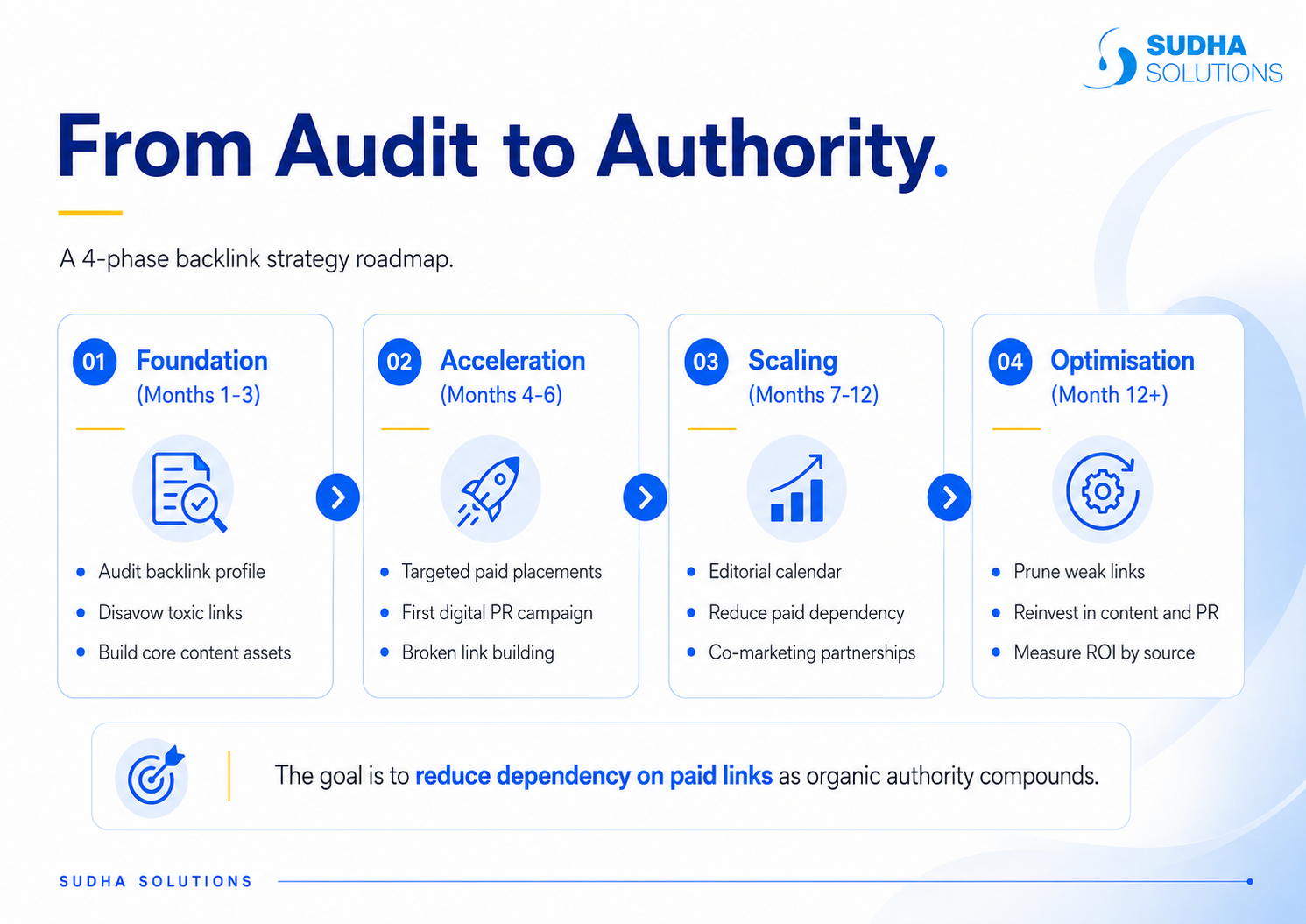
Getting from where you are to where you want to be requires a phased approach – not a spray-and-pray campaign.
Phase 1 – Foundation (Months 1-3): Audit your current backlink profile. Identify and disavow toxic links. Set baseline metrics: DA, referring domains, organic traffic. Begin building content assets around your top 5–10 target keywords. Start HARO engagement.
Phase 2 – Acceleration (Months 4-6): Deploy targeted paid placements to fill competitive keyword gaps. Launch your first digital PR campaign – ideally built around original data or research your audience will reference. Activate broken link building campaigns.
Phase 3 – Scaling (Months 7-12): Build a dedicated editorial calendar. Reduce paid link dependency as organic compounds. Pursue strategic co-marketing partnerships for high-authority link opportunities.
Phase 4 – Optimisation (Month 12+): Audit and prune expired or low-quality paid links. Reinvest those savings into content and PR. Target DA 70+ links exclusively through organic strategies. Measure ROI per link source and reallocate accordingly.
What to Measure (So You Know It’s Working)
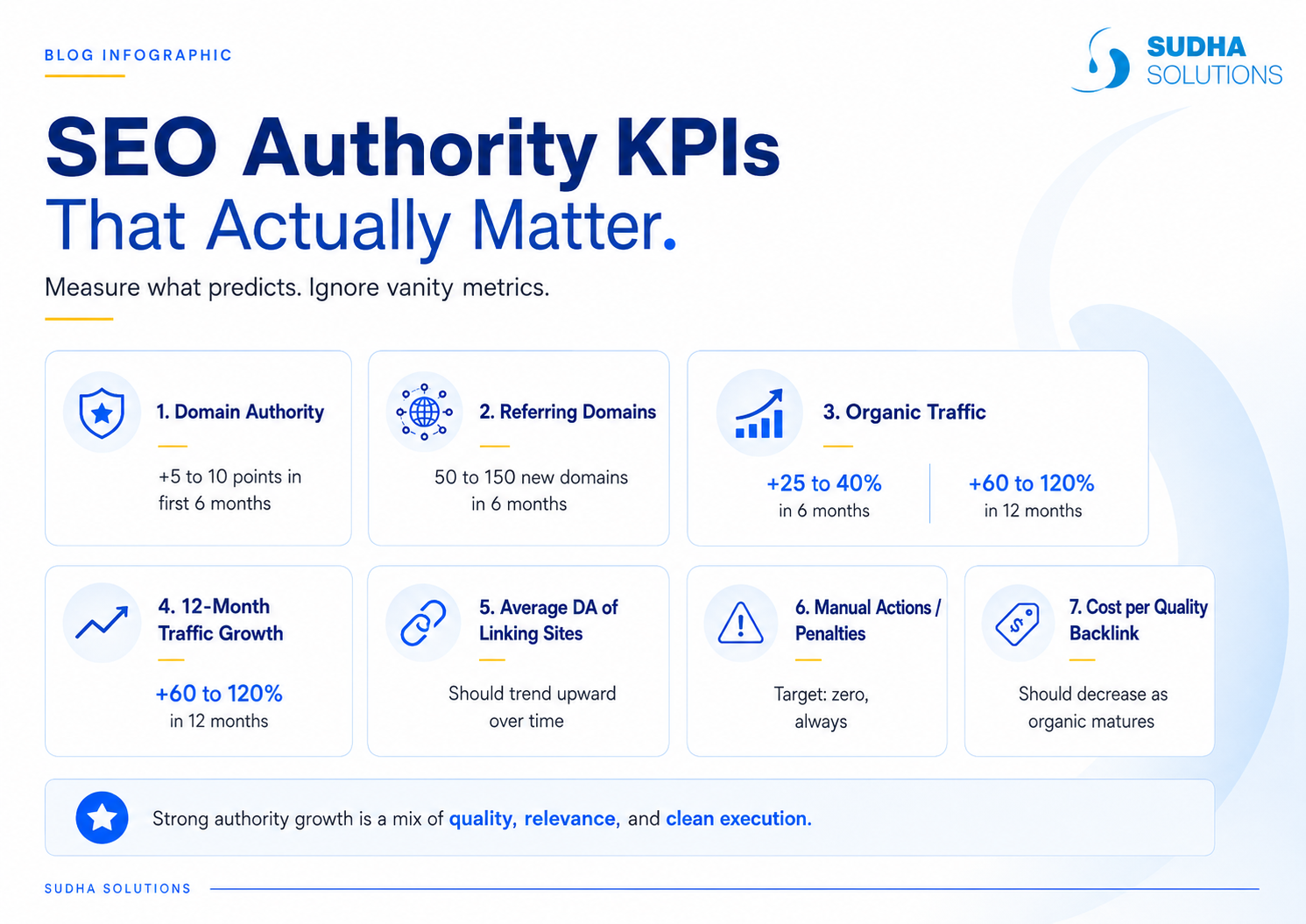
Vanity metrics won’t tell you the full story. These are the KPIs that matter:
- Domain Authority – target +5 to 10 points in the first six months
- Referring Domains – 50 to 150 new domains in six months is a healthy benchmark
- Organic Traffic – aim for 25–40% growth in six months, 60–120% in twelve
- Average DA of Linking Sites – should trend upward over time
- Manual Actions / Penalties – should remain at zero, always
- Cost per Quality Backlink – should decrease as organic activity matures
The Bottom Line
The organisations that win the long game in SEO are those that build authority through genuine value creation; content that earns links, brands that attract mentions, strategies that compound rather than rent results.
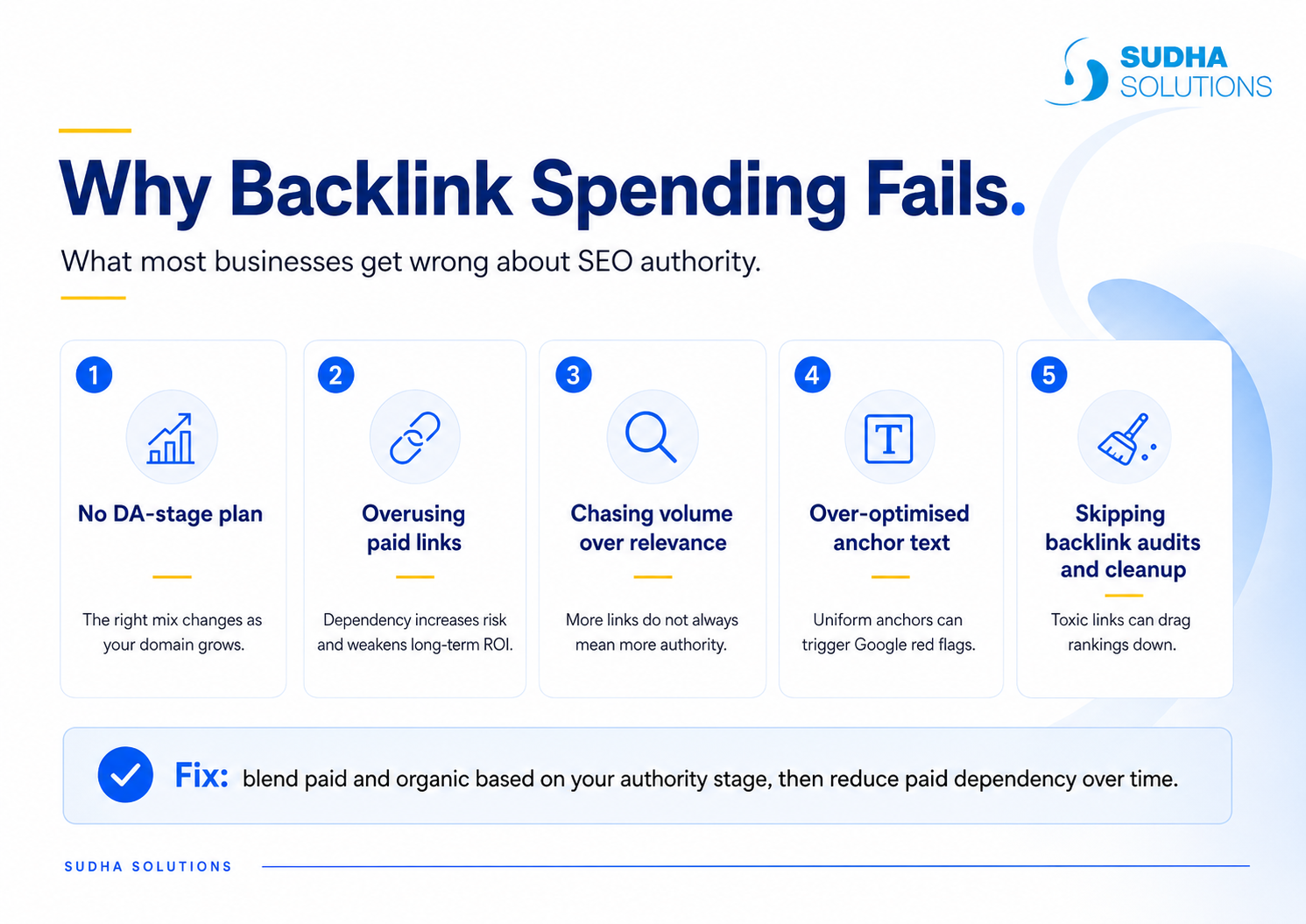
Paid backlinking is a legitimate tactical tool. But it should operate with a defined exit timeline, a shrinking allocation, and never as a substitute for the harder, more rewarding work of earning authority.
Ready to Build SEO Authority That Lasts?
At Sudha Solutions, we design and execute link-building strategies calibrated to your exact DA stage, niche, and growth objectives. Whether you’re launching a new domain or protecting a high-authority site, we’ll help you find the right blend, and the right partners, to build ranking power that compounds.
Get in touch with Sudha Solutions →
Want the full strategic framework, including detailed DA-stage ratio tables, KPI benchmarks, and our complete implementation roadmap? Download our whitepaper: Paid vs. Organic Backlinking – The Strategic Decision-Maker’s Guide.