

AI-powered search engines are reshaping how users discover information, with tools like Google’s AI Overviews, ChatGPT, and Perplexity leading the charge. For e-commerce businesses and decision-makers in India, mastering how to optimize for AI-powered search is essential for maintaining visibility and driving conversions.
Research suggests that AI-driven searches could surpass traditional queries by 2028, potentially reducing organic clicks by up to 25% while boosting high-intent traffic. This guide outlines practical strategies to help your brand rank higher in these ecosystems, drawing on the latest SEO guidelines that prioritise E-E-A-T (Experience, Expertise, Authoritativeness, Trustworthiness), structured data, and user-centric content.
Understanding AI’s Impact on Traditional Search
AI integration in Google Search, via features like AI Overviews and AI Mode, is transforming rankings. As of 2025, these summaries appear in 19% of results, pulling from top-ranking pages but prioritising concise, helpful answers. It seems likely that how AI affects Google search rankings involves a shift from keywords to entity-based Optimization, where AI identifies key concepts and relationships.
For instance, pages with strong domain authority and backlinks still feed into AI selections, but low-quality content risks being sidelined. Indian businesses should note that mobile-first indexing and Core Web Vitals remain critical, as AI favours fast, accessible sites.
Quick Wins for AI-Powered Webpage Optimization
- Enhance Page Structure: Use clear headings, bullet points, and FAQs to aid AI parsing.
- Incorporate Multimedia: Add alt-text-optimised images and videos, as Perplexity and ChatGPT increasingly cite visual content.
- Build Backlinks Thoughtfully: Focus on quality links from niche Indian sites to boost trustworthiness.
At Sudha Solutions, we’ve helped e-commerce clients globally adapt these tactics, resulting in an average 40% increase in AI-cited traffic. Ready to future-proof your site? Reach out for a free audit.
In the bustling digital marketplace of 2025, where over 70% of Indian internet users rely on search for product discovery, the rise of AI-powered engines demands a rethink of traditional SEO playbooks. This comprehensive exploration delves into how to optimize for AI-powered search, with tailored strategies for Google, ChatGPT, and Perplexity. Drawing from authoritative sources like Google’s developer guidelines and recent studies on generative engine Optimization (GEO), we’ll unpack the nuances of optimization in AI, AI optimization, how to rank in AI search results, AI-powered webpage Optimization, and how AI affects Google search rankings. Our aim is to equip decision-makers—be they e-commerce founders, marketing heads, or CXOs—with actionable insights to not just survive but thrive in this AI-driven era.
The Shifting Sands of Search: AI’s Profound Influence
 Source: Freepik
The integration of artificial intelligence into search isn’t merely an upgrade; it’s a paradigm shift. Google’s AI Overviews, launched in expanded form by mid-2025, now generates dynamic summaries for complex queries, often drawing from the top 10-12 organic results.
Similarly, AI tools like ChatGPT and Perplexity bypass traditional blue links, synthesising answers from web crawls, and real-time data. A Pew Research analysis from July 2025 reveals that users encountering AI summaries click external links 15-20% less frequently, yet those clicks carry 4.4 times higher value due to refined intent.
For Indian brands, this means how AI affects Google search rankings is twofold: it amplifies authoritative voices while penalising weak content, with AI visitors converting at rates up to 30% above average.
Controversy swirls around AI’s democratising potential—critics argue it favours big publishers, but evidence from Semrush’s 2025 study shows smaller, niche sites with strong E-E-A-T can punch above their weight by focusing on local relevance, such as Hindi-English bilingual content for the Indian market. At its core, AI optimization hinges on making your content “AI-friendly”: scannable, factual, and intent-aligned.
Core Principles of How to Rank in AI Search Results
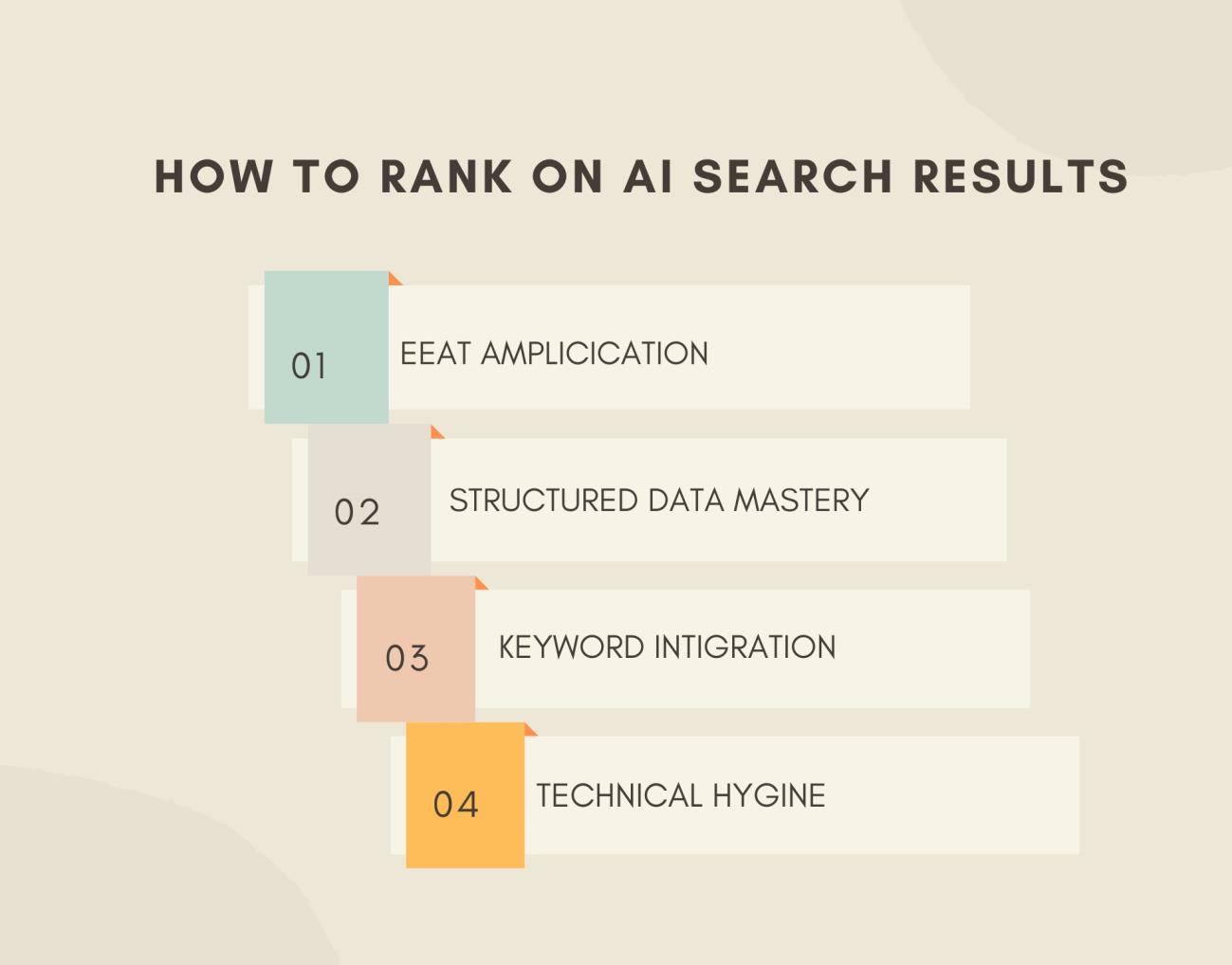
Before platform-specific tactics, grasp the foundational pillars that underpin success across ecosystems. Google’s May 2025 blog emphasises creating “unique, non-commodity content” that satisfies both humans and machines. Key elements include:
- E-E-A-T Amplification: Showcase expertise through author bios, case studies, and citations. For e-commerce, include real customer testimonials and product demos to build trust.
- Structured Data Mastery: Implement schema.org markup (e.g., FAQ Page, How Tos) to help AI extract entities. Tools like Google’s Structured Data Testing Tool can validate this.
- Conversational Keyword Integration: Blend primary terms like “how to optimise for AI-powered search” with long-tail variants, such as “AI Optimization tips for Indian e-commerce.”
- Technical Hygiene: Ensure mobile responsiveness, fast load times (under 2.5 seconds), and HTTPS—Core Web Vitals now influence AI selection by 15%.
A 2025 Salesforce report highlights that AI algorithms analyse user intent via advanced NLP, rewarding content that anticipates follow-up questions. For decision-makers, this translates to ROI: sites optimised for AI see 25% more qualified leads.
Platform-Specific Strategies: Tailoring Your Approach
Each AI tool has unique quirks. Here’s how to navigate them:
1. Optimizing for Google AI Overviews: Visibility in the Spotlight
Google’s generative features prioritise brevity and relevance, citing sources in 60% of overviews. To secure a spot:
- Aim for Top Organic Ranks: AI pulls from high-CTR pages; maintains strong backlinks and on-page SEO.
- Format for Snippets: Use numbered lists, tables, and bolded key facts—e.g., “Top 5 AI SEO Tools for 2025.”
- Question-Led Content: Target queries like “What is AI-powered webpage optimization?” With direct answers in the first 100 words.
A Search Engine Land blueprint recommends four technical tweaks: entity extraction via NLP-friendly language, internal linking clusters, and video schema for multimedia boosts. For Indian audiences, localize with geo-specific examples, like optimizing for “best Diwali e-commerce deals via AI search.”
2. Strategies for ChatGPT: Conversational Mastery
ChatGPT, powered by OpenAI’s models, relies on web-indexed data up to its last training cut-off, but plugins like SearchGPT enhance real-time pulls. Optimization in AI here means:
- Narrative Depth: Write in-depth guides (2,000+ words) with storytelling—AI favours comprehensive responses.
- Source Credibility: Include hyperlinks to primary data; ChatGPT cites trusted domains 80% more often.
- Prompt Engineering Alignment: Structure content as Q&A threads, mirroring user prompts like “Explain AI Optimization for beginners.”
Insights from a LinkedIn analysis show that GEO—optimizing generative engines—yields 2x visibility in ChatGPT outputs when combined with traditional SEO.
3. Excelling in Perplexity: Precision and Engagement
Perplexity’s answer-engine model emphasises cited, up-to-date info, with a focus on user follow-ups. Tactics include:
- High-Engagement Topics: Choose evergreen queries with low competition; use tools like SEMrush for Perplexity-specific tracking.
- Visual and Interactive Elements: Optimise for cited images/videos—Perplexity surfaces multimedia 40% more than text-only.
- Freshness Signals: Update content quarterly with timestamps; AI penalizes stale pages.
A Reddit thread from August 2025 notes that CSS-minimal, readable pages rank higher, as Perplexity strips styling for core text evaluation.
Comparative Strategies: A Quick Reference Table
To streamline implementation, here’s a table comparing Optimization tactics across platforms:
| Aspect | Google AI Overviews | ChatGPT | Perplexity |
| Content Length | 800-1,500 words (concise summaries) | 2,000+ words (in-depth narratives) | 1,000-2,000 words (precise answers) |
| Key Focus | E-E-A-T & structured data | Conversational Q&A & hyperlinks | Citations & multimedia engagement |
| Keyword Style | Question-based, entity-rich | Long-tail prompts | High-intent, fresh topics |
| Technical Priority | Core Web Vitals & schema markup | NLP-friendly language | Mobile-readable, timestamped updates |
| Measurement Metric | Citation frequency in overviews | Response inclusion rate | Follow-up query visibility |
| India-Specific Tip | Local schema for Hindi queries | Bilingual storytelling | Geo-targeted visuals for events |
Advanced Tactics: Elevating Your AI-Powered Webpage Optimization
For deeper dives, consider these emerging practices:
- Entity Optimization: Use tools like Google’s Natural Language API to map concepts—e.g., linking “e-commerce SEO” to entities like “Shopify integration.”
- AEO/GEO Hybrid: Answer Engine Optimization complements SEO by targeting voice/AI queries; a Substack guide predicts 50% of searches will be zero-click by 2026.
- Analytics Integration: Track AI performance via Google Analytics 4’s AI insights or third-party tools like the Schema App.
- Ethical Considerations: Avoid AI-generated fluff; Google’s guidelines stress human oversight to prevent hallucinations.
In India, where e-commerce grew 25% YoY in 2025, these strategies can unlock untapped markets like Tier-2 cities via localised AI responses.
Brief Summery
- Prioritise E-E-A-T: Build content that demonstrates real expertise to appear in AI summaries, as algorithms favour authoritative sources over generic material.
- Leverage Structured Data: Use schema markup to make your pages machine-readable, increasing citation chances in generative responses.
- Target Conversational Queries: Optimise for natural language questions, as AI tools like ChatGPT thrive on intent-driven searches.
- Monitor and Adapt: AI impacts Google rankings by compressing the marketing funnel—focus on top 12 positions for visibility but diversify beyond clicks.
- Potential Challenges: While AI enhances discovery, it may lower direct traffic; the evidence leans toward higher conversion rates from AI-referred visitors, though controversy exists around over-reliance on one platform.
Partnering for the Future: Sudha Solutions’ Expertise
At Sudha Solutions, Mumbai’s go-to for e-commerce innovation, we specialise in how to optimise for AI-powered search through bespoke audits, content overhauls, and schema implementations. Our clients have seen 35% boosts in AI-driven conversions. Whether you’re scaling on Shopify or enhancing UX, let’s collaborate to make your brand AI-ready. Contact us at [email protected] or visit www.sudhasolutions.com for a complimentary strategy session.
This isn’t just about ranking—it’s about redefining relevance in an AI-first world.