You can write a well-researched, 3000-word blog, only for it to be never seen by any AI platforms.
In the past, some keywords and backlinks would be enough to get google ranking in the first couple of pages along with decent views. However, times have changed.
With AI, people are not looking for blog links, they want direct answers either from Google overview or chatbots like ChatGPT, Claude, Grok and more. Therefore, your goal as a brand should be to get mentioned by AI platforms.
Any content you write must be easy for AI platforms to understand, extract, and reuse. But how can a brand achieve that? The answer: GEO Optimisation.
GEO is not “SEO 2.0”. It is a content standard that makes your pages easier for AI to retrieve and safer for AI to summarise. And the good news is: most GEO wins come from clear writing and structure, not complex technical work.
TL;DR: The GEO content standard:
If you remember only one thing, make it this:
- SEO helps you get found. GEO helps you get understood.
- GEO works best when you lead with the answer in the first 100 words, not halfway down the page.
- AI prefers accurate information over long intros and fluffy storytelling.
- Your content structure must include headings, lists, and tables are signals AI can parse quickly.
- Your biggest advantage is the human layer: experience, specific examples, case studies and original data points that cannot be copied.
- GEO success is increasingly about being cited and reused, not only about clicks.
What is GEO?
GEO or generative engine optimisation is the process of crafting or updating your website content to boost its AI visibility, across tools like ChatGPT-style assistants and AI search experiences.
GEO vs SEO: Teammates, not Rivals
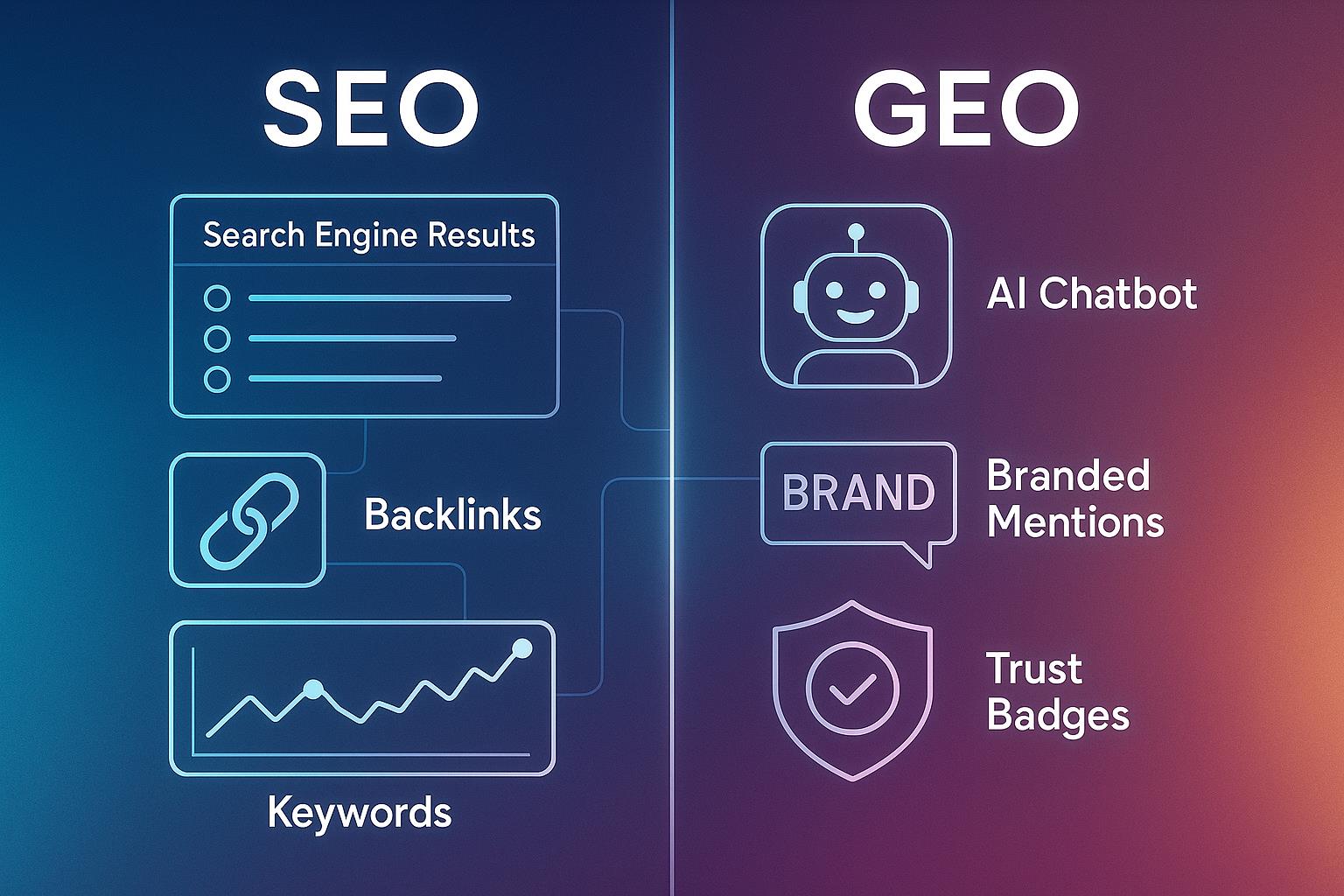
Every year we get questions from our clients asking if SEO is still relevant. Our answer remains the same every year, Yes, it is. GEO, AEO and all other new AI terms are all part of SEO, not different from it.
Businesses investing in structured SEO services often find that their GEO efforts perform significantly better because the technical and content foundations are already strong.
A simple way to think about it especially for founders and marketing heads:
- SEO is about being found in search results.
- GEO is about being understood and reused in AI-generated answers.
GEO does not replace SEO. In practice, GEO usually performs best when your SEO foundations are already solid.
Here is a quick comparison:
| PARAMETERS | SEO | GEO |
| Primary goal | Rank and win clicks. | Be extracted, summarised, cited. |
| Best-performing intro | Hooks and curiosity. | Direct answer upfront. |
| What gets rewarded | Relevance + authority + UX. | Clarity + extractable structure + information gain. |
| Best page formats | Blog posts, category pages. | FAQs, how-to pages, definitions, comparisons, policies. |
| Success metrics | Rankings, CTR, sessions. | Citations, share of voice in answers, accurate brand representation. |
How AI Uses your Content (and why that changes how you write)
AI systems are not as patient as humans when it comes to reading your content.
When someone asks an AI tool a question, that tool often pulls from multiple pages across the web and builds a single answer. How your content is structured affects whether it is even considered in that process.
A practical way to think about it:
- Retrieval: Can the system find a relevant page?
- Extraction: Can it isolate the right section quickly?
- Synthesis: Can it summarise without misrepresenting you?
If your page is a wall of text, AI has to work harder to extract. If your page is cleanly structured, it becomes an easy building block.
Best GEO practice #1: Use an Answer-First Approach (BLUF)
Many marketers and writers were taught to “build mystery” to improve time on page. AI-driven discovery flips that incentive. AI citation patterns and modern content guidance increasingly push in the opposite direction: make the answer obvious early.
The BLUF rule
BLUF means: Bottom Line Up Front.
In your first 100 words, include:
- A plain-English definition (or the direct answer)
- Who it is for
- The result or takeaway
Example opening
“Generative Engine Optimisation (GEO) is how you write and structure content so AI tools can accurately summarise and cite it. It works best when your pages lead with direct answers, use clear headings, and include high-information elements like lists, tables, and examples.”
The Q&A Header Format
This is one of the simplest, highest-leverage tactics:
- Put a real question in an H2 or H3. You can use tools like Answer The Public to find genuine questions.
- Answer it immediately in the first sentence.
- Then expand with details, stats, and case studies.
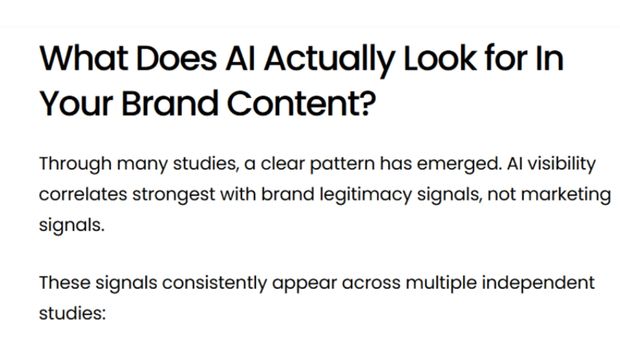
AI Ranking calls this the “capsule” approach, with question-style headings and immediate answers before elaborating it further.
Best GEO practice #2: Increase Information Density
Cut Fluff, Add Data
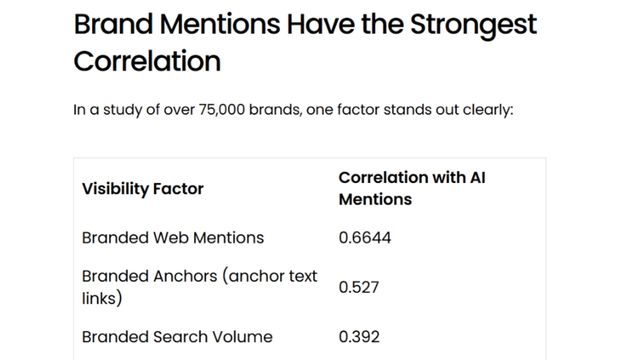
AI systems tend to reward content like the one mentioned above that offers more “useful information per paragraph”. The more your page contains
- Unique facts
- Clear definitions
- Concrete examples
… the more it becomes a reliable source.
This is where strategic content marketing services and structured blog writing services play a critical role — turning generic blogs into high-information, AI-extractable assets.
A simple test: If your content could be rewritten by anyone in your category with the same outcome, it is probably not dense enough.
Replace Vague Claims with Specific Signals
Instead of: “It is important to maximise visibility.”
Try: “In our audits, pages with a clear definition block and a comparison table improved inclusion in AI answers for ‘X vs Y’ style queries.”
Even when you do not have proprietary numbers, you can increase density by adding:
- Clear criteria (what “good” means and how to judge it)
- Constraints (time, cost, sequence, prerequisites)
- Examples (what it looks like in the real world)
Use Data-Backed Patterns Where You Can
If you do want to use external benchmarks, cite them cleanly and avoid over-claiming.
For example, Analyse AI reports insights from a large citation dataset and discusses factors correlated with being cited in Perplexity results, including page-level attributes and structure.
Best GEO practice #3: Structure is a signal (write in extractable blocks)
Brittany Lieu (Heinz Marketing) makes the core point plainly: formatting helps humans read, but structure helps AI retrieve.
Here is the practical checklist our content team follows:
1. Headings that Mirror Real Questions
- One H1 (blog headline) that states exactly what the page delivers
- H2s that match what people actually ask
- H3s for follow-ups and “it depends” cases
Pro Tip: If your H2s look like vague topics (“Benefits”, “Overview”, “More info”), rewrite them as questions (“What are the benefits of…?”, “When should you use…?”).
2. Short Paragraphs and “One Idea Per Block”
- 2–4 lines per paragraph (especially in the first half)
- One claim per paragraph, supported immediately (no fluff, strictly.)
3. Use Listicles and Bullet Points Smartly
Use numbered lists for:
- Steps
- Sequences
- Workflows
Use bullets for:
- Attributes
- Requirements
- Pros and cons
- Pitfalls
4. Tables when Comparison Matters
Tables make your content easier to extract for:
|
Sr. No |
Comparison Type |
|
1 |
“Best X” lists |
|
2 |
“X vs Y” comparisons |
|
3 |
Pricing and packaging |
|
4 |
Feature differences |
|
5 |
Requirements and eligibility |
You can read our blog to learn more about adding bullet points, listicles, and tables accordingly.
Best GEO practice #4: Use EEAT Format
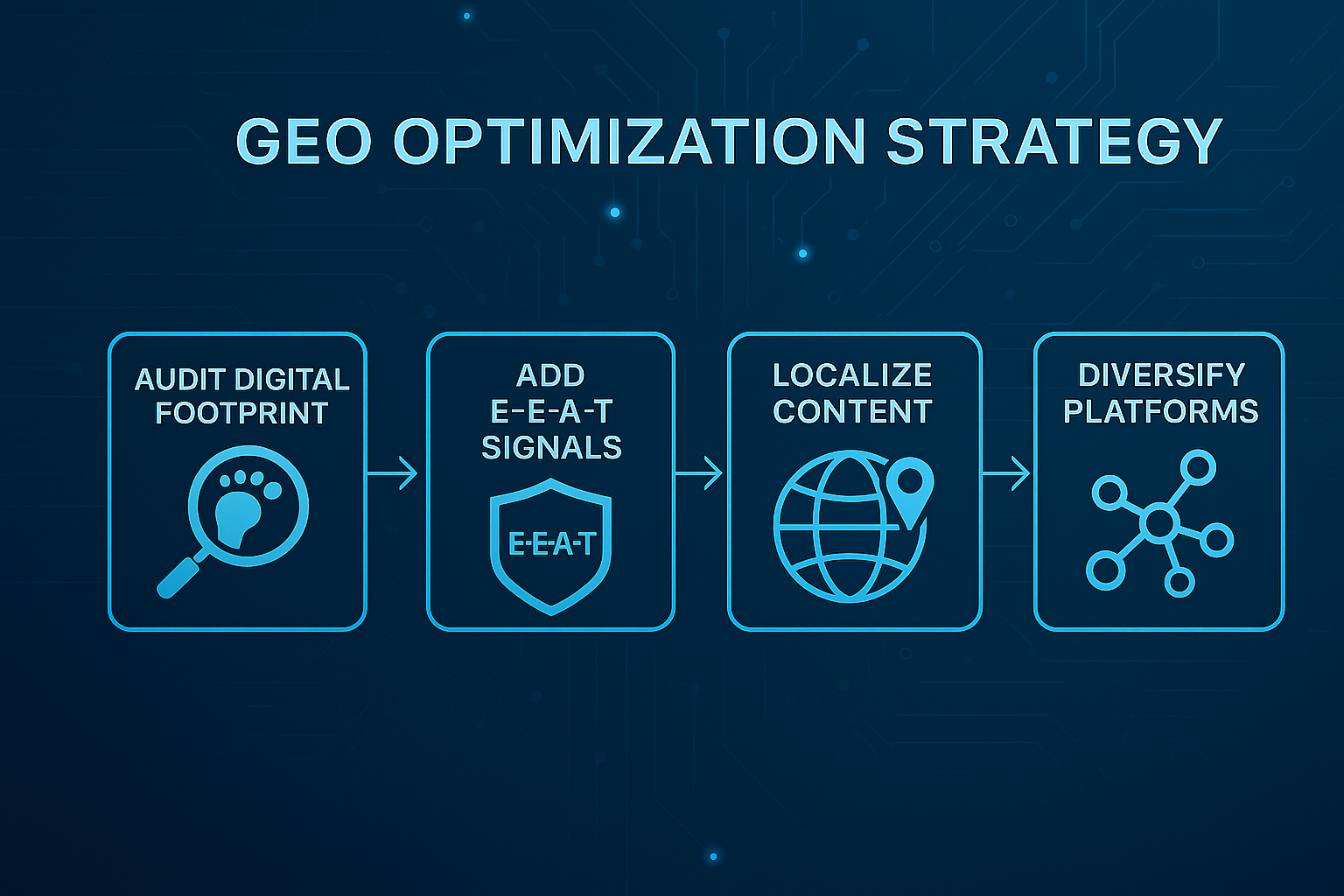
According to SEMrush ‘E-E-A-T (Experience, Expertise, Authoritativeness, and Trustworthiness) is a framework that Google’s human reviewers use to assess content quality.’
This is where the adding a human touch helps: experience, expertise, and trust cues that make your page feel like it comes from a real operator.
Even GEO commentary in the space emphasises that fundamentals still matter and that content must be trustworthy and properly structured.
The “Micro Case Study” Format (Fast, Credible, not Fluffy)
Use 4 lines:
- Context: who/what the situation was
- Change: what you did
- Result: what improved (ideally with a number)
- Reason: why that change worked
Add Basic Trust Cues that AI can Pick Up
These are not only for Google or traditional SEO. They help AI interpret your content’s reliability:
- Author name and role
- Publish date and last updated date
- Clear definitions
- Sources for important claims
Lieu explicitly calls out author names and publishes dates as helpful context for discoverability and comprehension.
Also Read: How We Helped a Legacy Brand Win 300% AI Visibility
List of New GEO KPIs (What to Measure Instead of Obsessing Over Clicks?)
AI discovery shifts the scoreboard. Even AI Ranking explicitly talks about a “citation economy” and highlights that being cited changes outcomes even when clicks change.
Modern performance marketing strategies must now consider AI citation visibility alongside traditional click-based metrics.
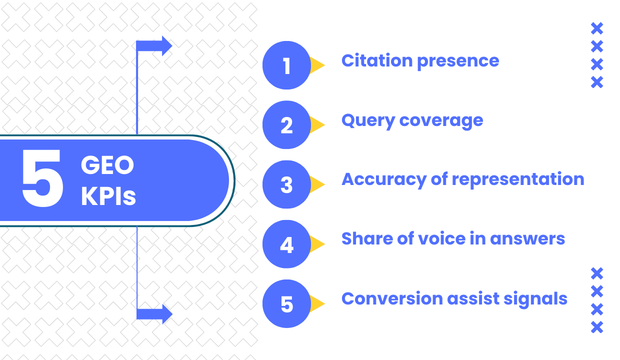
For founders and marketing heads, consider these GEO-friendly KPIs:
- Citation presence: Are you being cited in AI answers for your core topics?
- Query coverage: How many meaningful questions include you as a source?
- Accuracy of representation: Does AI describe your offering correctly?
- Share of voice in answers: How often you appear compared to competitors (even without a click)
- Conversion assist signals: Leads that mention “I found you via ChatGPT / an AI summary”
A Simple 3-Step Implementation Roadmap (No Tools Needed)
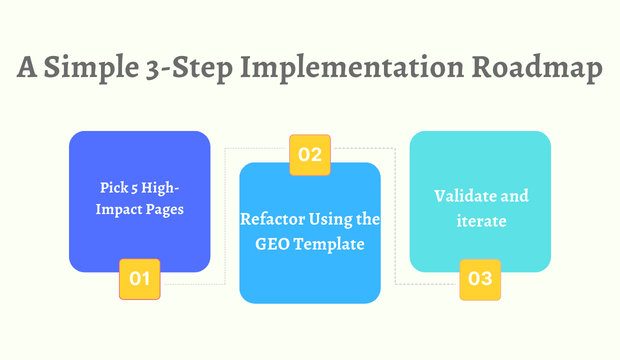
If you want this to be operational, not theoretical, include a roadmap teams can follow:
Step 1: Pick 5 High-Impact Pages
Start with pages that already get intent-driven traffic or answer common questions:
- FAQ page
- “How it works”
- Pricing or packages
- “X vs Y” comparison
- A core category or service page
Step 2: Refactor Using the GEO Template
For each page:
- Add a TL;DR block near the top
- Add a definition block under an H2
- Convert one key section into a table
- Rewrite 3–6 headings as questions with immediate answers
- Add one micro case study or specific example
Step 3: Validate and iterate
Revisit in 2–3 weeks:
- Did citations/mentions improve?
- Are you being described accurately?
- Which questions still skip your brand?
A GEO Checklist We Follow
Answer-first
- Direct answer in first 100 words
- TL;DR in the first 20% of the page
- Each major section starts with a clear “first sentence answer”
Information density
- Every section includes at least one of: definition, criteria, example, constraint, number, or a mini case study
- Fluff removed (no long “in this article we will…” intros)
Structure
- H2s written as questions where possible
- Short paragraphs, lists for logic, tables for comparisons
- Clear labels in tables and consistent terms across headings
Trust
- Sources cited for key claims
- Experience included via micro case studies
Final Thoughts
GEO is not about chasing a new acronym. It is about earning a new kind of visibility: being the source that AI systems can safely reuse.
Do you want your brand to get cited by AI platforms? Schedule a call with us TODAY. We at Sudha Solutions have helped:
- A home decor brand rank above Amazon and Flipkart
- A cosmetic brand gets cited by both Google and ChatGPT
- A sustainable brand gets cited by both Google and ChatGPT
These results are not fluke, rather a proof of our expertise in the new gen SEO which is less about clicks and more about AI citations. Contact Us Today!
Frequently Asked Questions
1. Does word count matter for GEO?
Less than you think. A shorter page with clear structure and unique information can outperform a long page full of fluff. This aligns with the broader GEO idea of information gain over volume.
2. Will writing for AI make my content boring?
Not if you do it right. Clarity, summaries, tables, and examples usually improve human experience too.
3. Is SEO dead?
No. GEO builds on SEO foundations like structure, metadata, and clean internal linking.
4. Do I need to rebuild mywhole site?
No. Start with high-impact pages first, then expand gradually.